
Tulsi Vivah Dev Deepavali 2026: Puja Vidhi, Katha & Auspicious Muhurat
📋 Table of Contents
- Tulsi Vivah and Dev Deepawali: A Divine Confluence of Devotional Celebrations
- The Mythological Story of Tulsi Vivah: The Secret of Virtuous Vrinda, Jalandhar & Shaligram
- Complete Classical Method for Performing Tulsi Vivah at Home (Step-by-Step)
- Dev Deepawali (Kartik Purnima): The Slaying of Tripurasur & the Grand Festival of Kashi
- Frequently Asked Questions (FAQs)
- Conclusion: Victory of Chastity, Respect for Nature, and Divine Light
- Read Also (Related Mythological Mysteries & Sacred Festival Tales)
Tulsi Vivah and Dev Deepawali: A Divine Confluence of Devotional Celebrations
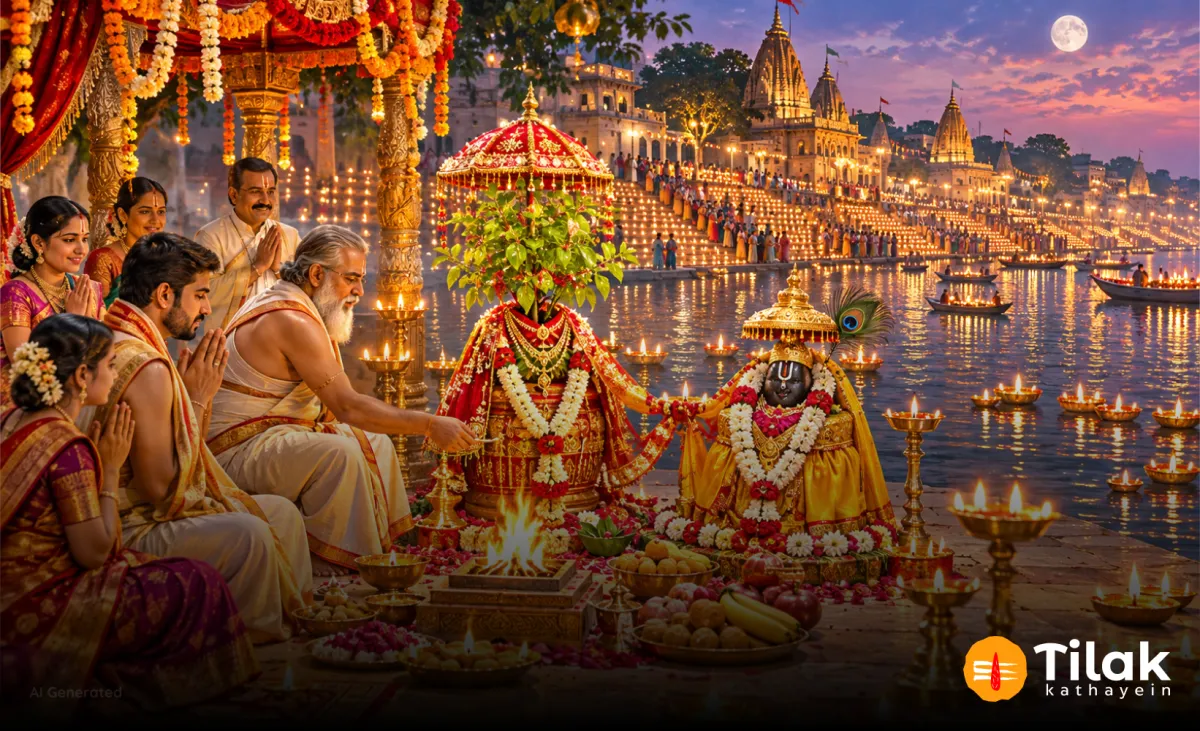
In the Sanatan Dharma, the month of Kartik is considered the most auspicious and merit-giving month of the entire year. On Kartik Shukla Ekadashi—known as Dev Uthani (Prabodhini) Ekadashi—when Lord Shri Hari Vishnu awakens from his four-month yogic slumber, the first auspicious ritual performed is 'Tulsi Vivah'.
This sacred festival of Tulsi Vivah begins on Dev Uthani Ekadashi and continues until Kartik Purnima, also known as 'Dev Deepawali'. While Tulsi Vivah marks the opening of doors for marriages, housewarmings, and auspicious ceremonies on Earth, on the night of Kartik Purnima, all the gods and goddesses descend from the heavens to celebrate a festival of lights on Earth (especially on the sacred banks of the Ganges in Kashi), which is called 'Dev Deepawali'.
"Mahaprasadjanani sarvasaubhagyavardhini.
Aadhi vyadhi hara nityam Tulsi tvam namostu te॥"
(Meaning: O Goddess Tulsi, who generates great offerings, enhances all good fortune, and constantly removes all afflictions and diseases! I bow to you repeatedly.)
The Mythological Story of Tulsi Vivah: The Secret of Virtuous Vrinda, Jalandhar & Shaligram
According to the narratives described in the Padma Purana and Shiva Purana, Tulsi was, in a previous birth, Vrinda, the daughter of the demon Kalnemi, who was an ardent devotee of Lord Vishnu from her childhood. She was married to the mighty demon Jalandhar, born from the ocean.
1. Jalandhar's Tyranny and Vrinda's Unbroken Chastity
Jalandhar was extremely cruel and arrogant. He defeated Lord Indra, the king of the gods, and seized heaven, then marched to Kailash to fight Lord Shiva. However, no deity could defeat Jalandhar because his wife Vrinda's chastity and devotion to her husband served as an impenetrable shield for him.
2. Lord Vishnu's Divine Play and Vrinda's Curse
To protect creation and the gods, Lord Vishnu took the form of Jalandhar and arrived at Vrinda's palace. Seeing her husband alive before her, Vrinda performed his worship and touched his feet, which broke her vow of chastity. As her protective shield shattered, Lord Shiva, on the battlefield, slew Jalandhar with his trident.
When Vrinda realized this deception, she became enraged and cursed Lord Vishnu—"O Narayana! You have behaved with me like a stone-hearted being; go, you too shall turn into a black stone (pashan) and suffer the agony of separation from your wife." The Lord Vishnu, who is devoted to his devotees, gladly accepted Vrinda's curse and assumed the form of the Shaligram stone.
3. The Manifestation of Tulsi and Lord Hari's Eternal Boon
In her grief and separation from her husband, virtuous Vrinda immolated herself in fire. From her ashes, a divine medicinal plant emerged, which Lord Vishnu named 'Tulsi'. Lord Hari bestowed a boon: "O Vrinda! From today, you shall reside on my head. Your marriage will be performed with my Shaligram form, and without a Tulsi leaf, I will not accept any devotee's offering (bhog)."
Complete Classical Method for Performing Tulsi Vivah at Home (Step-by-Step)
Couples who do not have a daughter, if they perform Tulsi Vivah with proper rituals, they receive immeasurable merit equivalent to Kanyadaan:
- Decorating the Mandap: In the evening (Goghuli Vela), construct a beautiful wedding canopy in the courtyard or prayer area using sugarcane stalks. Decorate the canopy with mango leaves and marigold flowers.
- Installation of Tulsi and Shaligram: Decorate the Tulsi plant's pot with ochre and rangoli. To its right, place Lord Shaligram (or a statue of Shri Krishna/Vishnu) on a raised platform covered with a yellow cloth.
- Offering Sixteen Beautifications: Offer a red sari, blouse, mehndi, turmeric, bindi, bangles, and all other bridal adornments to Mother Tulsi. Dress Lord Shaligram in a yellow cloth and a sacred thread.
- Tying the Knot & Mangalashtak: Tie the knot between Lord Shaligram and Tulsi with a yellow cloth or sacred thread. Then, chant Vedic Mangalashtak mantras and offer akshat (rice mixed with turmeric).
- Seven Rounds and Kanyadaan: Family members should hold Lord Shaligram and circumambulate Tulsi seven times (take seven rounds). Afterward, take sesame seeds, Kush grass, and water to make the vow of Kanyadaan.
- Offering Bhog and Aarti: After the wedding, offer seasonal fruits (water chestnut, amla, berries, sugarcane), sweets, and kheer as bhog. Perform aarti with camphor, praying for marital bliss.
Dev Deepawali (Kartik Purnima): The Slaying of Tripurasur & the Grand Festival of Kashi
The concluding day of Tulsi Vivah, i.e., the full moon day of Kartik month, is celebrated as 'Dev Deepawali' (Dev Diwali). Behind this celebration lies a glorious story from the Shiva Purana:
1. The Slaying of Tripurasur and the Gods' Diwali
The three sons of the demon king Tarakasur—Tarakaksha, Kamalaksha, and Vidyunmali—performed severe penance to Lord Brahma and received a boon for three impenetrable cities (flying cities of gold, silver, and iron). They were known as 'Tripurasur'. The boon stated that only when the three cities aligned once in a thousand years could they be destroyed by a single arrow.
To protect the gods tormented by the atrocities of Tripurasur, Lord Shiva took the Earth as his chariot, the sun and moon as its wheels, the Vedas as his horses, Mount Sumeru as his bow, and Lord Vishnu as the arrow. With this single, infallible arrow, he incinerated the three cities and the Tripurasurs. Lord Shiva became known as 'Tripurari'. This great victory occurred on the day of Kartik Purnima, and in celebration of this joy, all the gods descended to the ghats of Kashi and lit millions of lamps.
2. The Wonderful Spectacle of Kashi's 84 Ghats
Even today, during Dev Deepawali in Kashi (Varanasi), over 1.5 million earthen lamps are lit on the 84 ghats of the Ganges. It is believed that bathing in the Ganges and performing deepadaan (offering lamps) on this night destroys the sins of all one's past lives and grants liberation to the ancestors.
Frequently Asked Questions (FAQs)
1. Is Tulsi Vivah performed on Ekadashi or Dwadashi?
Lord Vishnu awakens from his slumber on Dev Uthani Ekadashi, so Tulsi Vivah is primarily performed on the evening of Ekadashi or on Dwadashi tithi. In many traditions, this marriage can be solemnized on any auspicious day until Kartik Purnima.
2. If one does not have Shaligram at home, with whom should Tulsi Vivah be performed?
If traditional black Shaligram stones are not available at home, Tulsi Vivah can be performed with a statue of Lord Krishna (Laddu Gopal) or Lord Vishnu made of brass or silver.
3. What is the difference between Dev Deepawali and regular Diwali?
Regular Diwali is celebrated on Kartik Amavasya by humans to rejoice in the return of Lord Rama to Ayodhya, whereas Dev Deepawali is celebrated 15 days later on Kartik Purnima by the gods themselves to celebrate the slaying of Tripurasur.
4. What should be done with the bridal adornments offered after Tulsi Vivah?
The sari, bangles, and other bridal adornments offered to Mother Tulsi should be respectfully gifted to a married Brahmin woman or other married women in the household the next day.
Conclusion: Victory of Chastity, Respect for Nature, and Divine Light
The sacred festivals of Tulsi Vivah and Dev Deepawali connect us to two supreme ideals of Sanatan culture—first, to see God in every form of nature, including plants, and second, to celebrate the eternal victory of the light of Dharma over the darkness of adharma.
Let us, in this holy month of Kartik, welcome Tulsi-Shaligram in our homes and courtyards, and on the night of Kartik Purnima, by offering lamps, fill our inner selves with the light of devotion, purity, and knowledge.
"Vrinda Vrindavani Vishwapujita Vishwapavani.
Pushpasara Nandani cha Tulsi Krishnajivani॥"🚩 Jai Tulsi Mata! Jai Shaligram Bhagwan! Happy Tulsi Vivah and Dev Deepawali! 🌿🪔🙏
Read Also (Related Mythological Mysteries & Sacred Festival Tales):
- Why Did Lord Shiva Kill Jalandhara? Know the Secret and Story: The complete story of Jalandhara's origin from Shiva's third eye, his evil gaze upon Mother Parvati, and the chaste devotion of Sati Vrinda.
- Kashi Vishwanath Jyotirlinga Darshan Guide & Dev Deepawali: The history of the salvation-granting city of Kashi, resting on a trident, and the divine festival of lights celebrated on its Ganges ghats.
- Why Did Shri Krishna Have 16,108 Wives? Know the Mythological Secret: The truth behind the slaying of Narakasura, the 8 principal queens (Ashtabharya), and the social respect for 16,100 maidens [cite: 3].
- Sharad Purnima: Time for Offering Kheer, Puja Vidhi & Mythological Story: The 16 phases of the moon, the secret of the nectar shower, and the midnight worship of Goddess Lakshmi (Kojagiri Puja) [cite: 3].
Today's Panchang 19 November 2026
For auspicious times, choghadiya, horoscope and planetary positions
Related Articles
Kali Chaudas 2026: Maa Kali Puja Vidhi, Auspicious Muhurat & Vada Bhog
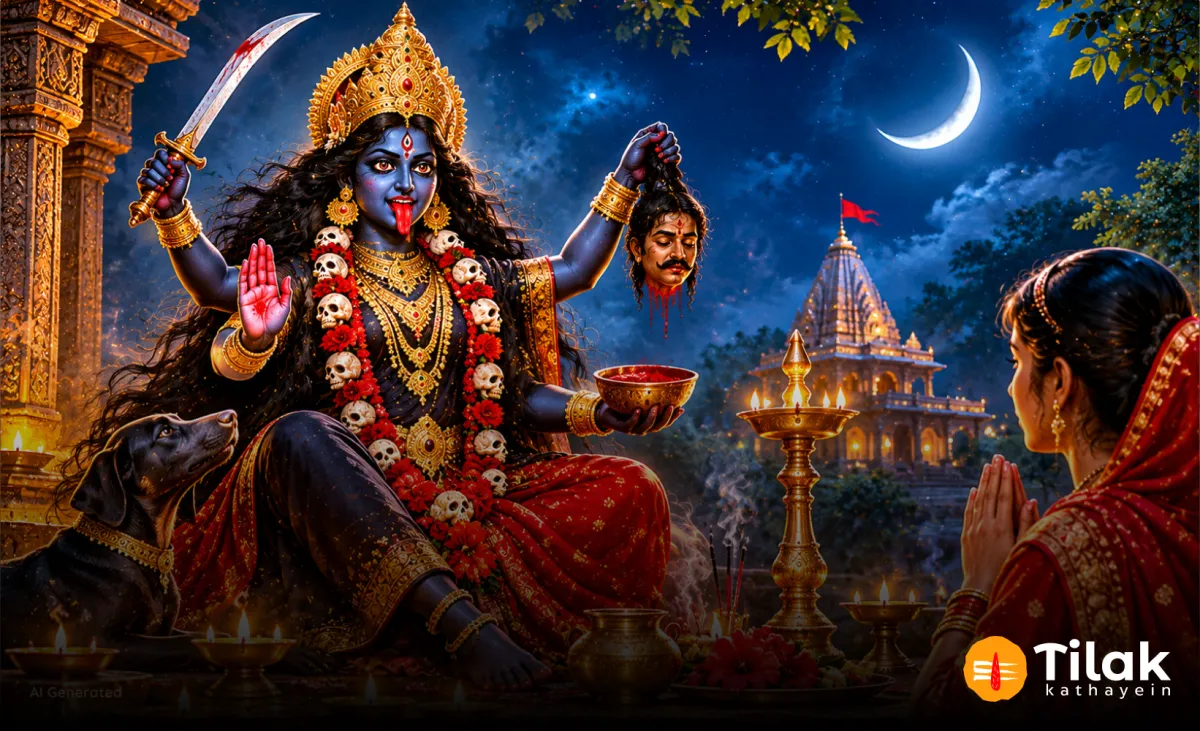
कार्तिक मास के कृष्ण पक्ष की चतुर्दशी (गुजराती पंचांग अनुसार आश्विन मास के वद पक्ष की चौदस) को 'काली चौदस' (Kali Chaudas) कहा जाता है। यह पावन रात्रि मां महाकाली, काल भैरव और संकटमोचन हनुमान जी की उपासना को समर्पित है। विशेषकर गुजरात और पश्चिमी भारत में इस दिन घर से नकारात्मक ऊर्जा, नजर दोष, तंत्र-बाधा और बुरी शक्तियों के निवारण हेतु मां काली की विधिवत आराधना की जाती है। इस दिन उड़द की दाल के वड़े बनाकर मां काली और भैरवनाथ को भोग लगाने तथा घर के बाहर चौमुखा दीपक रखने की प्राचीन परंपरा है।
Bhai Dooj 2026: Yama Dwitiya Story, Tilak Muhurat & Yama Tarpan Vidhi
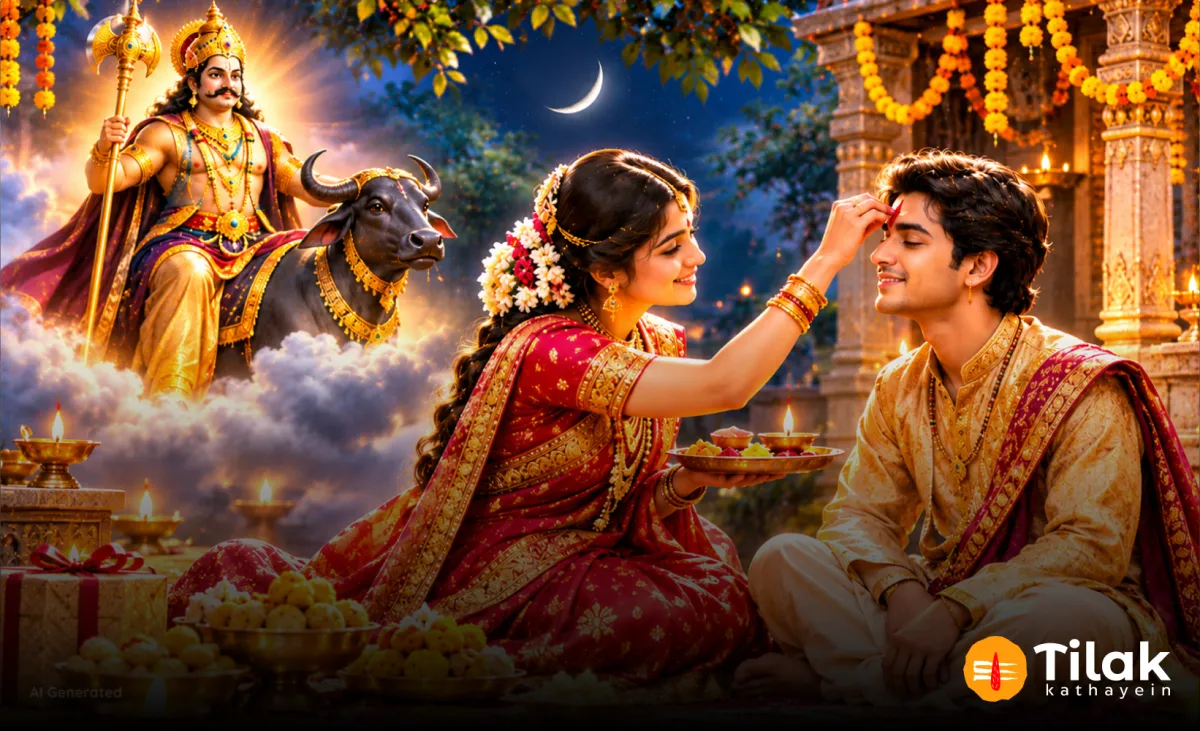
कार्तिक मास के शुक्ल पक्ष की द्वितीया तिथि को 'भाई दूज', 'यम द्वितीया' अथवा 'भ्रातृ द्वितीया' कहा जाता है। यह पावन पर्व पांच दिवसीय दीपोत्सव का समापन दिवस है। स्कंद पुराण और भविष्योत्तर पुराण के अनुसार, इसी दिन मृत्यु के देवता यमराज अपनी बहन यमुना के सादर निमंत्रण पर उनके घर भोजन करने गए थे। बहन यमुना के प्रेम से अभिभूत होकर यमराज ने वरदान दिया था कि जो भाई इस पावन तिथि पर अपनी बहन के घर जाकर उसके हाथ का बना भोजन ग्रहण करेगा और तिलक लगवाएगा, उसे अकाल मृत्यु और यम यातना का भय नहीं रहेगा।
Govardhan Puja 2026: Annakut Bhog, Puja Vidhi & Indra Man-Mardan Katha
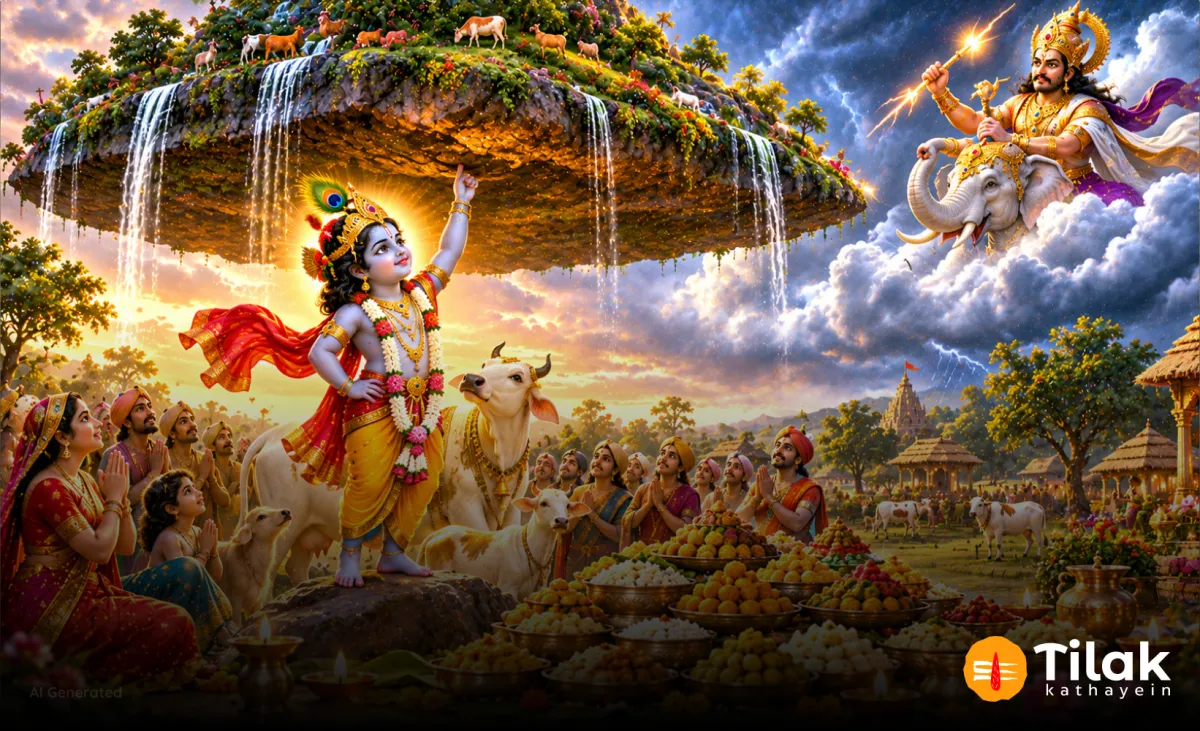
कार्तिक मास के शुक्ल पक्ष की प्रतिपदा तिथि को 'गोवर्धन पूजा' एवं 'अन्नकूट महोत्सव' मनाया जाता है। श्रीमद्भागवत महापुराण के अनुसार, द्वापर युग में भगवान श्रीकृष्ण ने देवराज इंद्र के मिथ्या अहंकार का मान-मर्दन करने और ब्रजवासियों को प्रकृति (पर्वत, वृक्ष, गाय एवं जल) की प्रत्यक्ष पूजा की ओर उन्मुख करने के लिए अपनी कनिष्ठिका (छोटी) उंगली पर विशाल गोवर्धन पर्वत को 7 दिनों तक उठाए रखा था। इस पावन अवसर पर घर के आंगन में गाय के गोबर से गिरिराज गोवर्धन की आकृति बनाकर पूजा की जाती है और भगवान को विविध प्रकार के अन्न, शाक व मिष्ठान्न से युक्त 'अन्नकूट' व '56 भोग' अर्पित किए जाते हैं।
Why is Yama's lamp lit on Dhanteras? Know the correct method and secrets
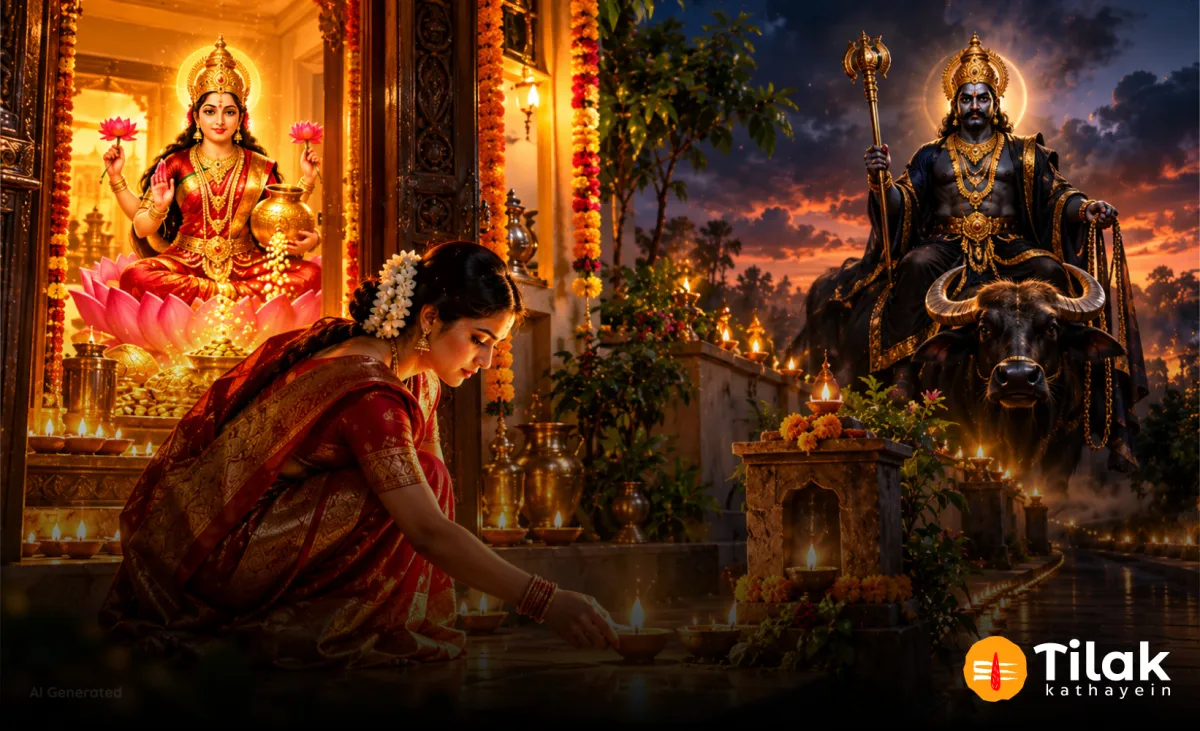
कार्तिक मास के कृष्ण पक्ष की त्रयोदशी (धनतेरस) की शाम को दक्षिण दिशा में मृत्यु के देवता यमराज के निमित्त जो विशेष दीपक प्रज्वलित किया जाता है, उसे 'यमदीप' (यम का दीया) कहते हैं। स्कंद पुराण और पद्म पुराण के अनुसार, धनतेरस के दिन यमराज के निमित्त चार मुखी दीपदान करने से परिवार के सदस्यों को अकाल मृत्यु, दुर्घटना और यम यातनाओं के भय से मुक्ति मिलती है। यह दीपक घर के मुख्य द्वार के बाहर दक्षिण दिशा की ओर मुख करके अन्न की ढेरी पर रखा जाता है।
Sharad Purnima: Time for Kheer, Puja Vidhi & Mythological Story
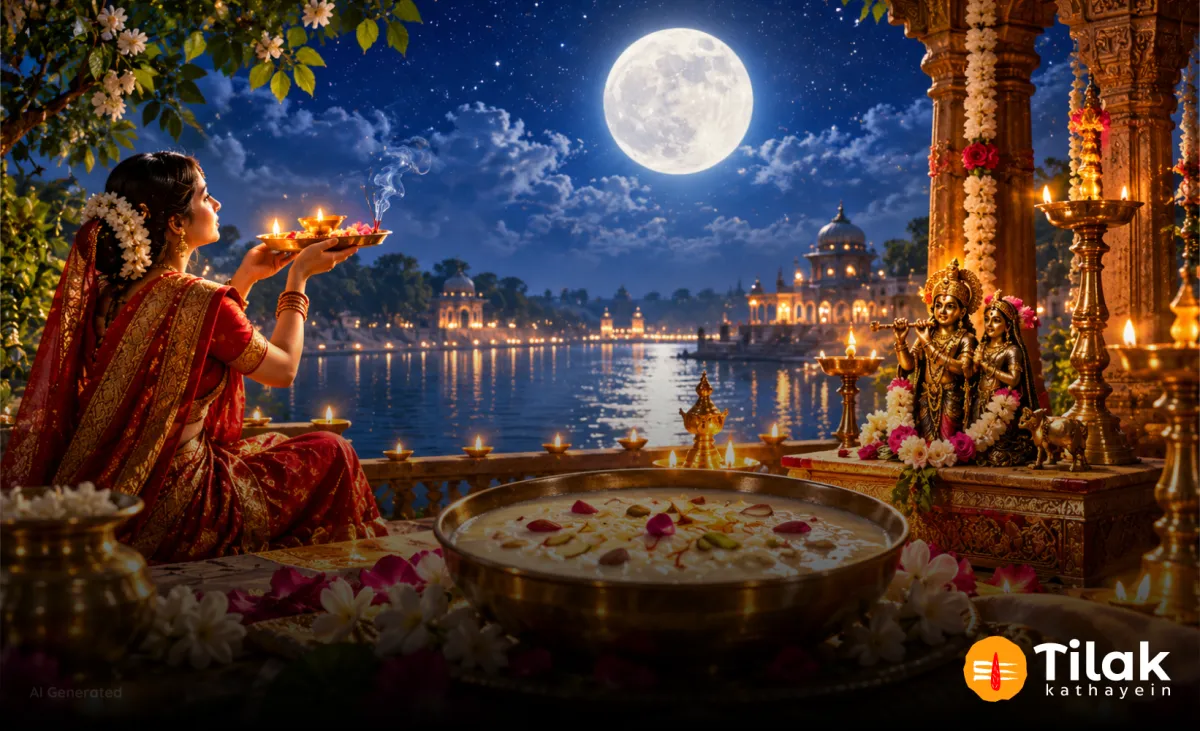
हिन्दू पंचांग के अनुसार आश्विन शुक्ल पूर्णिमा को 'शरद पूर्णिमा' या 'शरद पूनम' (कोजागरी पूर्णिमा) कहा जाता है। मान्यता है कि इस पावन रात्रि को चंद्रमा पृथ्वी के सर्वाधिक निकट होता है और अपनी संपूर्ण 16 कलाओं से अमृत की किरणें बरसाता है। इस रात खुले आकाश के नीचे गाय के दूध और चावल से बनी खीर (गुजरात में दूध-पौंआ) रखने की परंपरा है। मध्यरात्रि में धन की देवी माता लक्ष्मी "को जागर्ति" (कौन जाग रहा है?) पूछते हुए पृथ्वी पर विचरण करती हैं और जागरण करने वाले भक्तों को अखंड ऐश्वर्य का वरदान देती हैं।