
Govardhan Puja 2026: Annakut Bhog, Puja Vidhi & Indra Man-Mardan Katha
📋 Table of Contents
- Govardhan Puja and Annakut: The Great Festival of Eternal Nature Worship
- Mythological Story: Indra's Ego and Krishna's Leela of Lifting Giriraj
- The Deep Mathematical and Spiritual Secret of Annakut Festival and 56 Bhog
- The Eternal Message of Nature, Environment, and Cow Protection
- Classical Method of Govardhan Puja at Home (Step-by-Step Worship Guide)
- The Greatness of Shri Giriraj Govardhan Parikrama (21 km) and Major Pilgrimage Sites
- Govardhan Puja: At a Glance (Quick Summary Table)
- Frequently Asked Questions (FAQs)
- Conclusion: Victory of Devotion and Nature-Harmony over Ego
- Read Also (Diwali Mahaparva & Related Mythological Stories)
Govardhan Puja and Annakut: The Great Festival of Eternal Nature Worship
In the extensive calendar of festivals of Sanatan Dharma, the Pratipada Tithi (the day after Diwali) of the Shukla Paksha in the month of Kartik is considered an extremely revolutionary and spiritually awakening date. On this holy day, Govardhan Puja and Annakut Festival are celebrated with great joy throughout India.
This is not just a traditional ritual, but it is the historic day when Lord Krishna, the Lord of Yoga, ended superstition, fear, and ritualistic dogmatism, teaching humanity to bow down to direct nature—mountains, water, vegetation, and cattle wealth.
After worshipping Mother Mahalakshmi on the night of Diwali, the dawn of Kartik Pratipada reminds us that the true foundation of wealth and prosperity lies in the natural resources of the Earth. As long as nature is green and the mother cows are safe, human civilization can remain prosperous and alive.
"Govardhano dharanidharo Gokulotsavakarah.
Krishnabahukratchhatro Gavam Kotiprado'stu Me॥"
(Meaning: O Giriraj Govardhan, the sustainer of the Earth, the cause of Gokul's joy, who was held as an umbrella by Lord Krishna's arms, may you remove all our sufferings and grant us happiness, peace, and prosperity.)
Mythological Story: Indra's Ego and Krishna's Leela of Lifting Giriraj
The Shrimad Bhagwat Mahapurana in its Tenth Canto (Govardhan Leela episode) and the Vishnu Purana provide a very vivid description of this divine event:
1. Preparation for Indra's Yajna in Braj and Kanha's Logic
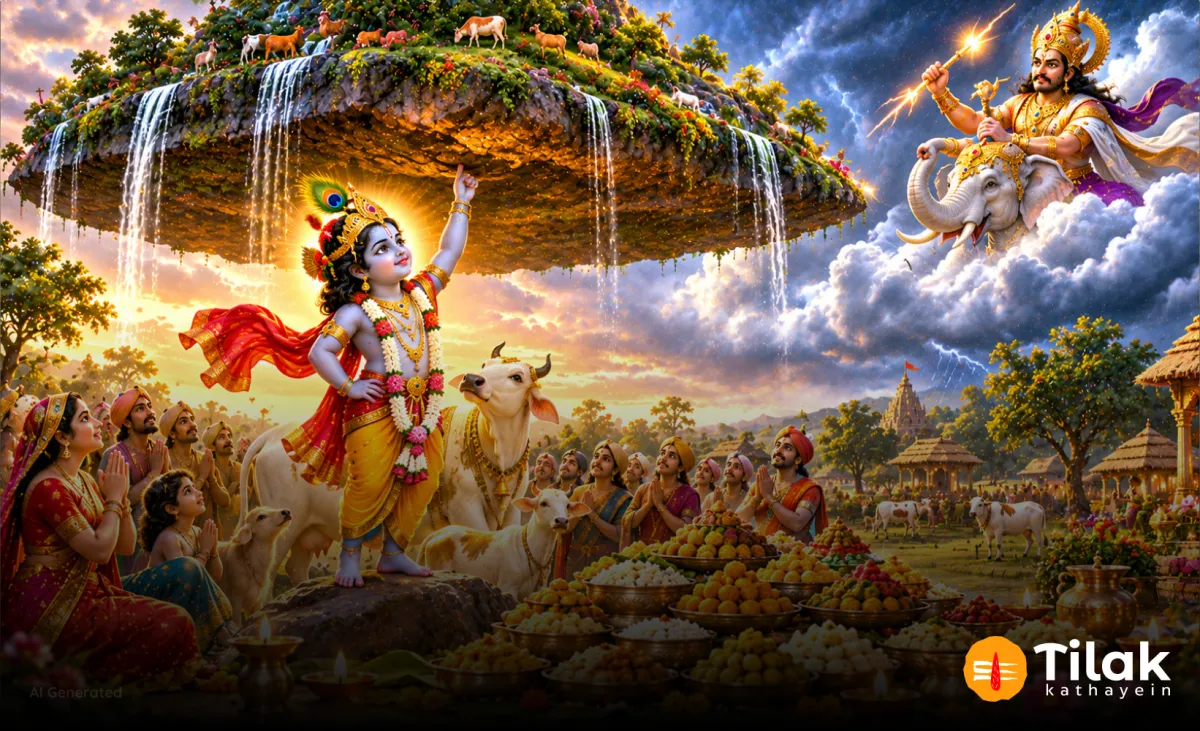
Once, Nanda Baba and all the residents of Braj were preparing for a grand yajna to appease Lord Indra. Various sweets, delicacies, and offerings were being prepared. Then, seven-year-old child Krishna innocently asked Nanda Baba, "Father! For whom is this grand festival and yajna being organized?"
Nanda Baba replied, "Son! Lord Indra is the lord of the clouds. When he is pleased, he sends rain, which makes our fields yield crops and our cows get green grass. Therefore, this is his annual worship."
Lord Krishna smiled and argued:
"Father! We are forest dwellers and cowherds. Our lives depend not on palaces, but on these forests, cows, and the Govardhan mountain. Indra merely performs his duty. To the mountain that provides fodder for our cows, from which we get medicines and pure springs, our true gratitude should be expressed towards that Giriraj Govardhan."
Hearing Krishna's logical words, all the residents of Braj stopped Indra's yajna and went to worship Giriraj Govardhan with all the delicacies and offerings.
2. Indra's Wrath and the Dance of the Samvartaka Clouds
When Indra, the king of heaven, learned that the residents of Braj had stopped his traditional yajna at the behest of a mere child, his ego was wounded. Angered, Indra ordered the destructive 'Samvartaka Clouds' to flood the entire Braj region and wreak havoc.
In an instant, dense darkness enveloped the sky. Torrential rain, terrifying thunder, and hailstorms like boulders began to fall. Frightened, all the residents of Braj, cowherd men and women, and the mute animals ran to the refuge of child Krishna, weeping.
3. Lifting Giriraj on the Little Finger
Lord Krishna reassured everyone. Smiling gently, he walked forward as if playing and lifted the entire Govardhan mountain on the little finger of his left hand, like a giant umbrella. He called all the residents of Braj, cows, and calves under the shelter of the mountain to safety.
Indra rained incessantly for seven days, but the rain could not touch any living being sheltered under the mountain, due to the power of Krishna's penance and the heat of his Sudarshan Chakra.
4. Humbling Indra's Pride and the Manifestation of 'Govinda'
On the seventh day, Indra's entire water reservoir was depleted, and his false ego was shattered. The sky cleared, and the Sun God smiled. Ashamed, Lord Indra fell at Krishna's feet with his Kamadhenu (Surabhi) cow. The Surabhi cow anointed the Lord with her divine milk, and Indra, seeking forgiveness, said, "O Lord! You are the protector of all cows, senses, and creation, hence from today your name shall be 'Govinda'."
The Deep Mathematical and Spiritual Secret of Annakut Festival and 56 Bhog
On the day of Govardhan Puja, a huge mountain (Koot) of various types of grains is prepared and offered to the Lord, which is called Annakut (Annakut). On this day, there is a unique tradition of offering '56 Bhog' (Chhappan Bhog). Behind this lies a very scientific and affectionate secret:
1. Mother Yashoda's Affection and the Mathematics of 56 Bhog
- Mother Yashoda used to lovingly feed child Krishna eight times a day (8 Prahar = 24 hours).
- Lord Krishna, protecting Braj from Indra's wrath, held the mountain on his finger for seven continuous days without consuming food or water.
- Thus, for seven days, the Lord was deprived of 56 Prahar of food (8 Prahar daily × 7 days = 56 Prahar).
- On the eighth day, when the crisis was averted, Mother Yashoda and all the residents of Braj, expressing immense gratitude and affection towards the Lord, lovingly prepared 56 types of delicious dishes and offered them to Krishna. This tradition is known today as 'Chhappan Bhog'.
2. Seasonal and Ayurvedic Science of Annakut
The traditional vegetable dish prepared in Annakut is a mixture of all the green leafy vegetables, roots (tubers), and new grains harvested during the transition period of the autumn and early winter seasons. According to Ayurveda, this diverse mixture of vegetables enhances the body's immunity and provides energy for the coming harsh winter season.
The Eternal Message of Nature, Environment, and Cow Protection
This divine play of Lord Krishna is not just a miracle, but the first eco-friendly manifesto of Sanatan culture:
- Freedom from Invisible Fear: Krishna explained that worshipping deities out of fear of some imaginary wrath is ignorance. Dharma should be based on love, respect, and direct gratitude.
- Conservation of Mountains and Rivers: Mountains stop clouds and bring rain, rivers give life, and forests purify the air. Govardhan Puja teaches us that instead of exploiting nature, it is human dharma to nurture and worship it.
- Nurturing Mother Cow: A cow is not just an animal, but the backbone of Sanatan life. Cow dung fertilizes the land, cow urine yields medicines, and milk provides nectar.
Classical Method of Govardhan Puja at Home (Step-by-Step Worship Guide)
The ritual of Govardhan Puja is performed on the Kartik Shukla Pratipada day, either in the morning or in the evening during Pradosh Vela:
- Making the Figure from Cow Dung: In the morning, after bathing and other rituals, create the figure of a reclining male form of Giriraj Ji using fresh cow dung in a clean courtyard or open terrace. Sculpt a crown on his head, and form his hands and feet.
- Placing the Lamp in the Navel: Create a bowl or cavity in the navel area of Govardhan Ji and place a four-faced earthen lamp there, filled with pure cow ghee or mustard oil and Ganga water or milk.
- Offering Roli, Chandan & Flowers: Offer Roli, Akshat (rice), yellow sandalwood, Khil (puffed rice), Batashe (sugar candies), incense, and fragrant yellow flowers to Govardhan Ji.
- Pouring Milk and Circumambulation: Holding a copper or brass pot filled with raw milk, pour a stream of milk onto the navel of Govardhan Ji, or pour streams of milk and water around him, performing 7 circumambulations. While circumambulating, chant "Govardhan Maharaj, you are the crown of my head."
- Offering Annakut: Prepare a large platter of Kadhi (curry), rice, bajra (millet), puri (fried bread), Malpua (sweet pancake), and mixed vegetables (Annakut) and offer it to Giriraj Ji. Be sure to offer Tulsi leaves.
- Cow Worship (Gau Dhan Vandana): Bathe the cows and calves, apply Geru/color to their horns, tie bells around their necks, apply tilak to them, perform Aarti, and feed them jaggery-roti or green fodder.
The Greatness of Shri Giriraj Govardhan Parikrama (21 km) and Major Pilgrimage Sites
Circumambulating the holy Govardhan mountain (Giriraj Ji), located in the Mathura district of Uttar Pradesh, is considered as meritorious as visiting all pilgrimage sites in Sanatan Dharma:
- Seven Kos (21 kilometers) Parikrama: This circumambulation is divided into two parts—the long parikrama (approx. 12 km) and the short parikrama (approx. 9 km). Devotees complete this parikrama barefoot.
- Major Pilgrimage Stops:
- Daan Ghati Temple: Where Krishna asked the Gopis for toll (butter).
- Mansi Ganga: The holy Ganges that manifested from Lord Krishna's mental resolve, bathing in which yields the same merit as bathing in the Ganges.
- Radhakund & Shyamkund: The center of the divine love of Shri Radha-Krishna, where bathing at midnight holds special significance.
- Kusum Sarovar: A holy lake adorned with beautiful stone chhatris, where the Gopis used to pick flowers.
- Punchari ka Lauta: The abode of Baba Lauta Ji, who was Krishna's friend and is still believed to be waiting there for his return.
- Dandavati Parikrama: Extremely devout devotees complete the entire 21-kilometer route by prostrating themselves on the ground, taking months to complete, which is considered the pinnacle of penance.
Govardhan Puja: At a Glance (Quick Summary Table)
| Description | Scriptural and Authentic Information |
|---|---|
| Name of the Festival | Govardhan Puja, Annakut Festival, Padwa / Bali Pratipada |
| Date and Month | Kartik month, Shukla Paksha Pratipada Tithi (Day after Diwali) |
| Main Deity Worshipped | Giriraj Govardhan, Lord Krishna (Govinda) & Mother Cow |
| Main Offering (Naivedya) | Annakut (mixed vegetable curry), Kadhi-Rice, Bajra, Malpua, and 56 Bhog |
| Main Message of the Festival | Subjugation of ego, conservation of nature and environment, and cow protection |
| Distance of Govardhan Parikrama | 21 kilometers (Seven Kos) – Mathura, Brajbhumi |
Frequently Asked Questions (FAQs)
1. Why is only cow dung used in Govardhan Puja?
According to Sanatan scriptures, Mother Mahalakshmi is believed to reside in cow dung ("Gomaye vasate Lakshmiah"). Cow dung purifies the land, makes it germ-free, and fills it with sattvic energy, hence the idol of Giriraj Ji is made from it.
2. For how many days did Lord Krishna lift the Govardhan mountain?
Lord Krishna held the Govardhan mountain on the little finger of his left hand for 7 continuous days to protect Braj from the wrath of Indra's Samvartaka clouds.
3. Why are 56 Bhog offered in Annakut?
Lord Krishna used to eat 8 Prahar a day. During the 7 days he held the mountain, he observed a fast for 56 Prahar (8 × 7). When the crisis ended, Mother Yashoda and the residents of Braj, out of gratitude, offered 56 types of dishes to the Lord.
4. How many times should Govardhan Ji be circumambulated?
The Govardhan Ji made at home should be circumambulated at least 7 times, pouring milk or water. The actual Govardhan mountain in Braj has a complete parikrama of 21 kilometers (seven Kos).
Conclusion: Victory of Devotion and Nature-Harmony over Ego
The holy festival of Govardhan Puja gives us the timeless message that no matter how great one's position, power, or might, ego always ends in defeat. The humbling of Lord Indra teaches us humility.
This festival inspires us to return to our roots, respect nature, and live in harmony with the entire creation. Only when we resolve to serve our environment and mother cow do we become worthy of being true friends and devotees of Lord Krishna.
"Namo Govardhanadharaya Namo Govindadharine.
Sarvapapavinashaya Namaste Sarvakamada॥"
(Salutations to Govardhan bearer, the sustainer of senses, Govinda, and Hari, the destroyer of all sins and fulfiller of all desires.)🚩 Jai Giriraj Maharaj! Jai Kanhaiya Lal! Happy Govardhan Puja and Annakut! 🌾🪔🙏
Read Also (Diwali Mahaparva & Related Mythological Stories):
- The Story of the Owl and Mother Lakshmi on Diwali Night: The deep spiritual secret of a restless mind, the darkness of ignorance, and the balance of wealth with wisdom.
- Naraka Chaturdashi (Roop Chaturdashi) and the Secret of 14 Lamps: The classical method of slaying Narakasura, the pre-sunrise sesame oil bath, and Yama Tarpan.
- Why is Yama's Lamp Lit on Dhanteras? The four-faced Yama Deep Vidhan, mantra, and the holy story from the Skanda Purana to be freed from the fear of untimely death.
- Why Did Krishna Have 16,108 Wives? The respect for the 16,100 maidens freed from Narakasura's prison, the Ashtabharya, and the spiritual truth of the Shrimad Bhagwat.
Today's Panchang 2 November 2026
For auspicious times, choghadiya, horoscope and planetary positions
Related Articles
Why is Yama's lamp lit on Dhanteras? Know the correct method and secrets
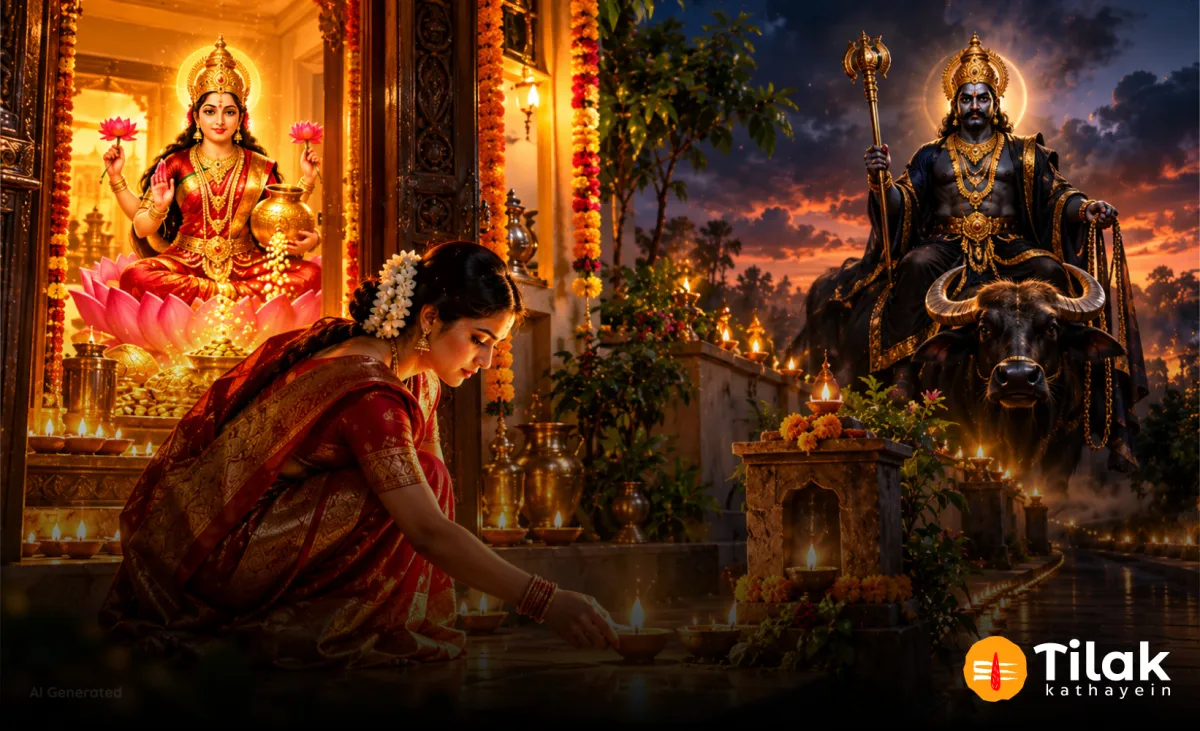
कार्तिक मास के कृष्ण पक्ष की त्रयोदशी (धनतेरस) की शाम को दक्षिण दिशा में मृत्यु के देवता यमराज के निमित्त जो विशेष दीपक प्रज्वलित किया जाता है, उसे 'यमदीप' (यम का दीया) कहते हैं। स्कंद पुराण और पद्म पुराण के अनुसार, धनतेरस के दिन यमराज के निमित्त चार मुखी दीपदान करने से परिवार के सदस्यों को अकाल मृत्यु, दुर्घटना और यम यातनाओं के भय से मुक्ति मिलती है। यह दीपक घर के मुख्य द्वार के बाहर दक्षिण दिशा की ओर मुख करके अन्न की ढेरी पर रखा जाता है।
Sharad Purnima: Time for Kheer, Puja Vidhi & Mythological Story
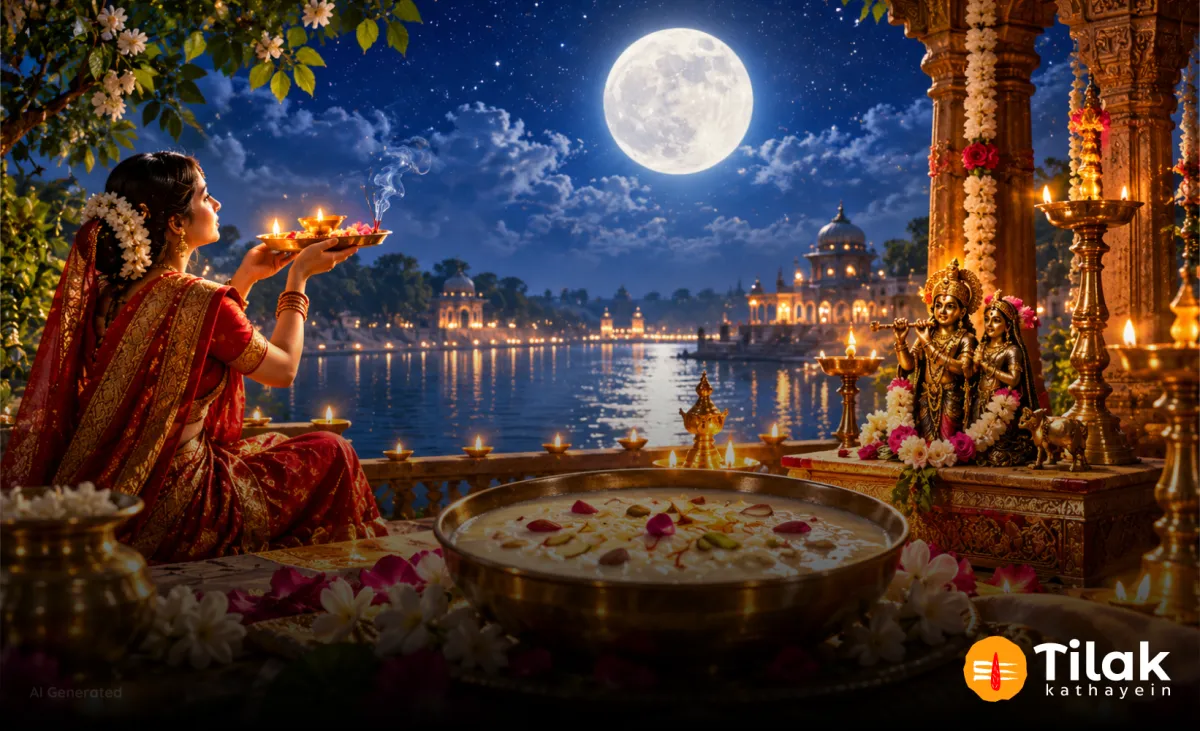
हिन्दू पंचांग के अनुसार आश्विन शुक्ल पूर्णिमा को 'शरद पूर्णिमा' या 'शरद पूनम' (कोजागरी पूर्णिमा) कहा जाता है। मान्यता है कि इस पावन रात्रि को चंद्रमा पृथ्वी के सर्वाधिक निकट होता है और अपनी संपूर्ण 16 कलाओं से अमृत की किरणें बरसाता है। इस रात खुले आकाश के नीचे गाय के दूध और चावल से बनी खीर (गुजरात में दूध-पौंआ) रखने की परंपरा है। मध्यरात्रि में धन की देवी माता लक्ष्मी "को जागर्ति" (कौन जाग रहा है?) पूछते हुए पृथ्वी पर विचरण करती हैं और जागरण करने वाले भक्तों को अखंड ऐश्वर्य का वरदान देती हैं।
How did Bhishma Pitamah receive the boon of Ichhamrityu (death by choice)? Know the story from Mahabharata
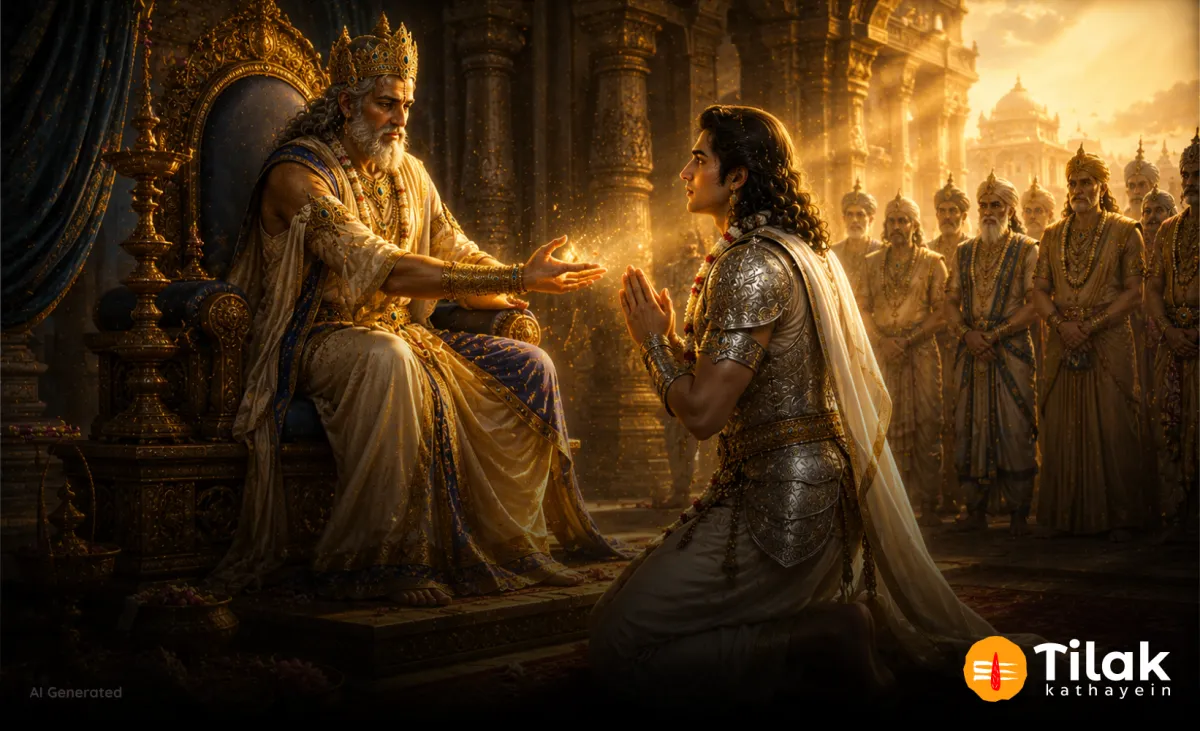
**भीष्म पितामह**, जिन्हें जन्म के समय देवव्रत कहा जाता था, अपनी महान प्रतिज्ञा और त्याग के लिए प्रसिद्ध हैं। जब उन्होंने अपने पिता राजा शांतनु के सुख और सत्यवती से उनके विवाह के लिए आजीवन ब्रह्मचर्य तथा हस्तिनापुर के सिंहासन पर अपना अधिकार छोड़ने की भयंकर प्रतिज्ञा ली, तब शांतनु उनसे अत्यंत प्रसन्न हुए। उन्होंने देवव्रत को ऐसा वरदान दिया कि **मृत्यु उनकी इच्छा के अधीन रहेगी**। इसी कारण भीष्म युद्धभूमि में बाणों की शय्या पर पड़े रहने के बाद भी अपनी इच्छानुसार प्राण त्याग सके। इस लेख में जानें इच्छामृत्यु के वरदान की पूरी कथा और इसका महाभारत में महत्व।
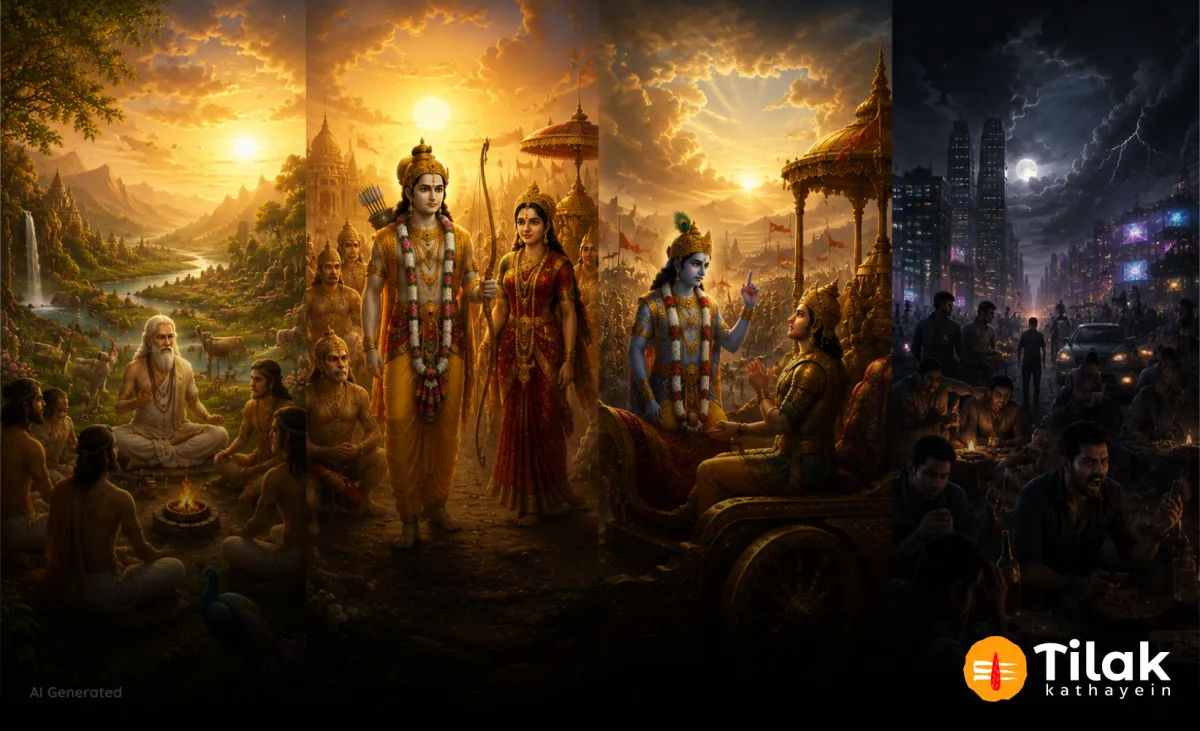
4 Yugas Explained in Hindi | Origin and Mystery of the Four Yugas
हिंदू धर्मग्रंथों में समय को एक चक्र के रूप में समझाया गया है, जिसमें **सतयुग, त्रेतायुग, द्वापर युग और कलियुग** क्रम से आते हैं। प्रत्येक युग में धर्म, मानव जीवन और नैतिक मूल्यों की स्थिति अलग बताई गई है। पुराणों में इन युगों की अवधि, विशेषताओं और एक युग से दूसरे युग में परिवर्तन का विस्तृत वर्णन मिलता है। इस लेख में जानें चारों युगों की उत्पत्ति, उनका क्रम, अवधि, धर्म के क्रमिक परिवर्तन और इस रहस्यमयी युगचक्र से जुड़ी पौराणिक मान्यताओं की सम्पूर्ण जानकारी।
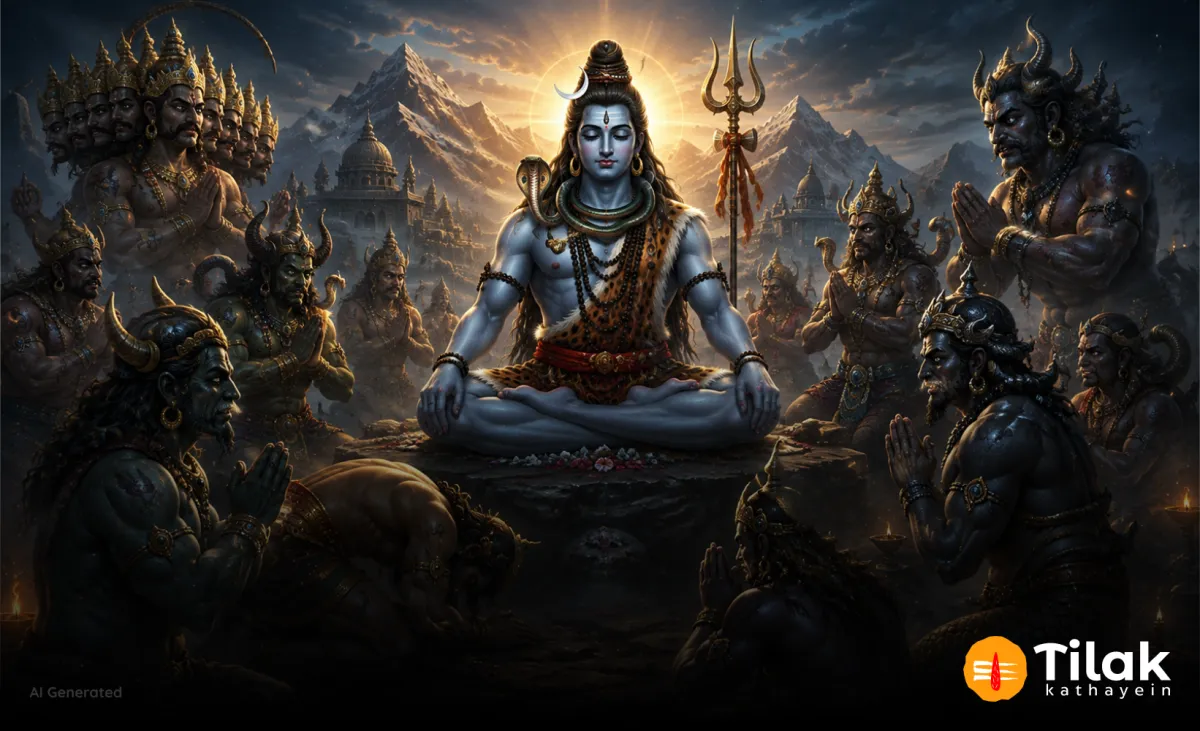
Why Did Asuras Worship Lord Shiva? 4 Powerful Reasons and Mythological Stories
हिंदू पुराणों में कई ऐसे असुरों का वर्णन मिलता है जिन्होंने भगवान शिव की कठोर तपस्या और अनन्य भक्ति की थी। **रावण, बाणासुर और अन्य शिव भक्त असुरों** की कथाएं बताती हैं कि महादेव की भक्ति केवल देवताओं तक सीमित नहीं थी। असुरों ने शक्ति, वरदान, ज्ञान और अपनी इच्छाओं की पूर्ति के लिए शिव की आराधना की, लेकिन उनकी कथाओं में भक्ति और अहंकार के बीच का अंतर भी स्पष्ट दिखाई देता है। इस लेख में जानें **4 प्रमुख कारण**, जिनके कारण असुर भगवान शिव के भक्त बने और उन्हें महादेव से कौन-कौन से वरदान प्राप्त हुए।
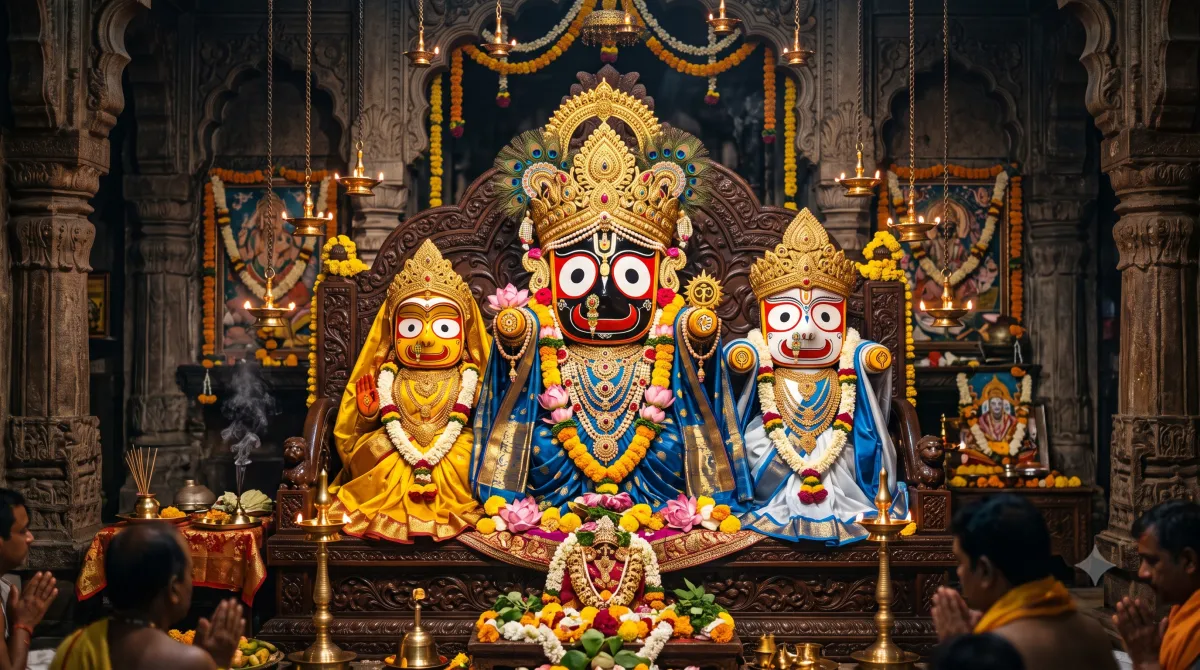
Introduction to Lord Jagannath | History, Mythology, Form, and Significance
भगवान जगन्नाथ भगवान श्रीकृष्ण के दिव्य स्वरूप माने जाते हैं और ओडिशा के पुरी में स्थित श्री जगन्नाथ मंदिर विश्वभर के करोड़ों श्रद्धालुओं की आस्था का केंद्र है।