
Bhai Dooj 2026: Yama Dwitiya Story, Tilak Muhurat & Yama Tarpan Vidhi
📋 Table of Contents
- Bhai Dooj and Yama Dwitiya: Introduction & Spiritual Significance
- The Sacred Story from Skanda Purana: Yamraj, Yamuna Ji, and the Boon of Immortality
- The Episode of Lord Shri Krishna and Subhadra: Welcome after the Slaying of Narakasura
- The Correct Classical Method and Rules for Applying Tilak (Step-by-Step)
- Mathura Vishram Ghat: The Secret of the Sacred Yamuna Bath for Brothers and Sisters
- Bhai Dooj and Yama Dwitiya: At a Glance (Quick Summary Table)
- Frequently Asked Questions (FAQs)
- Conclusion: Purification of Relationships and Protection from Untimely Death
- Read Also (The Great Festival of Diwali & Related Mythological Stories)
Bhai Dooj and Yama Dwitiya: Introduction & Spiritual Significance
In the Sanatan Dharma, the second day of the waxing moon in the month of Kartik is known as 'Bhai Dooj', 'Yama Dwitiya', or 'Bhratri Dwitiya'. This sacred festival is the final and deeply emotional step of the five-day Deepotsav that begins with Dhanteras.
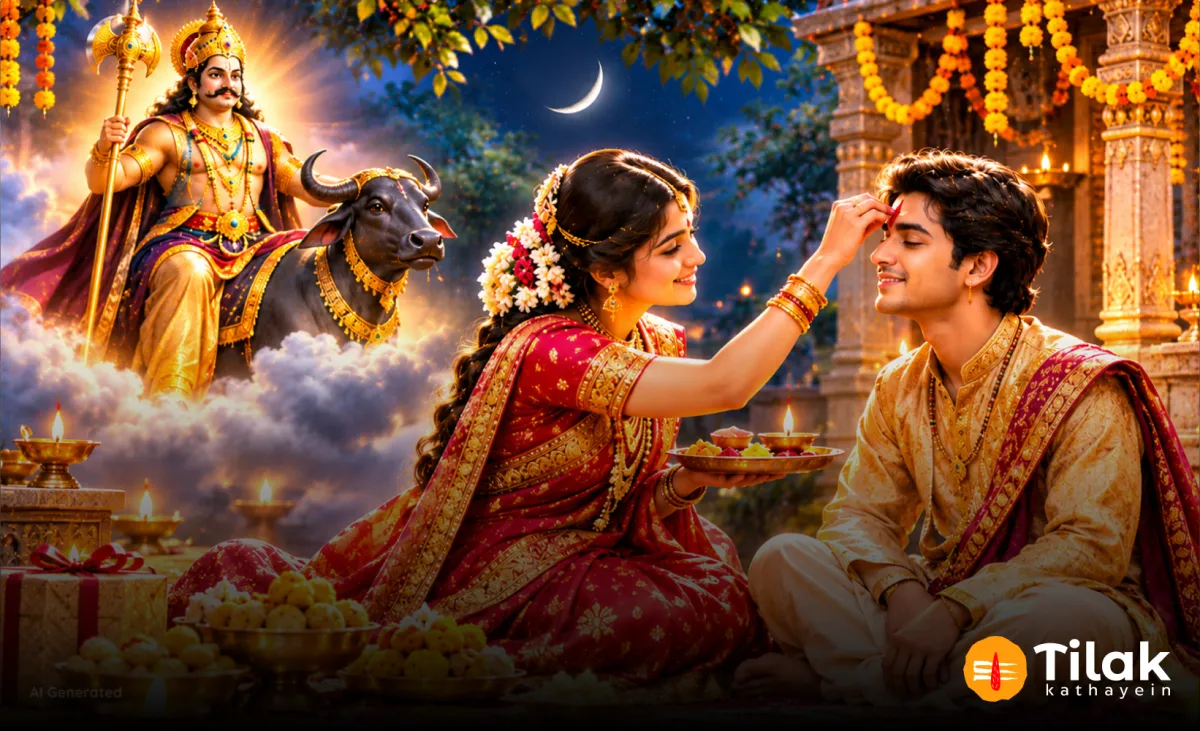
While on Raksha Bandhan, a brother promises to protect his sister, on Bhai Dooj, the sister, through her penance, prayers, and heartfelt devotion, resolves for her brother's long life, excellent health, and protection from untimely death. The Padma Purana and Skanda Purana describe consuming food prepared by the sister at her home and applying tilak on this day as a means to attain freedom from the fear of Dharmaraj Yamraj himself.
"Kartikasyaasite pakshe dwitiyaayaam yamo yamunaamagaat.
Tatra bhukwaa yamah saardham bhaginyaa modate chiram॥"
(Meaning: On the second day of the waxing moon in Kartik, Yamraj went to his sister Yamuna's house. There, after eating with his sister, Yamraj rejoiced for a long time.)
The Sacred Story from Skanda Purana: Yamraj, Yamuna Ji, and the Boon of Immortality
According to the scriptures, two children were born to Goddess Surya's wife Chhaya—a son named Yamraj and a daughter named Yamuna. Both brother and sister shared immense affection from childhood. Later, Yamraj was assigned the responsibility of accounting for the deeds of beings and the duty of death, due to which he became extremely busy with his work.
1. Sister Yamuna's Longing and Invitation
Yamuna Ji constantly longed to meet her brother Yamraj. She repeatedly sent messages inviting Yamraj to her home for a meal, but due to his excessive workload, Yamraj could not go.
2. The Sacred Union on Kartik Shukla Dwitiya
On the second day of the waxing moon in the month of Kartik, Yamraj thought that he takes the lives of all beings in the world, so no one invites him to their home with love. Only his sister Yamuna remembers him affectionately. Yamraj released all the prisoners and souls in Yamaloka for that day and proceeded directly to the banks of the Yamuna.
3. Yamuna Ji's Welcome and Yamraj's Boon
Seeing her brother suddenly at the door, Yamuna Ji's heart filled with joy. She welcomed Yamraj after bathing him, applied a divine tilak on his forehead, and honored him with various delicious dishes. Satisfied, Yamraj, with a cheerful heart, said—"O virtuous one! I am extremely pleased with your devotion and hospitality. Ask for any boon you desire."
Yamuna Ji humbly said—"O brother! If you are pleased with me, grant me this boon: that any brother who visits his sister's home on this day and lovingly partakes of the meal prepared by her hands and receives tilak from her, shall never be troubled by untimely death or the torments of Yamaloka."
Yamraj granted the boon by saying 'Tathastu' (So be it) and returned to Yamaloka after gifting clothes and ornaments. From then on, the tradition of celebrating this day as 'Yama Dwitiya' and 'Bhai Dooj' began.
The Episode of Lord Shri Krishna and Subhadra: Welcome after the Slaying of Narakasura
Another very important story related to Bhai Dooj is associated with Lord Shri Krishna and his beloved sister Subhadra:
- Return to Dwarka after slaying Narakasura: When Lord Shri Krishna slew the wicked demon Narakasura and liberated 16,100 maidens, he went to meet his sister Subhadra on the second day of the waxing moon in Kartik.
- Aarti and Victory Tilak: Upon her brother's return from his victorious campaign, sister Subhadra performed his aarti with lamps, applied a victory tilak on his forehead, showered him with flowers, and offered him sweets.
- It is believed that after this affectionate welcome by Subhadra, the custom of sisters applying tilak to their brothers and performing aarti with lamps for their well-being became established in the Sanatan society.
The Correct Classical Method and Rules for Applying Tilak (Step-by-Step)
The ritual of applying tilak on Bhai Dooj is not just a formality but a classical Vedic protection ritual. Perform it as follows:
- Determining the Direction: Seat the brother on a wooden plank (chowki). Ensure that the brother's face is towards the North or Northeast (Ishaan Kon) direction, and the sister's face is towards the East.
- Drawing the Chowk: Draw a beautiful chowk below the plank using rice flour or geru (red ochre).
- Offering the Tilak: The sister should apply tilak of roli, sandalwood, and akshat (unbroken rice grains) on the brother's forehead using her ring finger.
- Kalava and Coconut (Dry): Tie a Raksha Sutra (kalava) on the brother's wrist and give him a dry coconut (gola) in his hand. Dry coconut is considered a symbol of long life and prosperity.
- Aarti and Lamp Observation: Light a ghee lamp in a brass plate and perform aarti for the brother, starting from his right side, to remove all his negative energies.
- Offering Food: After the tilak, the sister should serve pure, sattvic food prepared by her own hands (kheer, poori, and the brother's favorite dish). Eating food at one's own home on this day is considered forbidden; one should dine only at the sister's home.
Mathura Vishram Ghat: The Secret of the Sacred Yamuna Bath for Brothers and Sisters
At Vishram Ghat on the banks of the Yamuna in Mathura, Uttar Pradesh, a very wondrous and grand fair is held on the day of Bhai Dooj:
- Collective Bath Holding Hands: On this sacred day, millions of brothers and sisters from across the country gather in Mathura and take a dip in the holy Yamuna River, holding each other's hands.
- Belief of Liberation from Yamaloka: According to the Skanda Purana, brothers and sisters who take a Yamuna bath together at Mathura's Vishram Ghat on Yama Dwitiya are freed from the fear of life and death and are not subject to Yamraj's punishment.
Bhai Dooj and Yama Dwitiya: At a Glance (Quick Summary Table)
| Description | Scriptural and Authentic Rules |
|---|---|
| Name of the Festival | Bhai Dooj, Yama Dwitiya, Bhratri Dwitiya, Bhai Teeka |
| Date and Lunar Phase | Month of Kartik, Second day of the waxing moon (Shukla Paksha Dwitiya Tithi) |
| Main Deities | Dharmaraj Yamraj, Yamuna Ji, Lord Shri Krishna, and Chitragupta Ji |
| Direction for Brother to Sit | North or Northeast (Ishaan Kon) |
| Main Symbolic Offerings | Dry Coconut (Gola), Kalava, and Sweets |
| Mandatory Religious Rule | To go to the sister's house and partake in the meal (abstaining from eating at one's own home) |
| Primary Benefits | Liberation from untimely death, long life, family harmony, and eradication of the fear of Yama |
Frequently Asked Questions (FAQs)
1. Why should a brother eat at his sister's house on Bhai Dooj?
According to the scriptures, Yamraj himself went to his sister Yamuna's house and ate. It is believed that the brother who goes to his sister's house on this day and eats the food prepared by her hands increases his lifespan and overcomes the fear of Yamadutas.
2. What should one do if they do not have a biological sister?
If one does not have a biological sister, they can get tilak applied by a cousin sister (paternal aunt's daughter, maternal uncle's daughter, paternal uncle's daughter, or maternal aunt's daughter). If this is also not possible, one can meditate on a cow, a sacred river (Yamuna or Ganga), or Mother Tulsi while seated, and then partake in a meal.
3. What is the significance of offering a dry coconut (gola) on Bhai Dooj?
Dry coconut is considered a symbol of sattvic nature, firmness, and immortality. The coconut given by the sister absorbs the brother's troubles and protects him.
4. Is Yamraj worshipped on Bhai Dooj?
Yes, on this day, special worship and lamp offerings are made to Yamraj and his scribe, Chitragupta Ji. Businessmen also perform the worship of their new account books and pens on this day.
Conclusion: The Sacred Thread of Relationships and the Quelling of Yama's Fear
The great festival of Bhai Dooj is not merely a family celebration of distributing sweets and applying tilak, but it symbolizes that noble tradition of Sanatan culture where the power of heartfelt relationships is considered so great that it can alter the laws of time and even Yamraj.
A sister's pure love and a brother's protective resolve provide society with order, affection, and spiritual energy. On this sacred occasion, respect your sisters, visit their homes to share the sweetness of affection, and become recipients of Dharmaraj Yamraj's sacred boon.
"Yamasvarnamaste'stu yamune lokapujite.
Varadaa bhava me nityam Suryaputri namo'stu te॥"
(O Yamuna Ji, worshipped by the world, daughter of Surya, and sister of Yamraj! I bow to you repeatedly. May you always grant us the boon of long life, health, and fearlessness.)🚩 Jai Dharmaraj Yamraj! Jai Yamuna Maiya! Happy Bhai Dooj! 🌸🪔🙏
Read Also (The Great Festival of Diwali & Related Mythological Stories):
- The Secret of Govardhan Puja and Annakut: The subjugation of Indra's ego, the 56-dish Annakut offering, and the significance of the 21 km Giriraj parikrama.
- The Episode of Mother Lakshmi and the Owl on Diwali: The deep spiritual secret of balancing a restless mind, the darkness of ignorance, and wealth with wisdom.
- Why is Yama's Lamp Lit on Dhanteras? The classical method, mantra, and sacred story from Skanda Purana for the four-faced Yama lamp to attain freedom from the fear of untimely death.
- Narak Chaturdashi and the Secret of 14 Lamps: The slaying of Narakasura, the ritualistic oil bath before sunrise, and the classical method of Yama Tarpan.
Today's Panchang 4 November 2026
For auspicious times, choghadiya, horoscope and planetary positions
Related Articles
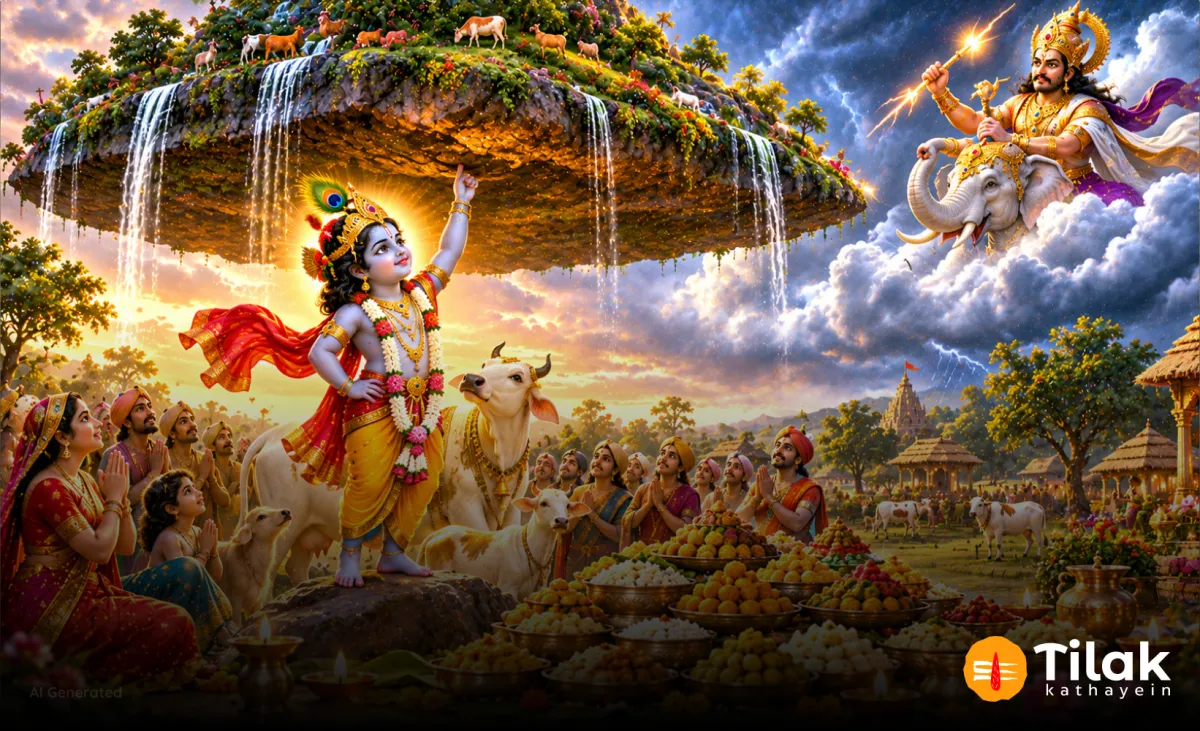
Govardhan Puja 2026: Annakut Bhog, Puja Vidhi & Indra Man-Mardan Katha
कार्तिक मास के शुक्ल पक्ष की प्रतिपदा तिथि को 'गोवर्धन पूजा' एवं 'अन्नकूट महोत्सव' मनाया जाता है। श्रीमद्भागवत महापुराण के अनुसार, द्वापर युग में भगवान श्रीकृष्ण ने देवराज इंद्र के मिथ्या अहंकार का मान-मर्दन करने और ब्रजवासियों को प्रकृति (पर्वत, वृक्ष, गाय एवं जल) की प्रत्यक्ष पूजा की ओर उन्मुख करने के लिए अपनी कनिष्ठिका (छोटी) उंगली पर विशाल गोवर्धन पर्वत को 7 दिनों तक उठाए रखा था। इस पावन अवसर पर घर के आंगन में गाय के गोबर से गिरिराज गोवर्धन की आकृति बनाकर पूजा की जाती है और भगवान को विविध प्रकार के अन्न, शाक व मिष्ठान्न से युक्त 'अन्नकूट' व '56 भोग' अर्पित किए जाते हैं।
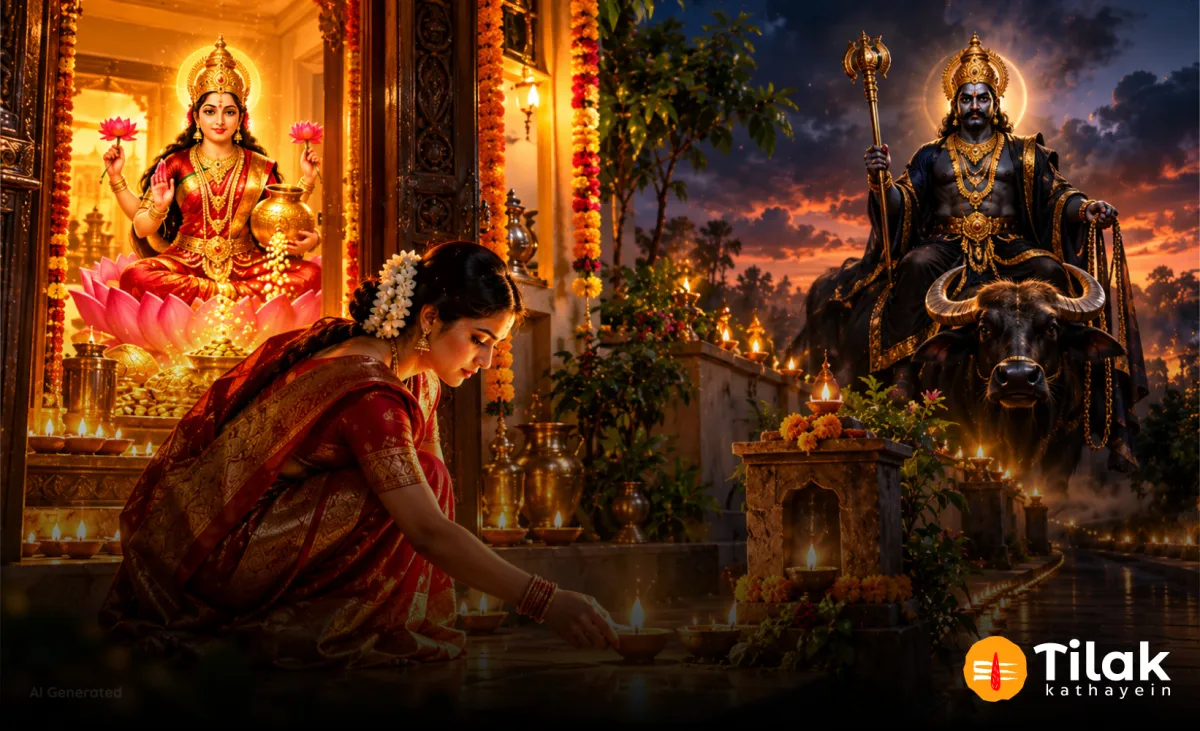
Why is Yama's lamp lit on Dhanteras? Know the correct method and secrets
कार्तिक मास के कृष्ण पक्ष की त्रयोदशी (धनतेरस) की शाम को दक्षिण दिशा में मृत्यु के देवता यमराज के निमित्त जो विशेष दीपक प्रज्वलित किया जाता है, उसे 'यमदीप' (यम का दीया) कहते हैं। स्कंद पुराण और पद्म पुराण के अनुसार, धनतेरस के दिन यमराज के निमित्त चार मुखी दीपदान करने से परिवार के सदस्यों को अकाल मृत्यु, दुर्घटना और यम यातनाओं के भय से मुक्ति मिलती है। यह दीपक घर के मुख्य द्वार के बाहर दक्षिण दिशा की ओर मुख करके अन्न की ढेरी पर रखा जाता है।
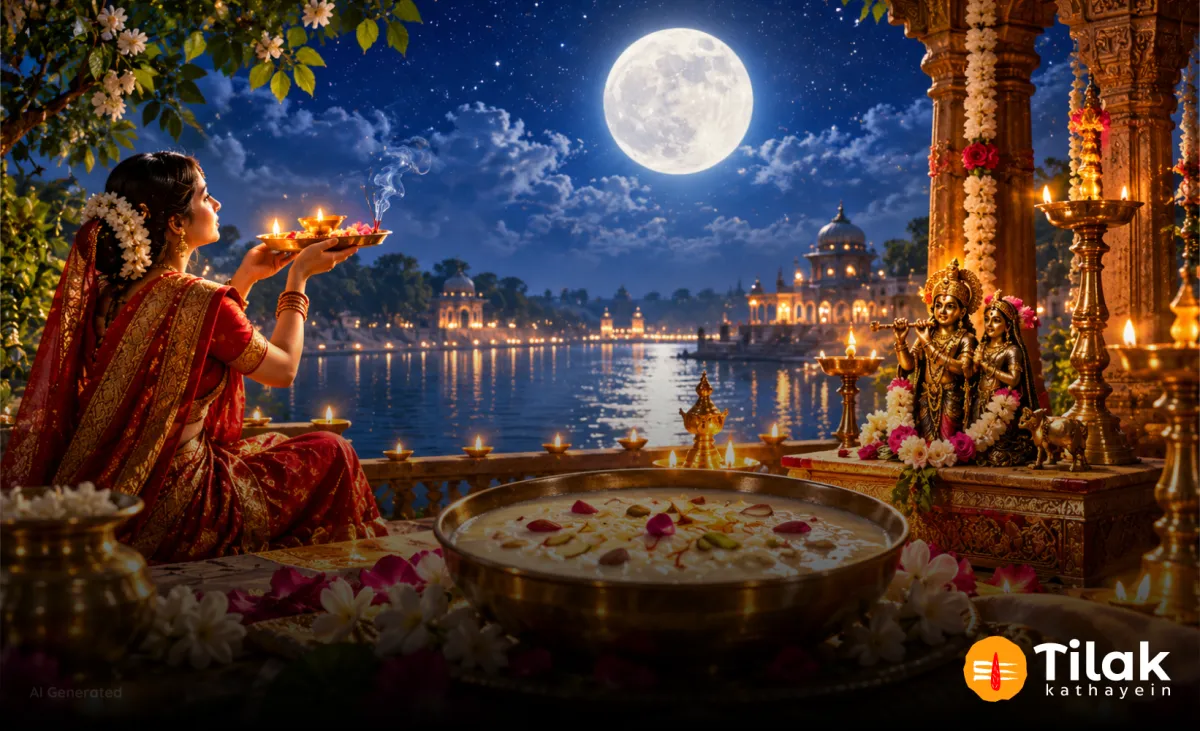
Sharad Purnima: Time for Kheer, Puja Vidhi & Mythological Story
हिन्दू पंचांग के अनुसार आश्विन शुक्ल पूर्णिमा को 'शरद पूर्णिमा' या 'शरद पूनम' (कोजागरी पूर्णिमा) कहा जाता है। मान्यता है कि इस पावन रात्रि को चंद्रमा पृथ्वी के सर्वाधिक निकट होता है और अपनी संपूर्ण 16 कलाओं से अमृत की किरणें बरसाता है। इस रात खुले आकाश के नीचे गाय के दूध और चावल से बनी खीर (गुजरात में दूध-पौंआ) रखने की परंपरा है। मध्यरात्रि में धन की देवी माता लक्ष्मी "को जागर्ति" (कौन जाग रहा है?) पूछते हुए पृथ्वी पर विचरण करती हैं और जागरण करने वाले भक्तों को अखंड ऐश्वर्य का वरदान देती हैं।