
Why did Lakshman not sleep for 14 years? Know the secret of the Goddess of Sleep
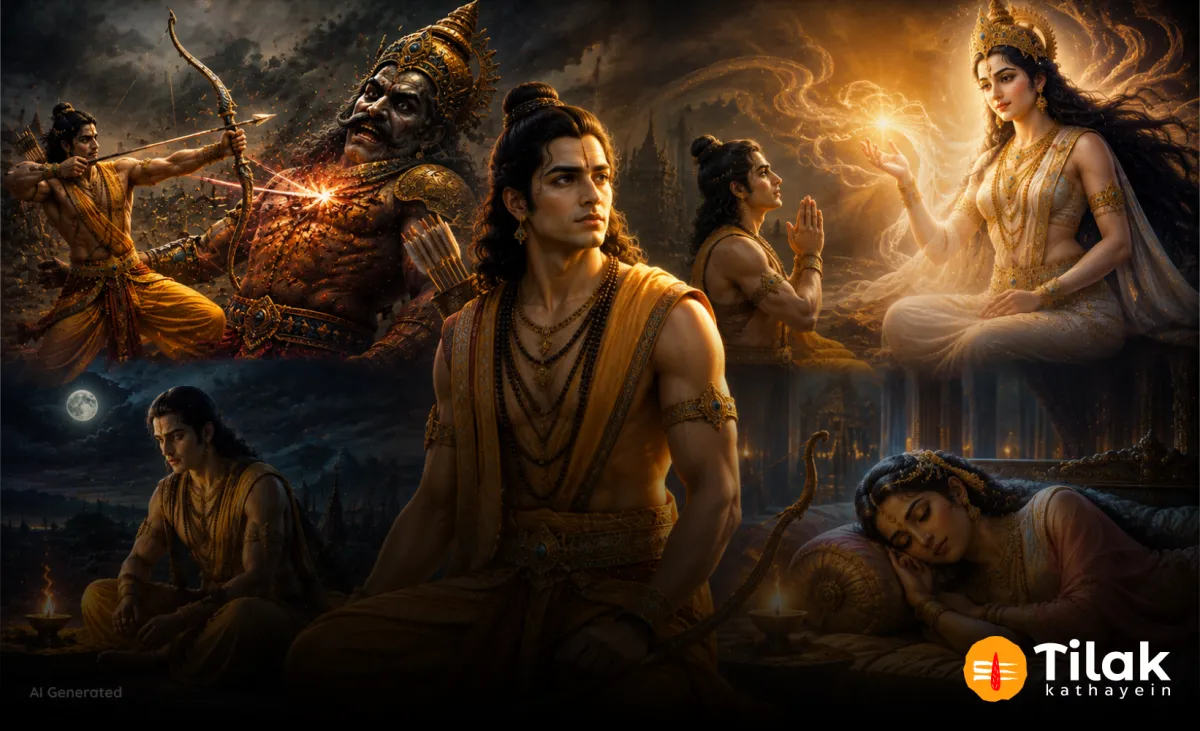
Why Did Lakshman Not Sleep for 14 Years? Know the Secret of the Goddess of Sleep | Amazing Story from Ramayana
In the Ramayana, the story of Lord Rama's exile is as amazing as the emotional story of his younger brother Lakshman's sacrifice. When Rama was ordered to go into exile for 14 years, Lakshman also decided to go with him.
But do you know that according to a famous folk tale, Lakshman renounced sleep for the entire 14 years?
It is said that during the exile, Lakshman remained engaged day and night in the service and protection of Rama and Mother Sita. For this, he asked for a special boon from the Goddess of Sleep (Nidra Devi).
In this story, the sacrifice of his wife Urmila is equally important. It is said that Urmila took the burden of Lakshman's sleep upon herself and slept for 14 years.
But is this episode found in the original Valmiki Ramayana? Let's know in detail about the famous story of Lakshman not sleeping for 14 years, the secret of the Goddess of Sleep, and Urmila's sacrifice.
Why Did Lakshman Decide to Go into Exile with Rama?
When Rama had to go into exile for 14 years due to Kaikeyi's boon, Lakshman also decided to go with him.
Rama tried to explain to him that life in the forest would be extremely difficult. There would be no facilities like a royal palace, and they would have to face many kinds of dangers.
But Lakshman was not ready to back down from serving his elder brother.
For him, Rama was not just an elder brother, but an ideal, a master, and the foundation of his life.
Lakshman decided that he would serve and protect Rama and Mother Sita in the forest.
What Was Lakshman's Biggest Responsibility in Exile?
In the forest, Lakshman completely dedicated himself to the service of Rama and Mother Sita.
He would build huts for them, arrange for food and necessary items, and protect them from the dangers of the forest.
Even at night, Lakshman would keep watch so that Rama and Sita could rest safely.
This was the situation that was later linked in popular tradition to the story of Lakshman's renunciation of sleep.
Who Was the Goddess of Sleep?
In Hindu religious tradition, sleep is not only seen as a natural state that relieves fatigue but also as a divine form.
In the popular story associated with Lakshman, the Goddess of Sleep appears before him.
According to the story, the Goddess of Sleep tells Lakshman that sleep is essential for every living being, and one cannot remain awake for a long time without it.
But Lakshman expressed his desire to remain free from sleep for 14 years due to his service and resolve.
What Boon Did Lakshman Ask from the Goddess of Sleep?
According to the popular story, Lakshman prayed to the Goddess of Sleep to keep him free from sleep throughout the exile.
The Goddess of Sleep said that according to the laws of nature, it is not possible for a person to remain awake continuously for so many years.
Then Lakshman took the name of his wife Urmila.
According to the story, Lakshman said that if Urmila accepted the sleep on his behalf, he could continue to serve Rama and Sita while remaining awake.
How Did Urmila Take on Lakshman's Sleep?
According to the famous folk tale, the Goddess of Sleep went to Urmila and asked her if she would accept the sleep meant for Lakshman.
Urmila accepted this sacrifice without any complaint.
It is said that Urmila completed Lakshman's share of sleep by sleeping for 14 years, while Lakshman remained awake in the forest.
Thus, on one hand, Lakshman was engaged day and night in the service of Rama and Sita, while on the other hand, Urmila made a sacrifice while staying in Ayodhya, which is often discussed very little in the popular tales of the Ramayana.
Why Is Urmila's Sacrifice Considered Greater Than Lakshman's?
Lakshman's sacrifice was visible. He was with Rama in the forest, facing difficult circumstances, and serving him.
But Urmila's sacrifice was silent and invisible.
She understood her husband's duty and his obligation towards his brother, rather than stopping him from going to the forest.
According to the folk tale, she helped fulfill his resolve by taking on Lakshman's sleep.
For this reason, in modern storytelling, Urmila is often called the "embodiment of silent sacrifice".
Did Lakshman Really Not Sleep for 14 Years?
It is important to understand a significant scholarly distinction here.
It is not clearly stated in the original text of the Valmiki Ramayana that Lakshman did not sleep at all for the entire 14 years, or that the Goddess of Sleep gave his sleep to Urmila.
This story became very famous in later popular Ramayana traditions and folk tales.
The Valmiki Ramayana does describe Lakshman going to the forest with Rama, serving him, and living a difficult life, but the detailed episode of "the Goddess of Sleep and Urmila taking 14 years of sleep" is not found in the original Valmiki Ramayana in that form.
Therefore, it is more accurate to present this story as a popular religious tradition.
Why Did Lakshman Resolve to Stay Awake for 14 Years?
According to the popular story, Lakshman's aim was not to prove himself great.
His sole objective was that there should be no lapse in the service and protection of Rama and Mother Sita.
He had the thought in his mind, "If I sleep, who will protect Rama and Sita?"
This spirit of service is considered one of the greatest characteristics of Lakshman's character.
The Biggest Secret of the Story of Lakshman and the Goddess of Sleep
The most interesting part of this story is that Lakshman considered sleep an obstacle for himself, while Urmila made that very sleep the medium of her sacrifice.
That is, two different types of sacrifices are seen in the same event.
Lakshman's Sacrifice — Service and Vigilance.
Urmila's Sacrifice — Silence and Waiting.
This is why this story is not just about Lakshman, but also a story of Urmila's invisible contribution.
Did Urmila Really Sleep for 14 Years?
This is also part of the same popular folk tale.
Some stories state that Urmila took Lakshman's sleep upon herself and slept for 14 years.
However, there is no clear description in the Valmiki Ramayana of her sleeping continuously for 14 years.
Therefore, it should be understood as a story from popular tradition rather than a historical fact or a direct account from the original Ramayana.
How is the Story of Lakshman's 14 Years of Vigilance Connected to the Slaying of Meghnad?
In the popular traditions of the Ramayana, Lakshman's long period of wakefulness is also linked to his slaying of Meghnad.
During the war in Lanka, Meghnad was an extremely powerful warrior. Defeating him was a major challenge for Lord Rama's army.
Finally, Lakshman confronted Meghnad and slew him.
Some folk tales say that Meghnad had a boon that only a person who had renounced sleep for a long time could slay him.
For this reason, the story of Lakshman not sleeping for 14 years is linked to the slaying of Meghnad.
Although this boon and its specific connection are also found in various later folk traditions and should not be considered a clear description from the original text of the Valmiki Ramayana.
The Importance of Urmila in Lakshman's Life
In the main narrative of the Ramayana, Urmila's role appears relatively less, but a significant sense of sacrifice and patience is seen in her character.
When Lakshman decided to go to the forest, Urmila also respected her husband's decision.
She faced the circumstances of the family and the royal palace while staying in Ayodhya.
For this reason, Urmila's character conveys the message that not all sacrifices are visible on the battlefield or in the forest; some sacrifices are made silently within the four walls of the home.
5 Major Lessons from the Story of Lakshman and Urmila
1. True Service Has No Selfishness
Lakshman placed Rama's service above his personal comfort. His story depicts a spirit of dedication and duty.
2. Not All Sacrifices Are Visible
Urmila's story reminds us that the value of a person's contribution should not be judged solely by their visible actions.
3. Understanding and Support Are Essential in Relationships
In the popular story of Lakshman and Urmila, both are seen understanding each other's duties and circumstances.
4. Duty Can Be Difficult
Lakshman's exile is an example of leaving royal life and serving in difficult conditions.
5. Dedication Makes a Person Great
Lakshman is identified not only by his warrior persona but also by his incredible dedication to Rama.
Lakshman's 14 Years of Vigilance Story at a Glance
| Episode | Description According to Popular Story |
|---|---|
| Exile | Lakshman also went to the forest with Rama for 14 years |
| Lakshman's Resolve | To serve and protect Rama and Mother Sita |
| Goddess of Sleep | Dialogue with Lakshman regarding renunciation of sleep |
| Urmila | Wife who accepted sleep on behalf of Lakshman |
| Vigilance | In the popular story, Lakshman did not sleep for 14 years |
| Slaying of Meghnad | Linked to Lakshman's vigilance in later folk tales |
Frequently Asked Questions (FAQs)
1. Why did Lakshman not sleep for 14 years?
According to the popular Ramayana story, Lakshman renounced sleep for the service and protection of Rama and Mother Sita. The story of the Goddess of Sleep states that his wife Urmila took his sleep upon herself.
2. Is the story of Lakshman not sleeping for 14 years in the Valmiki Ramayana?
No, in this form, this story is not clearly found in the original text of the Valmiki Ramayana. It became famous in later popular Ramayana traditions and folk tales.
3. Who was the Goddess of Sleep?
In the popular story, the Goddess of Sleep appears before Lakshman as the goddess of sleep and dialogues with him about the natural law of sleep.
4. Did Urmila sleep for 14 years?
This is part of the popular folk tale. According to it, Urmila took Lakshman's sleep upon herself. However, there is no clear description in the Valmiki Ramayana of her sleeping continuously for 14 years.
5. Why did Lakshman renounce sleep?
According to the popular story, his aim was to continuously serve and protect Rama and Mother Sita.
6. Was Lakshman's wakefulness related to the slaying of Meghnad?
In some later folk tales, Lakshman's long vigil is linked to the slaying of Meghnad due to a special boon granted to him. This description is not clear in the original text of the Valmiki Ramayana in the same form.
7. Who was Lakshman's wife?
Lakshman's wife's name was Urmila. She was the daughter of King Janak and the sister of Mother Sita.
8. What is the greatest message of Lakshman's sacrifice?
Lakshman's story conveys the message of service, duty, dedication, and loyalty to family. On the other hand, the popular story of Urmila teaches us the importance of silent sacrifice and patience.
Conclusion
The story of Lakshman not sleeping for 14 years is one of the most popular and inspiring folk tales of the Ramayana. According to it, Lakshman renounced his sleep for the service and protection of Rama and Mother Sita and obtained a special boon from the Goddess of Sleep.
In this story, the sacrifice of his wife Urmila is equally important. According to popular tradition, Urmila took Lakshman's sleep upon herself, thus helping Lakshman to serve Rama continuously by staying awake.
However, it is important to remember from a scholarly perspective that the detailed episode of Lakshman not sleeping at all for 14 years and Urmila accepting his sleep is not clearly found in the original text of the Valmiki Ramayana. This story became more famous in later folk traditions.
Nevertheless, its sentiment is extremely beautiful—Lakshman's vigilance teaches us service and duty, while Urmila's silent sacrifice reminds us that not all great contributions are visible.
This is why the story of Lakshman and Urmila is still counted among the most emotional and inspiring tales of the Ramayana.
Read Also
- What did Urmila do during Lakshman's exile? Know the unheard story
- How did the war between Lakshman and Meghnad happen?
- The complete story of Lakshman being struck by the Shakti arrow
- Why was Lord Rama exiled for 14 years?
- How special was the relationship between Mother Sita and Urmila?
- 10 unheard and mysterious stories of Ramayana
Today's Panchang 24 September 2026
For auspicious times, choghadiya, horoscope and planetary positions
Related Articles
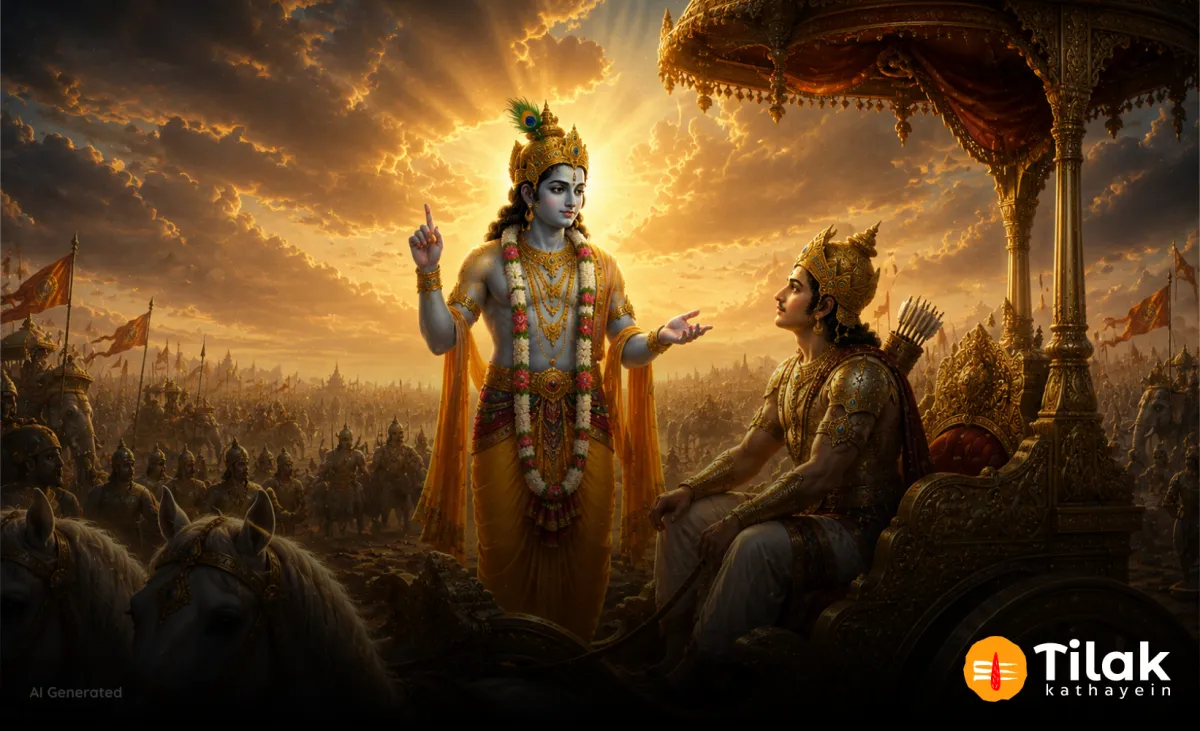
7 Verses from the Bhagavad Gita That Teach Self-Confidence and Self-Reliance
**भगवद्गीता** केवल आध्यात्मिक ज्ञान का ग्रंथ नहीं, बल्कि जीवन की कठिन परिस्थितियों में सही मार्ग दिखाने वाला दिव्य संदेश है। कुरुक्षेत्र में भगवान श्रीकृष्ण ने अर्जुन को ऐसे अनेक उपदेश दिए, जो आज भी आत्मविश्वास, कर्म, धैर्य और स्वयं पर विश्वास रखने की प्रेरणा देते हैं। इस लेख में जानें **भगवद्गीता के 7 शक्तिशाली श्लोक**, उनके सरल हिंदी अर्थ और जीवन में मिलने वाली ऐसी सीखें, जो कठिन समय में अपने निर्णय और क्षमता पर भरोसा करना सिखाती हैं।

Why is Lord Ganesha Called 'Pratham Pujya'? Know the Complete Mythological Story and Mystery
हिंदू धर्म में किसी भी शुभ कार्य या पूजा की शुरुआत अक्सर **भगवान गणेश के स्मरण** से की जाती है। इसके पीछे गणेश जी और उनके भाई कार्तिकेय से जुड़ी एक प्रसिद्ध पौराणिक कथा है, जिसमें दोनों के बीच संसार की परिक्रमा करने की प्रतियोगिता हुई थी। गणेश जी ने बुद्धि और माता-पिता के प्रति अपनी श्रद्धा का परिचय देते हुए शिव-पार्वती की परिक्रमा की और विजयी हुए। प्रसन्न होकर उन्हें प्रथम पूज्य होने का वरदान मिला। इस लेख में जानें गणेश जी की प्रथम पूजा का कारण, पूरी पौराणिक कथा और इसके पीछे छिपा गहरा आध्यात्मिक संदेश।
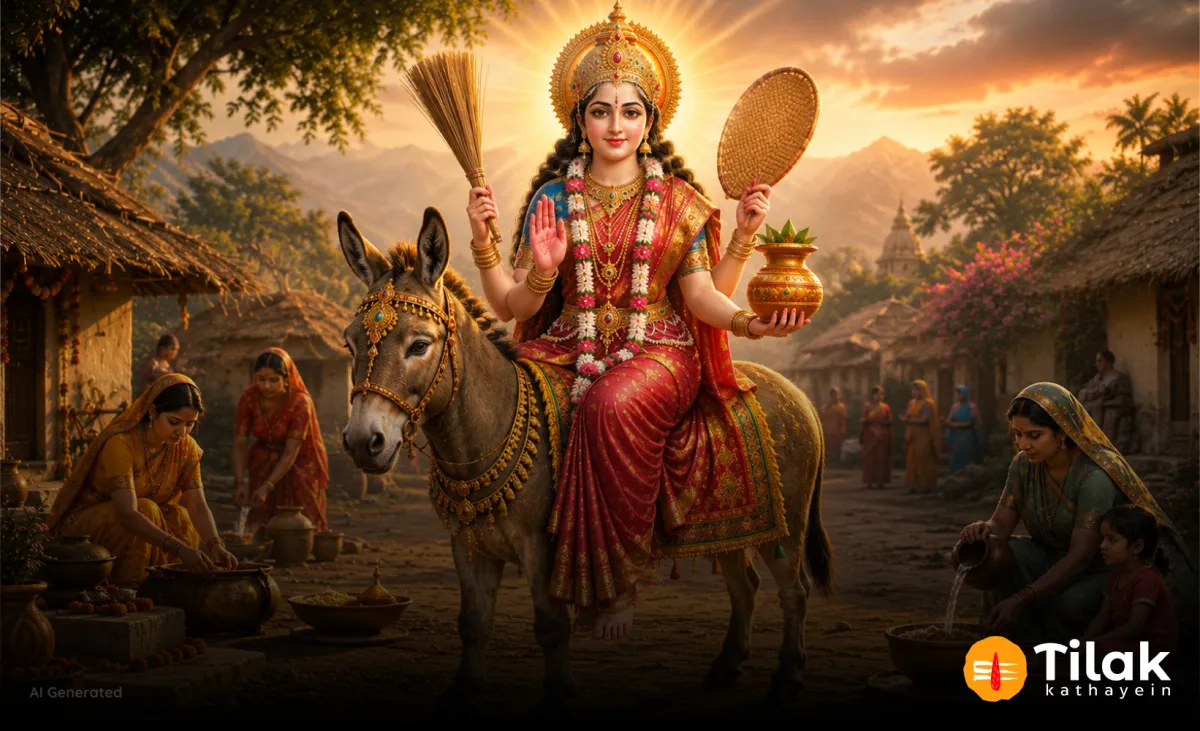
Shitala Satam 2026: Date, Muhurat & Guide
सनातन धर्म में शीतला सातम (शीतला सप्तमी) आरोग्य, स्वच्छता और संक्रामक रोगों से रक्षा का पावन लोकपर्व है, जो मुख्य रूप से गुजरात और पश्चिमी भारत में श्रावण मास के कृष्ण पक्ष की सप्तमी तिथि को मनाया जाता है। वर्ष 2026 में शीतला सातम 3 सितंबर 2026 (गुरुवार) को मनाई जाएगी, जबकि इससे एक दिन पूर्व 2 सितंबर 2026 को रांधण छठ पर भोजन पकाया जाएगा। इस दिन घर में अग्नि या चूल्हा जलाना वर्जित होता है और माता शीतला को एक दिन पूर्व बना ठंडा (बासोड़ा) भोजन अर्पित कर प्रसाद रूप में ग्रहण किया जाता है।
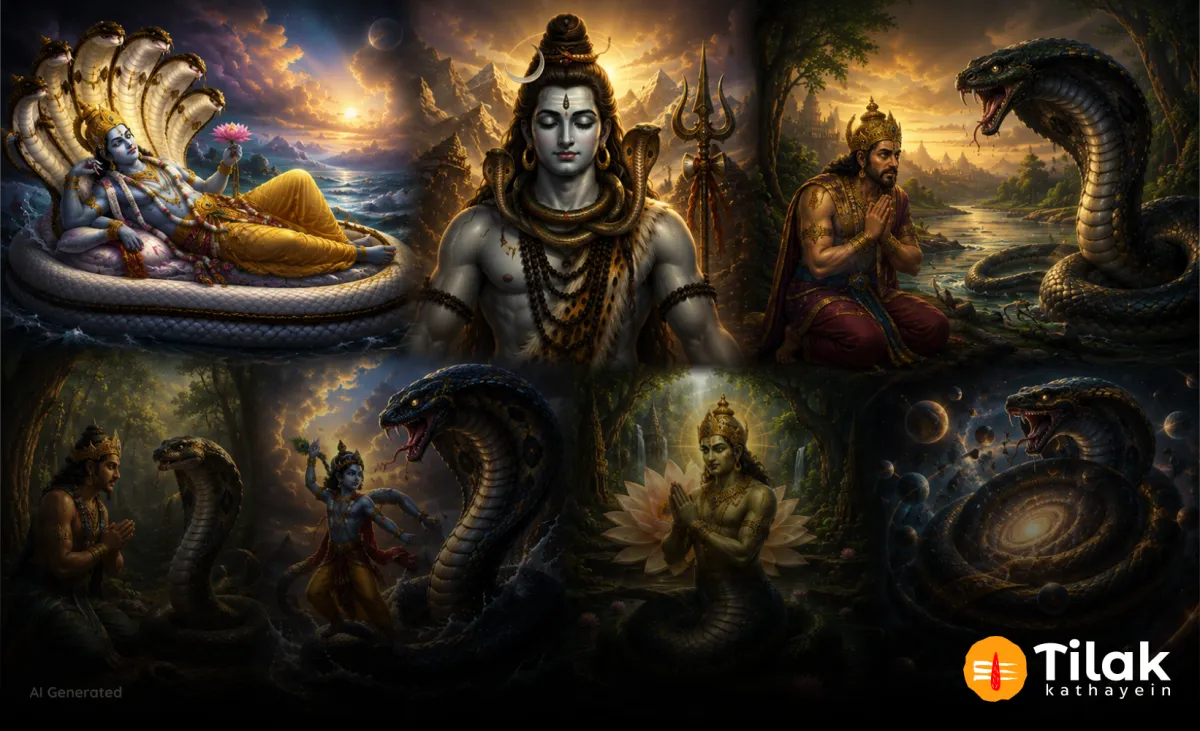
7 Powerful Nagas and Their Divine Connections | Mysterious Mythological Tales of Serpent Deities
हिंदू धर्म और पुराणों में नागों को केवल सर्प नहीं, बल्कि शक्तिशाली दिव्य प्राणियों के रूप में वर्णित किया गया है। **शेषनाग, वासुकी, तक्षक, कर्कोटक और अन्य प्रमुख नागों** का संबंध भगवान विष्णु, भगवान शिव, समुद्र मंथन और अनेक पौराणिक घटनाओं से जुड़ा है। प्रत्येक नाग की अपनी अलग शक्ति, कथा और धार्मिक महत्व है। इस लेख में जानें **7 शक्तिशाली नागों** की अद्भुत कहानियां, उनके दिव्य संबंध और हिंदू धर्म में उनके विशेष स्थान से जुड़े रोचक पौराणिक रहस्य।
Nag Panchami 2026: Auspicious Timing, Puja Method, and Mythological Story
नाग पंचमी 2026 हिंदू धर्म का महत्वपूर्ण पर्व है, जिसमें नाग देवता की पूजा कर सुख-समृद्धि, परिवार की रक्षा और भगवान शिव की कृपा की कामना की जाती है। इस दिन पूजा में क्या अर्पित करना चाहिए और किन चीजों से बचना चाहिए, इसे लेकर कई धार्मिक मान्यताएं हैं। इस लेख में जानें नाग पंचमी की पूजा विधि, पूजा सामग्री, 7 जरूरी नियम, क्या करें और क्या न करें, शुभ मुहूर्त और नाग देवता की पूजा का धार्मिक महत्व।
Shravan Somvar Vrat Katha: Puja Vidhi, Rules, Significance, Udyapan, and Complete Information
श्रावण सोमवार व्रत भगवान शिव को समर्पित पवित्र व्रत है। जानिए सावन सोमवार व्रत की कथा, पूजा विधि, नियम, महत्व, शिवलिंग अभिषेक, व्रत में क्या खाएं और उद्यापन की संपूर्ण विधि।