
Grishneshwar Jyotirlinga: Grishneshwar Temple Guide & Katha
📋 Table of Contents
- Grishneshwar Jyotirlinga: Introduction, Spiritual Significance & Quick Facts
- Mythological Story: The Unwavering Devotion of Ghushma, Revival of the Dead Son, and a Boon
- History of the Temple: Ancestors of Chhatrapati Shivaji Maharaj and Maharani Ahilyabai Holkar
- Red Basalt Stone Architecture: 5-Tiered Shikhara and Carved Nandi Mandap
- Sanctum Sanctorum, Self-Manifested East-Facing Jyotirlinga & Tradition of Touch Darshan
- Sacred Shivalay (Kumkum) Sarovar and the Significance of Pitru Tarpan
- 4 Major Nearby Attractions of Grishneshwar (Ellora Caves, Bhadra Maruti, etc.)
- Daily Darshan Timings, Aarti Details & Special Puja Arrangements
- Major Religious Festivals: Mahashivratri, Sawan Somwar & Tripurari Purnima
- Visitor Rules: Upper Cloth Removal Rule for Men, Dress Code & Security
- Grishneshwar Travel Guide: How to Reach by Train, Flight & Road?
- 1-Day Grishneshwar & Ellora Itinerary (Ideal Itinerary)
- Frequently Asked Questions (FAQs)
- Conclusion & Completion of the Twelve Jyotirlingas
Grishneshwar Jyotirlinga: Introduction and Spiritual Significance (Grishneshwar Overview)
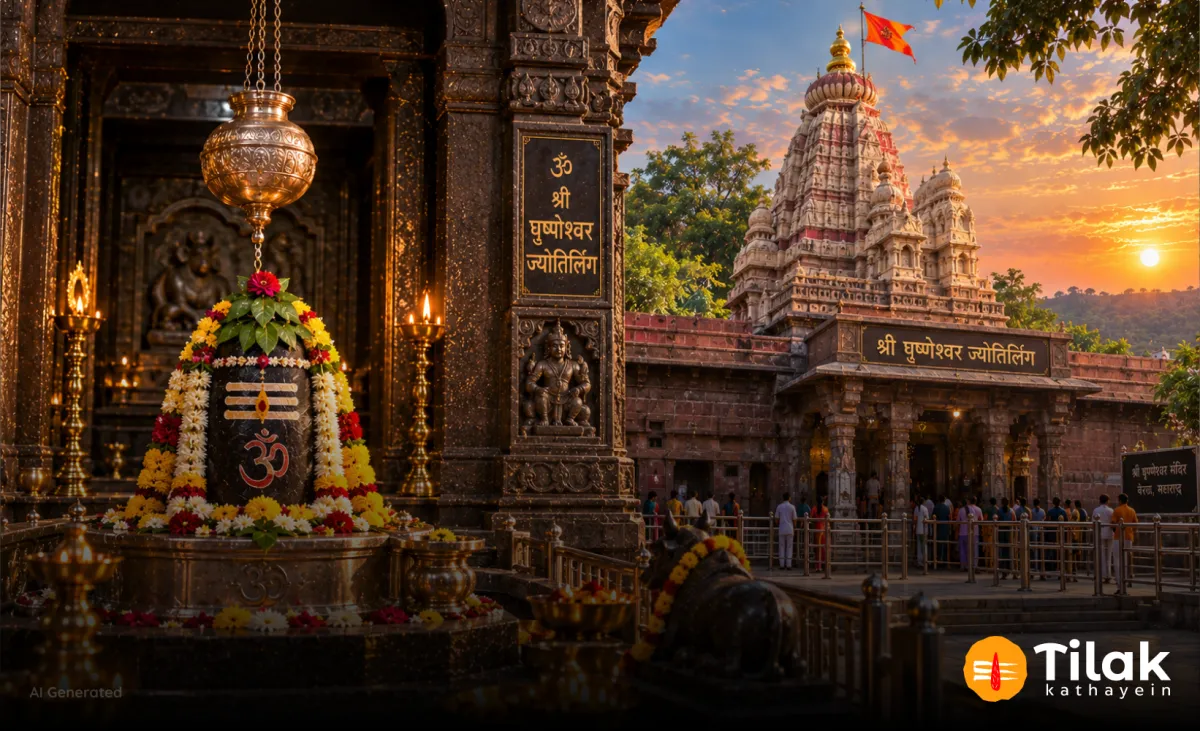
Located in the historic district of Maharashtra, Chhatrapati Sambhajinagar (formerly Aurangabad), near the UNESCO World Heritage Ellora Caves in the village of Verul, the Shri Grishneshwar Temple (also known as Ghushmeshwar Mahadev) is a highly potent and benevolent pilgrimage site of Sanatan Dharma. It is considered to be the last, i.e., the 12th Jyotirlinga among the Twelve (Dwadash) Jyotirlingas of Lord Shiva.
In the Dwadash Jyotirlinga Stotram composed by Adi Shankaracharya, this holy abode is remembered as: "Himalaye tu Kedaram Ghushmesham cha Shivalaye". The sacred pilgrimage of the Dwadash Jyotirlingas, which begins with the first Jyotirlinga, Somnath in Saurashtra, is considered complete only after the darshan and worship of this 12th abode, Grishneshwar Mahadev.
Spiritual Belief: According to the Kotirudra Samhita of Shiva Purana, this Jyotirlinga is the embodiment of selfless devotion, forgiveness, and the boundless love of motherhood. It is believed that any devotee who sincerely performs Jalabhishek here is blessed with progeny (happiness of having children), freedom from family discord, and relief from all mental anxieties.
Grishneshwar Temple: At a Glance (Quick Facts)
| Detail | Key Information |
|---|---|
| Temple Name | Shri Grishneshwar Jyotirlinga Temple (Ghushmeshwar Mahadev) |
| Jyotirlinga Order | Last among the Dwadash Jyotirlingas (12th & Final Jyotirlinga) |
| Presiding Deity | Lord Shiva (Grishneshwar Mahadev) |
| Location & District | Verul, Chhatrapati Sambhajinagar (Aurangabad), Maharashtra, India |
| Nearest Heritage Site | Ellora Caves (Kailash Temple) – Just 1 km |
| Holy Sarovar | Shivalay Sarovar (Kumkum Vapi) |
| Architectural Style | Maratha-Nagar Stone Style (Built with Red Basalt Stone) |
| Current Temple Construction | 18th Century (by Punyashlok Maharani Ahilyabai Holkar) |
| Temple Opening Time | Daily from 5:30 AM to 9:30 PM |
| Entry Fee | Completely Free (Free Entry for All) |
Mythological Story: The Unwavering Devotion of Ghushma and the Boon of Lord Shiva
According to the Kotirudra Samhita of Shiva Purana, the story of the manifestation of Grishneshwar Jyotirlinga is an immortal saga of the selfless devotion, motherhood, and extraordinary forgiveness of the great Shiva devotee, Ghushma.
1. Background of Sudharma, Suddeha, and Ghushma
In ancient times, a learned Brahmin named Sudharma, well-versed in the Vedas and a tapasvi, lived with his wife 'Suddeha' near Devagiri (present-day Daulatabad). They had no children. Distraught by the sorrow of childlessness, Suddeha arranged for her husband to marry her younger sister, Ghushma. Ghushma had been a devout worshipper of Lord Shiva since childhood.
2. The Practice of Making 101 Parthiva Lingas Daily
Ghushma would wake up every day at Brahma Muhurta, make 101 Parthiva Lingas (lingas made of clay), perform their Shodashopachara Puja (sixteen-step worship) with utmost devotion, and then immerse these lingas in a nearby lake. Pleased by this arduous penance, the easily pleased Lord Shiva blessed Ghushma with a very beautiful and radiant son. The birth of the son brought immense joy to the household.
3. The Fire of Envy and the Murder of the Son
Time passed, and Ghushma's son got married. When Suddeha saw that Ghushma and her daughter-in-law were gaining respect throughout the family and society, the fire of envy and malice ignited in her heart. One night, while Ghushma's young son was asleep, Suddeha stealthily slit his throat, murdered him brutally, and threw the body into the same lake where Ghushma used to immerse the lingas.
The next morning, when the daughter-in-law saw blood on the bed, a cry of anguish erupted in the house. Sudharma also beat his chest and wept. However, Ghushma, engrossed in Lord Shiva, was not disturbed in the least. Not a single line of sorrow appeared on her face. She performed her daily ritual of making 101 Parthiva Lingas, worshipped them with meditation, and proceeded towards the lake for immersion.
4. Revival of the Dead Son and the Manifestation of Lord Shiva
As Ghushma was returning after immersing the lingas in the lake, a miraculous event occurred. Her dead son emerged from the lake, alive and smiling, and touched his mother's feet.
At that very moment, Lord Shiva appeared in His radiant form, holding the Trishul and Damaru. The Lord was extremely angry at Suddeha's heinous sin and was about to slay her with His Trishul. But Ghushma, the embodiment of compassion, immediately held onto the Lord's feet and said with folded hands—"O Merciful One! O Lord of the Three Worlds! My sister committed this sin out of ignorance. If you are pleased with me, please forgive my sister and grant her good sense."
Moved by Ghushma's profound forgiveness and high level of devotion, the Lord was overwhelmed. He said—"O Ghushma! I am extremely pleased with your selfless devotion and generosity. From now on, I shall reside here forever on the banks of this lake in the form of a Jyotirlinga, named after you."
This holy place came to be known as 'Ghushmeshwar' after Mother Ghushma, whom we worship today as 'Grishneshwar'.
History of the Temple: Ancestors of Chhatrapati Shivaji Maharaj and Ahilyabai Holkar
The history of the Grishneshwar pilgrimage is a unique confluence of the revival of Sanatan Dharma and the glorious history of the Maratha Empire:
1. Shrimant Maloji Raje Bhosale (Grandfather of Chhatrapati Shivaji Maharaj)
In the late 16th century, the Patil of Verul and the grandfather of Chhatrapati Shivaji Maharaj, Shrimant Maloji Raje Bhosale, was a devout devotee of Grishneshwar Mahadev. According to local tradition, he discovered a hidden treasure near this temple during excavation. Maloji Raje did not use that wealth for his personal gain; instead, he used it to extensively renovate the Grishneshwar temple, which had been damaged by invaders, and also constructed the large stone Shivalay Sarovar.
2. Reconstruction by Maharani Ahilyabai Holkar (18th Century)
During the Mughal era, the temple was again damaged during the time of Aurangzeb. Subsequently, in the 18th century, the pious ruler of Malwa, Punyashlok Maharani Ahilyabai Holkar, undertook the complete reconstruction of the Grishneshwar temple, similar to Kashi Vishwanath and Somnath. The magnificent and intricately carved red stone temple that we see today is the eternal legacy of Maharani Ahilyabai.
Red Basalt Stone Architecture: 5-Tiered Shikhara and Carved Nandi Mandap
Shri Grishneshwar Temple is a serene and wonderful example of medieval Maratha-Nagar stone architecture. The temple is built using local red and brown basalt stones found in the Deccan plateau.
- Magnificent 5-Tiered Stone Shikhara: The main shikhara of the temple rises in five tiered levels. The shikhara is finely carved, and a golden kalash (finial) and a fluttering flag are installed at its apex.
- Scriptural Carvings on Walls: The outer walls of the temple depict various divine plays of Lord Shiva, the Samudra Manthan (Churning of the Ocean), the Dashavataras (Ten Incarnations) of Lord Vishnu, idols of Lord Ganesha, Mother Parvati, and beautiful Apsaras, brought to life on the stones.
- Carved Nandi Mandap: At the main entrance of the Sabha Mandap (assembly hall), a stone mandap houses the majestic and radiant idol of Lord Shiva's vahana (vehicle), Nandi Maharaj, who is perpetually gazing towards the sanctum sanctorum.
- Sabha Mandap Supported by 24 Stone Pillars: The vast Sabha Mandap of the temple stands on 24 strong and finely carved stone pillars, a beautiful testament to ancient engineering.
Sanctum Sanctorum, Self-Manifested East-Facing Jyotirlinga & Tradition of Touch Darshan
The sanctum sanctorum of the Grishneshwar temple is located deep down, a few steps below the ground floor. As you descend the stairs and enter the sanctum, the divine energy and peace there directly touch the heart.
- East-Facing Self-Manifested Jyotirlinga: In the center of the sanctum, Lord Grishneshwar's self-manifested stone lingam is enshrined in a beautiful stone jalhari (base), facing the east.
- Privilege of Touching and Performing Jalabhishek with Your Own Hands: While entry into the sanctum is restricted in most major temples, a unique feature of Grishneshwar temple is that on normal days, all devotees are permitted to enter the sanctum, touch the lingam with their own hands, offer Ganga water, and perform Dudhabhishek (milk offering). (Adherence to the prescribed dress code is mandatory for this.)
💡 Traveler's Tip: If you wish to enter the sanctum and touch the lingam, arrive between 6:00 AM and 11:30 AM. Touch darshan is closed during the afternoon Mahapuja and the evening Aarti, and only face darshan is available from outside.
Sacred Shivalay (Kumkum) Sarovar and the Significance of Pitru Tarpan
Just 200 meters away from the temple lies a large and historic stone tank, known as 'Shivalay Sarovar'.
This is the same sacred lake where Mother Ghushma used to immerse 101 Parthiva Lingas daily, and from where her dead son was revived by the grace of Lord Shiva. In local folklore, it is also called 'Kumkum Vapi'. It is believed that sipping water from this sarovar cures skin ailments and calms the mind. Many devotees also perform Pindadan and Shraddha rituals here for the salvation of their ancestors.
Places to Visit Near Grishneshwar Temple
Devotees visiting Grishneshwar not only offer prayers at the temple but also visit these major historical and religious sites nearby:
1️⃣ Ellora Caves & Kailash Temple (Ellora Caves) – Distance: 1 km
- Significance: UNESCO World Heritage Site. It comprises a total of 34 major caves, representing a confluence of Hindu, Buddhist, and Jain religions.
- Kailash Temple (Cave No. 16): This is the world's only marvel that was carved not by joining bricks or stones, but by excavating a single massive rock from top to bottom (Single Monolithic Rock). Its architecture amazes even modern scientists.
- Timings & Tickets: Sunrise to Sunset (Ellora Caves are closed on Tuesdays) | Ticket: Approx. ₹40 (Indian citizens).
2️⃣ Shri Bhadra Maruti Temple, Khuldabad (Bhadra Maruti) – Distance: 5 km
- Religious Significance: There are only three temples in all of India where Lord Hanuman is found in a reclining (sleeping/resting) posture (the first in Prayagraj, the second in Jamunia, Madhya Pradesh, and the third is Bhadra Maruti in Khuldabad).
- Belief: It is believed that having darshan of Hanumanji in this resting posture alleviates severe crises and Saturn-related afflictions.
- Distance & Timings: Just a 10-minute drive from Grishneshwar. The temple is open daily from 5:00 AM to 10:00 PM.
3️⃣ Historic Daulatabad Fort (Devagiri Fort) – Distance: 15 km
- Historical Background: A very powerful and impregnable hill fort built by the Yadava kings, which was later made the capital by Muhammad bin Tughlaq.
- Special Attractions: Dark passages carved into the hills of the fort, cannons, and a panoramic view of nature from the top of the fort.
- Timings: Open from 9:00 AM to 6:00 PM.
4️⃣ Bibi Ka Maqbara, Chhatrapati Sambhajinagar – Distance: 30 km
- Architecture: This beautiful marble structure built during the Mughal era is called the 'Taj of the Deccan' because its design closely resembles the Taj Mahal in Agra.
- City Tour: This can be visited while returning to Sambhajinagar after visiting Grishneshwar.
Grishneshwar Temple Timings and Aarti Schedule
The daily schedule of worship and aartis at Shri Grishneshwar Temple, from early morning to night, is as follows:
| Aarti / Darshan Program | Timings | Details |
|---|---|---|
| Temple Opening & Mangala Aarti | 05:30 AM | Morning Darshan Begins |
| General Darshan & Touch Jalabhishek | 06:00 AM – 12:00 PM | Devotees offer water, milk, and bel leaves in the sanctum |
| Midday Mahapuja & Bhog Aarti | 12:00 PM – 12:30 PM | Offering of Naivedya (food) to the deity (Touch darshan closed during this time) |
| Afternoon Darshan | 12:30 PM – 07:30 PM | General Darshan and worship resumes |
| Evening Sandhya Mahapuja Aarti | 07:30 PM – 08:15 PM | Grand Mahapuja with lamps, conch shells, and drums |
| Shayan Aarti & Temple Closing | 09:30 PM | Temple doors close after Shayan (sleep) ritual |
(Note: During the month of Sawan and on Mahashivratri, due to heavy crowds, the temple doors open at 4:00 AM and remain open throughout the night.)
Major Religious Festivals: Mahashivratri, Sawan, and Tripurari Purnima
- Mahashivratri Mahaparva: This is the grandest festival of Grishneshwar Dham. Millions of devotees participate in the four-prahar Mahapuja throughout the night. On this day, a grand palanquin procession of Lord Grishneshwar is taken out through the entire village of Verul.
- Holy Month of Shravan: On every Monday of Sawan, thousands of pilgrims and Kanwariyas from Maharashtra and surrounding states arrive with water from Shivalay Sarovar and Ganga Jal to perform Jalabhishek for Mahadev.
- Tripurari Purnima (Kartik Purnima): On this auspicious night, hundreds of oil lamps are lit on the ancient stone lamp posts (Deepstambha) of the temple, illuminating the entire temple premises.
Visitor Rules: Sanctum Rule for Men, Dress Code & Security
The Grishneshwar temple adheres to ancient Vedic traditions. Please be aware of these rules before your visit:
- Special Sanctum Rule for Men (Mandatory Rule for Men): If you wish to enter the sanctum to touch the lingam and perform Jalabhishek, men are required to remove all upper garments (shirt, t-shirt, vest). You will be permitted to enter the sanctum bare-chested, wearing only a dhoti or simple pants. It is also mandatory to remove leather belts and wallets from the waist.
- Dress Code for Women: Women can wear traditional sarees, salwar-kameez, or other modest Indian attire. Entry is not permitted in Western or revealing clothing.
- Prohibition of Mobile Phones & Electronic Devices: Carrying mobile phones, cameras, smartwatches, and videography inside the sanctum and the main temple is strictly prohibited. A locker counter is available outside the entrance where you can safely store your belongings.
Grishneshwar Travel Guide: How to Reach and Best Time to Visit
Best Time to Visit
- October to March (Winter Season – Most Ideal): The weather during this period is very pleasant, comfortable, and cool (temperature between 12°C to 28°C). This is the best time for walking around Ellora Caves and visiting the temple.
- July to September (Monsoon Season): The Sahyadri hills are lush green, and the weather is cool. This season is also very popular for viewing greenery and waterfalls.
- April to June (Summer Season): It is hot with strong sunshine (temperatures up to 38°C to 42°C). If visiting during summer, visit the temple only before 8:00 AM or after 6:00 PM.
How to Reach Grishneshwar Jyotirlinga Temple?
Grishneshwar temple is located in Verul village and has excellent connectivity from all major cities in Maharashtra:
1️⃣ By Air
- Nearest Airport: Chhatrapati Sambhajinagar Airport (IXU – Distance: Approx. 37 km).
- This airport is connected by direct domestic flights from major cities like Mumbai, Delhi, Hyderabad, and Bengaluru.
- Prepaid taxis and cabs are readily available from the airport to reach Grishneshwar (Taxi fare: Approx. ₹1,200 to ₹1,800, Time: 1 hour).
2️⃣ By Train
- Chhatrapati Sambhajinagar Railway Station (Distance: 30 km): Direct trains run from Mumbai, Pune, Hyderabad, Delhi, and Nagpur. Regular buses and taxis are available from the station to the temple.
- Manmad Junction (Distance: 110 km): This is a major and important junction on the Central Railway, where trains from almost all major cities of North, South, and East India stop. From Manmad, you can reach Verul by taxi or bus in about 2.5 hours.
3️⃣ By Road / Bus
- From Chhatrapati Sambhajinagar Central Bus Stand: Government MSRTC buses run every 15 to 20 minutes to Verul/Ellora (Bus fare: only ₹40–₹60, Time: 45 minutes).
- From Shirdi to Grishneshwar: The distance from Shirdi Sai Baba Temple to Grishneshwar is only 105 kilometers (Drive time: 2 to 2.5 hours). Most pilgrims visit Shirdi and Grishneshwar together.
- Distance from Pune: 255 km (Approx. 5 to 6 hours).
- Distance from Nashik: 175 km (Approx. 3.5 to 4 hours).
💡 Traveler's Tip: If you are arriving by train, alighting at Sambhajinagar Railway Station is the most convenient. If you cannot get a ticket for Sambhajinagar for a long-distance train, you can get off at Manmad Junction and take a direct cab or bus from there.
Ideal 1-Day Grishneshwar & Ellora Itinerary
- 06:00 AM – 08:00 AM | Grishneshwar Mahadev Main Darshan: Arrive in Verul early in the morning, visit Shivalay Sarovar, and have darshan of the Dwadash Jyotirlinga and touch Jalabhishek in the temple's sanctum.
- 08:30 AM – 12:30 PM | Ellora Caves & Kailash Temple: Visit Ellora Caves, located 1 km from the temple. Explore the amazing monolithic Kailash Temple (Cave No. 16) and the ancient Buddhist and Jain caves.
- 01:00 PM – 02:30 PM | Traditional Meal & Rest: Enjoy a hot Maharashtrian meal (Jowar Bhakri, Pithla, Dal-Rice) at local eateries in Verul or Khuldabad.
- 03:00 PM – 04:00 PM | Bhadra Maruti Temple Darshan (Khuldabad): Visit the Shri Bhadra Maruti Temple in Khuldabad, one of India's rare temples with a reclining posture of Hanumanji.
- 04:30 PM – 06:30 PM | Daulatabad (Devagiri) Fort: On your way back, visit the historic Devagiri Fort and enjoy the panoramic view of the sunset.
- After 07:30 PM: Return to Sambhajinagar city or depart for your onward journey (Shirdi/Pune).
Frequently Asked Questions (FAQs)
1. Where is Grishneshwar Jyotirlinga located?
The temple is located in Verul village, near Ellora Caves, in the Chhatrapati Sambhajinagar (formerly Aurangabad) district of Maharashtra, approximately 30 kilometers from Sambhajinagar city.
2. Why do men have to remove their upper garments when entering the sanctum?
This is an ancient Vedic tradition of the temple. To directly absorb the positive energy of the sanctum and maintain spiritual purity, men are permitted to enter the sanctum only after removing all upper garments (shirt/vest) from the waist up.
3. Is there any fee for entry or darshan at Grishneshwar Temple?
No, general darshan and Jalabhishek at Grishneshwar Temple are completely free of charge. No entry fee is levied.
4. What are the nearest railway station and airport to reach Grishneshwar?
The nearest railway station and airport are Chhatrapati Sambhajinagar (approx. 30 to 37 km). Additionally, a major railway junction is Manmad (110 km).
5. Can the visit to Ellora Caves and Shirdi be combined with Grishneshwar?
Yes, Ellora Caves are just 1 km from Grishneshwar, and Shirdi is about 105 km away. You can have darshan of Grishneshwar and Ellora in one day and reach Shirdi in the evening to visit Sai Baba the next day.
Conclusion: The Sacred Completion of the Dwadash Jyotirlingas
Shri Grishneshwar Jyotirlinga is not merely a temple built of stones, but the supreme spiritual peak of unwavering devotion, forgiveness, boundless maternal sacrifice, and the mercy of the Lord of Lords, Mahadev, in Sanatan culture. The divine architecture of the red stone temple on the historic land of Verul, the immense peace of Shivalay Sarovar, and the sacred chant of "Om Namah Shivaya" echoing from the sanctum fill every seeker's heart with ultimate bliss, freeing them from all sins.
Beginning with the first Jyotirlinga, Shri Somnath in Saurashtra, this sacred pilgrimage of the Dwadash Jyotirlingas finds its completion at the Dwadash Jyotirlinga, Shri Grishneshwar Mahadev, in Verul. The life of one who has darshan of this 12th holy abode is blessed and eternally illuminated with spiritual energy.
Read about the other holy abodes of the Dwadash Jyotirlingas:
- Somnath Jyotirlinga (Gujarat): The first among the Dwadash Jyotirlingas, the eternal pilgrimage of Prabhas Patan.
- Mallikarjuna Jyotirlinga (Andhra Pradesh): The only Jyotirlinga located on Shri Shail Mountain, a confluence with a Mahashaktipeeth.
- Mahakaleshwar Jyotirlinga (Ujjain, Madhya Pradesh): The world's only south-facing abode of the destroyer of time, located on the banks of the Shipra.
- Omkareshwar Jyotirlinga (Madhya Pradesh): The holy abode situated on the natural 'Om' island in the Narmada River.
- Kedarnath Dham (Uttarakhand): The abode of salvation nestled in the lap of the Himalayas on the banks of the Mandakini.
- Bhimashankar Jyotirlinga (Maharashtra): The pilgrimage site of the origin of the Bhima River in the Sahyadri mountain range.
- Kashi Vishwanath (Varanasi, Uttar Pradesh): The eternal city of liberation, Avimukta, resting on a trident on the banks of the Ganges.
- Trimbakeshwar Jyotirlinga (Nashik, Maharashtra): The lingam embodying the Trimurti: Brahma, Vishnu, and Mahesh.
- Vaidyanath Jyotirlinga (Deoghar, Jharkhand): The wish-fulfilling lingam associated with Ravana's penance.
- Nageshwar Jyotirlinga (Dwarka, Gujarat): Mahadev, the destroyer of serpents and poisonous forces, located in Darukavana.
- Rameshwaram Jyotirlinga (Tamil Nadu): The Char Dham pilgrimage of South India, established by Lord Rama.
- Pashupatinath Temple (Kathmandu, Nepal): The world-famous Panchamukhi (five-faced) abode of Lord Shiva on the banks of the Bagmati.
Itani Dwadasha Jyotirlingani Pratarutthaya Yah Pathet. Saptajanmakritam Papam Smaranena Vinashyati॥
May the Dwadash Jyotirlingas' concluding pilgrimage, Lord Grishneshwar Mahadev, destroy all the sufferings, ailments, and sins of your life, and grant you happiness, peace, prosperity, the joy of children, and ultimately, salvation.🚩 Om Namah Shivaya. Har Har Mahadev! Jai Shri Grishneshwar! 🙏🔱🪔
Today's Panchang 22 September 2026
For auspicious times, choghadiya, horoscope and planetary positions
Related Articles
Baidyanath Jyotirlinga: Baidyanath Dham Guide & Katha
झारखंड के देवघर में स्थित बाबा बैद्यनाथ (वैद्यनाथ) मंदिर भगवान शिव के 12 पवित्र ज्योतिर्लिंगों में से एक है, जिसे 'कामना लिंग' के नाम से भी जाना जाता है। शिव पुराण के अनुसार, लंकापति रावण ने महादेव को लंका ले जाने के लिए यहाँ अपने दस शीश काटकर घोर तपस्या की थी। भगवान शिव ने प्रकट होकर उसके शीश पुनः जोड़ दिए और एक कुशल वैद्य की तरह उसकी चिकित्सा की, जिससे इस धाम का नाम 'वैद्यनाथ' पड़ा। सावन के पावन मास में सुल्तानगंज से गंगाजल लाकर बाबा धाम में जलाभिषेक करने का विशेष धार्मिक महत्व है।
Omkareshwar Jyotirlinga: Omkareshwar Temple History & Guide
मध्य प्रदेश के खंडवा जिले में पवित्र नर्मदा नदी के तट पर स्थित ओंकारेश्वर महादेव मंदिर भगवान शिव के 12 पावन ज्योतिर्लिंगों में चतुर्थ (चौथा) स्थान रखता है। इस पावन तीर्थ का भौगोलिक आकार प्राकृतिक रूप से ॐ (प्रणव) जैसा बना हुआ है, जिसे शिवपुरी या मान्धाता द्वीप कहा जाता है। शिव पुराण के अनुसार, इक्ष्वाकु वंश के चक्रवर्ती राजा मान्धाता की कठोर तपस्या से प्रसन्न होकर महादेव यहाँ ज्योति रूप में प्रकट हुए थे। ओंकारेश्वर के साथ नर्मदा पार स्थित 'ममलेश्वर' लिंग के दर्शन करने पर ही संपूर्ण ज्योतिर्लिंग यात्रा का फल पूर्ण माना जाता है।

Nageshwar Jyotirlinga | Nageshwar Jyotirlinga Temple in Hindi
गुजरात के द्वारका स्थित नागेश्वर ज्योतिर्लिंग मंदिर की सम्पूर्ण जानकारी हिंदी में पढ़ें। जानें इसकी पौराणिक कथा, इतिहास, धार्मिक महत्व, दर्शन समय, पूजा विधि और यात्रा मार्ग।
Kedarnath Dham: History, Mythology, Mysteries & Travel Guide
उत्तराखंड के रुद्रप्रयाग जिले में मंदाकिनी नदी के तट और गढ़वाल हिमालय की गोद में स्थित केदारनाथ धाम भगवान शिव के 12 प्रमुख ज्योतिर्लिंगों तथा चार धामों में से एक है। महाभारत काल की पौराणिक मान्यता के अनुसार, कुरुक्षेत्र युद्ध के पापों के प्रायश्चित हेतु जब पांडव शिवजी की खोज में हिमालय पहुँचे, तब महादेव ने बैल (नंदी) का रूप धारण किया और उनका पृष्ठ (पीठ) भाग केदारनाथ में स्वयंभू ज्योतिर्लिंग के रूप में प्रकट हुआ। यह पावन धाम मोक्ष, आत्मशुद्धि और आध्यात्मिक ऊर्जा का प्रमुख केंद्र माना जाता है।

Somnath Jyotirlinga: Somnath Temple History & Guide
सोमनाथ मंदिर गुजरात के प्रभास पाटन में स्थित भगवान शिव के **12 ज्योतिर्लिंगों में प्रथम** और सबसे पवित्र तीर्थस्थलों में से एक है। यह मंदिर अपने प्राचीन इतिहास, अनेक बार हुए पुनर्निर्माण, अद्भुत वास्तुकला और गहन धार्मिक महत्व के लिए विश्वभर में प्रसिद्ध है। इस लेख में जानें सोमनाथ मंदिर का इतिहास, पौराणिक कथा, ज्योतिर्लिंग का महत्व, दर्शन समय, आरती, यात्रा मार्ग, प्रमुख उत्सव और इससे जुड़े रोचक तथ्य।
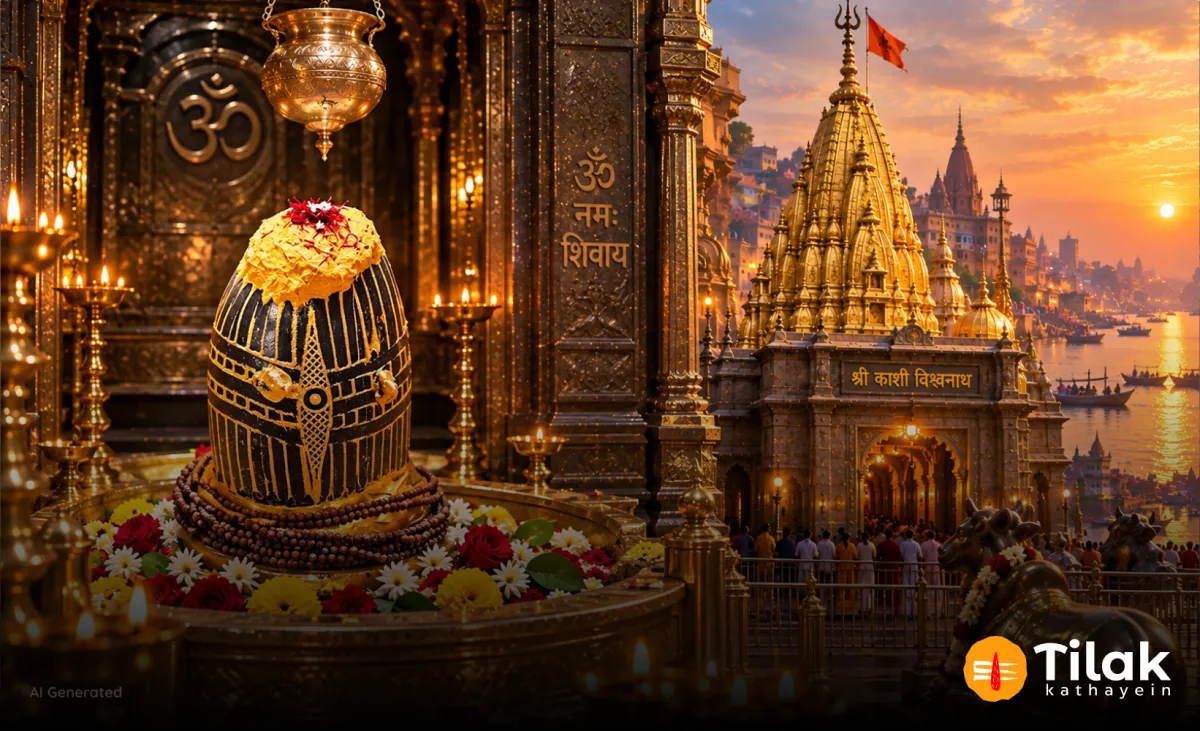
Kashi Vishwanath Jyotirlinga: Kashi Vishwanath Guide & Katha
उत्तर प्रदेश के प्राचीन एवं पावन नगर वाराणसी (काशी) में गंगा नदी के पश्चिमी तट पर स्थित काशी विश्वनाथ मंदिर भगवान शिव के 12 पवित्र ज्योतिर्लिंगों में से एक है। स्कंद पुराण और शिव पुराण के अनुसार, काशी नगरी महादेव के त्रिशूल पर बसी हुई है और इसे 'अविमुक्त क्षेत्र' कहा जाता है। मान्यता है कि जो भी व्यक्ति यहाँ काशी विश्वनाथ ज्योतिर्लिंग के दर्शन करता है और अपने प्राण त्यागता है, उसे स्वयं महादेव तारक मंत्र देकर जन्म-मरण के चक्र से मुक्ति (मोक्ष) प्रदान करते हैं।