
What Happened on the Night of Duryodhana's Birth? Know the Ominous Signs, Vidura's Warning, and the Mystery of the Mahabharata
What Happened on the Night of Duryodhana's Birth? Know the Terrible Ominous Signs, Vidura's Ignored Warning, and the Foundation of the Kuru Dynasty's Destruction
Unheard Mysteries of the Mahabharata | Tilak Stories
Last Updated: 2026 | Reading Time: Approx. 9 Minutes
📋 Table of Contents
- Introduction: The Inauspicious Night That Wrote the Future of the Kuru Empire
- Gandhari's 2-Year Pregnancy and the Blow of Envy
- 101 Pots from a Lump of Flesh: The Miraculous Method of Maharishi Vedavyasa
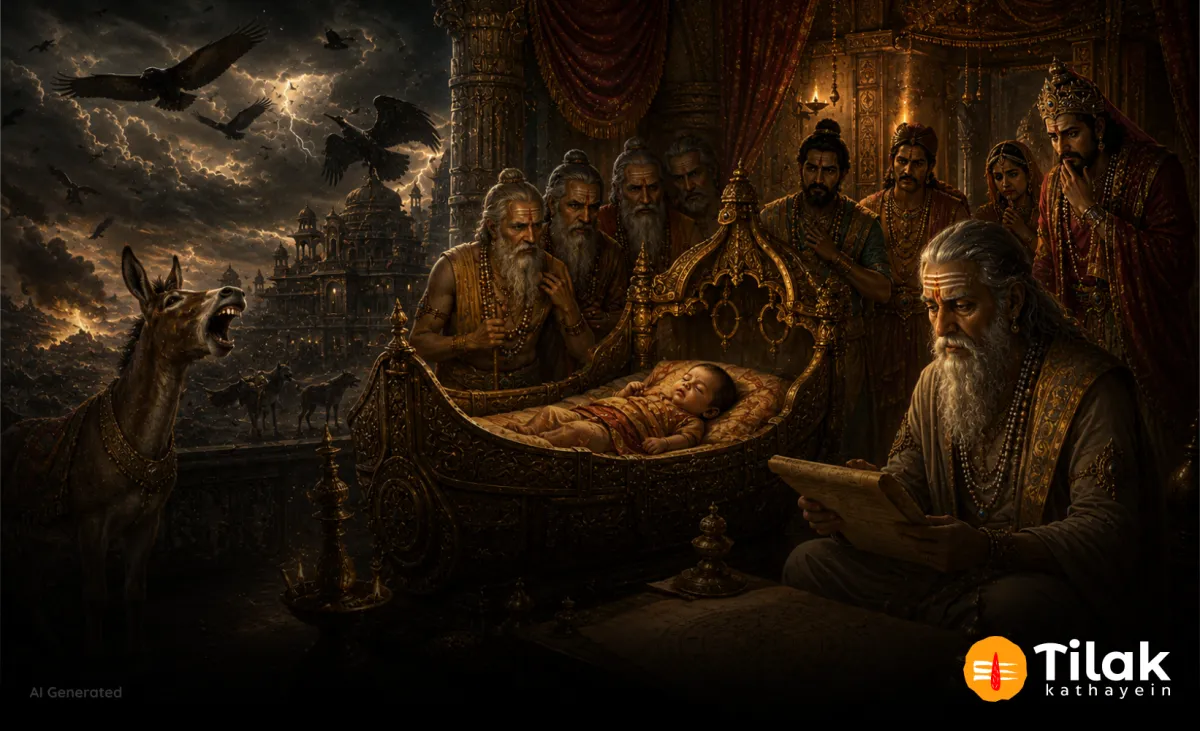
- The Terrible Ominous Signs on the Night of Duryodhana's Birth: When Hastinapur Trembled
- The Warning of Mahatma Vidura: "For the Protection of the Dynasty, Abandon This Son"
- Dhritarashtra's Blind 'Parental Affection': A Father's Mistake and the Slaughter of 18 Akshauhinis
- Suyodhana or Duryodhana? The Mystery of the Name and Its Meaning
- Duryodhana and Bhima: The Conjunction of Two Bitter Enemies Born on the Same Day
- 5 Major Life Lessons from the Birth Episode of Duryodhana
- Duryodhana's Birth Episode: A Quick Summary Table
- Frequently Asked Questions (FAQs)
- Conclusion
- Read Also (Related Mahabharata Stories)
Introduction: The Inauspicious Night That Wrote the Future of the Kuru Empire
The royal palace of Hastinapur has witnessed many celebrations and coronations in the history of the Mahabharata, but there was one night that drew a deep line of blood and tears across the destiny of the entire Aryavarta. That night was the night of the birth of Duryodhana, the eldest brother of the Kauravas.
When the first son is born in a family, auspicious songs are sung, conches are blown, and sweets are distributed among the people. However, Duryodhana's birth was not like an auspicious celebration, but rather like a terrible wrath of nature. The Adi Parva of the Mahabharata, composed by Maharishi Vedavyasa, clearly states that at the very moment Duryodhana took his first breath in this world, the sky of Hastinapur was shaken by screams, the cries of jackals, and inauspicious omens.
What exactly happened that night that the greatest statesman of the royal court, Mahatma Vidura, and Grandfather Bhishma himself were terrified? Why did Vidura, with folded hands, tell Dhritarashtra, "Maharaj! If you wish to save the dynasty, abandon this newborn child at this very moment"? Let us understand this extremely mysterious and thrilling episode of the Mahabharata in depth.
Gandhari's 2-Year Pregnancy and the Blow of Envy
This story begins with the immense mental anguish that Gandhari had to endure after her marriage. Gandhari, pleased with her service, had received a boon from Maharishi Krishna Dvaipayana (Vedavyasa) to become the mother of 100 powerful sons.
Time passed, but Gandhari's pregnancy, instead of the normal 9 months, stretched for a full two years (24 months). She was suffering from unbearable physical and mental pain. Meanwhile, news arrived from the forest that Pandu's wife Kunti had given birth to a supremely radiant son (Yudhishthira) from the essence of Dharmaraja Yama.
This news struck Gandhari's heart like a thunderbolt. According to the tradition of Hastinapur, the eldest son would inherit the future throne. Gandhari felt that even after carrying her child for two years, her unborn son would be deprived of his right to the throne.
In the extreme of anger, envy, and despair, Gandhari lost her composure. She secretly struck her own abdomen with an iron pestle, hidden from her maids. Due to this blow, instead of a child, a dry lump of flesh, as hard as iron, emerged from her womb. Seeing her plight, Gandhari began to weep uncontrollably and considered throwing away the lump of flesh.
101 Pots from a Lump of Flesh: The Miraculous Method of Maharishi Vedavyasa
As soon as Maharishi Vedavyasa learned of Gandhari's act through his divine knowledge, he immediately arrived at the inner chambers of Hastinapur. Scolding Gandhari, he said, "Daughter! What calamity have you wrought? My boon can never be in vain."
Vyas Muni immediately ordered the lump of flesh to be washed with cool, fragrant water. With the touch of water, the lump of flesh divided into 101 pieces, each the size of a thumb's knuckle (for 100 sons and 1 daughter).
Vyas Muni had 101 large clay pots (kumbhas) prepared in a safe, cool, and secret basement of the royal palace. These pots were filled with pure ghee and rare herbs, and the pieces of flesh were placed in them. Vyas Muni instructed:
"Do not open these pots for a full year. After one year has passed, 100 sons and one daughter will be born from them sequentially."
This story from ancient India appears to modern scientists like an advanced concept of 'test-tube babies' or 'in vitro fertilization (IVF)'.
The Terrible Ominous Signs on the Night of Duryodhana's Birth: When Hastinapur Trembled
After a year had passed, the pot in which the first embryo was kept suddenly cracked open. The child who emerged from that pot was Duryodhana.
However, at the very moment the child was born, nature gave such terrible and frightening signs that the astrologers and sages of Hastinapur trembled:
- Terrible Cry Like a Donkey: A normal child cries upon birth, but according to the Mahabharata, Duryodhana, upon birth, shrieked with a harsh and terrifying sound like the braying of a donkey.
- Echoes of Jackals and Wolves: As soon as the child's scream emanated from the royal palace, the ferocious jackals, foxes, and wolves gathered outside the city suddenly began to cry together in an inauspicious tone.
- Gathering of Carnivorous Birds: Vultures, eagles, and crows began to circle the roofs of the Hastinapur royal palace and started cawing ominously.
- Rain of Blood and Dust Storms: Suddenly, dust storms began to blow in the sky without clouds. Meteorites fell to the earth, and it seemed as if drops of blood were falling from the sky.
- Sacrificial Altars Spontaneously Ignited: Foul-smelling smoke began to rise from the sacred fires in the sacrificial altars of the royal priests.
That night in Hastinapur did not seem like a celebration, but rather like the arrival of Yama, the god of death himself.
The Warning of Mahatma Vidura: "For the Protection of the Dynasty, Abandon This Son"
Seeing these terrible disturbances, King Dhritarashtra became frightened. He immediately summoned the chief minister Mahatma Vidura, Grandfather Bhishma, and the royal astrologers to the assembly.
Dhritarashtra asked with a trembling voice, "O Vidura! O Brahmins! When Yudhishthira was born, flowers rained from the sky and auspicious conches sounded. Then why is there this cremation-ground-like chaos upon the birth of my first son? Will this son of mine become king in the future?"
Then, Mahatma Vidura, a great scholar of politics and dharma, bowed his head and spoke extremely harsh, yet truthful words. Vidura said:
"Tyajedekam kulasyarthe gramasyarthe kulam tyajet.
Gramam janapadasyarthe atmarthe prithivim tyajet॥"
(Meaning: For the welfare of the family, one should abandon one person; for the protection of the village, one should abandon the family; for the protection of the entire kingdom, one should abandon the village; and for one's own soul and dharma, one should abandon the entire earth.)
Vidura further said, "Maharaj! This child is no ordinary infant. His stars and these omens clearly indicate that this child has been born as an embodiment of Kala (the Kali Yuga). This single child will be the cause of the destruction of the entire Kuru dynasty, the slaughter of millions of innocents, and the downfall of Hastinapur. If you wish to save your dynasty, your subjects, and the entire Aryavarta from great destruction, then place a stone on your heart and abandon this newborn child at this very moment. You have 99 other sons; your lineage will not be destroyed."
Dhritarashtra's Blind 'Parental Affection': A Father's Mistake and the Slaughter of 18 Akshauhinis
Along with Vidura, other learned Brahmins and statesmen present also urged Dhritarashtra to abandon the child in the forest or river for the sake of the kingdom.
However, it was here that the greatest tragedy of Dhritarashtra's life occurred. Dhritarashtra himself was blind, but at this moment, he was completely blinded by 'parental affection'. The thought came to his mind that after so many years of waiting, he had received his first son; how could he abandon him?
Tears flowed from Dhritarashtra's eyes. He rejected Vidura's bitter yet life-saving advice and held the child close to his chest. This blind love of a father sacrificed royal dharma, family dharma, and national dharma.
That same child, whom Vidura had asked to abandon that night, later became the instigator of that great war of Kurukshetra in which 18 Akshauhinis of armies (approximately 40 lakh warriors) were slain, and nothing remained in the throne of Hastinapur except the wails of widows.
Suyodhana or Duryodhana? The Mystery of the Name and Its Meaning
Many authentic texts of the Mahabharata mention that at the time of his birth, Dhritarashtra had named his son 'Suyodhana' (Su + Yodhana).
- Meaning of Suyodhana: A warrior who fights righteously and skillfully (A fair and righteous warrior).
- Meaning of Duryodhana: With the prefix 'Dus', its meaning became "one who is extremely difficult to defeat in battle" or "one who fights unrighteously and wickedly."
In later times, when his envy towards the Pandavas, deceit, the conspiracy of the lac palace, and heinous acts like the disrobing of Draupadi in the dice game were evident, history remembered him forever as 'Duryodhana' instead of 'Suyodhana'.
Duryodhana and Bhima: The Conjunction of Two Bitter Enemies Born on the Same Day
Another astonishing coincidence of the Mahabharata is that on the same day and in the same constellation as Duryodhana was born in Hastinapur, Pandu's son Bhimasena, the son of the wind god, was born on the Shatashringa mountain.
See the decree of fate: on one hand, Duryodhana, the symbol of unrighteousness and ego, was being born, and at the same moment, nature had sent the mighty Bhima to earth to destroy him. Both children became unparalleled mallas in mace warfare, and ultimately, on the eighteenth day of Kurukshetra, on the banks of the Dvaitavana lake, Duryodhana's end came with Bhima's mace breaking his thigh.
5 Major Life Lessons from the Birth Episode of Duryodhana
- Royal Dharma and Justice Above Parental Affection: Love for family and children is natural, but when a child strays from the right path and you forget policy and truth to protect them, downfall is certain.
- Heed Good Advice, Even If It's Bitter: Dhritarashtra rejected the advice of a impartial well-wisher like Vidura and chose the flattery of a conspirator like Shakuni, the result of which was total destruction.
- Envy Steals Human Discretion: Gandhari striking her own womb upon hearing of Kunti's first son's birth teaches that envy harms oneself the most.
- Learn to Recognize Signs: When nature or conscience warns against wrong decisions, it is wise to correct oneself in time.
- Bad Company is More Fatal Than Birth Defects: Whatever Duryodhana was by birth, if he had been raised in the ideals of Bhishma and Vidura instead of the company of his uncle Shakuni, perhaps history would have been different.
Key Facts Related to Duryodhana's Birth: At a Glance
| Subject / Episode | Description as per Mahabharata Adi Parva |
|---|---|
| Parents | Maharaj Dhritarashtra and Maharani Gandhari |
| Gestation Period | Remained in Gandhari's womb for a full 2 years (24 months) |
| Method of Birth | A lump of flesh was divided into 101 pieces and kept in clay pots filled with ghee for 1 year |
| Ominous Signs at Birth | Screaming like a donkey, crying of jackals and wolves, circling of vultures, rain of blood |
| Mahatma Vidura's Advice | Abandon the newborn child immediately for the protection of the Kuru dynasty and subjects |
| Pandava Born on the Same Day | Mahabali Bhimasena, son of Pandu (Both were born on the same day) |
| Siblings | 100 brothers (Kauravas) and 1 sister (Dushala) |
Frequently Asked Questions (FAQs)
1. What terrible ominous signs occurred on the night of Duryodhana's birth?
According to the Mahabharata, Duryodhana shrieked with a harsh sound like a donkey upon birth. At that very moment, jackals and wolves outside the city began to cry loudly, vultures circled the rooftops, dust storms blew, and smoke rose from the sacrificial altars.
2. Why did Vidura advise Dhritarashtra to abandon his newborn son?
Vidura, observing the astrological signs and omens, realized that this child would become the cause of destruction for the entire Kuru dynasty and millions of innocents in the future. Citing the science of statecraft, he said that for the protection of the dynasty, one person should be abandoned.
3. How were Gandhari's 100 sons born from pots?
The hard lump of flesh that emerged from Gandhari's womb was divided by Maharishi Vedavyasa into 101 small pieces and kept safely in clay pots filled with medicinal ghee for one year. After a year, 100 Kauravas and one daughter, Dushala, were born from these pots.
4. Was Duryodhana's real name Suyodhana?
Yes, his father Dhritarashtra had named him 'Suyodhana' (a skilled and righteous warrior). However, due to his unrighteous conduct, ego, and envy, he became infamous in the world as 'Duryodhana' (an invincible or wicked warrior).
5. What was the unique relationship between Duryodhana and Bhima?
Duryodhana and the Pandava Bhima were born on the same day and in the same constellation. Both were masters of mace warfare and mace skills, and on the final day of Kurukshetra, it was Bhima who slew Duryodhana.
Conclusion: When a Father's Blind Affection Became the Cause of Kurukshetra
The story of Duryodhana's birth is not just an account of a child's birth, but it is the greatest warning from Sanatana literature that states, "Personal attachment placed above justice and national interest always leads to total destruction."
Had King Dhritarashtra accepted Vidura's impartial warning that night, there would have been no conspiracy of the lac palace, no disrobing of Draupadi in the full assembly, and no blood of 18 Akshauhinis of heroes would have flowed on the sacred land of Kurukshetra. The night of Duryodhana's birth teaches us that evil must be suppressed the moment it raises its head, otherwise, given time, it will consume the entire world.
"Yato Dharmastato Jayah"
(Where there is righteousness, there is victory. Unrighteousness, however powerful it may be at birth, is destined to end.)🚩 Jai Shri Krishna! Satyameva Jayate! 🔱🏹
Read Also (Other Unheard and Informative Episodes of the Mahabharata):
- Why was Dhritarashtra Blind from Birth and How Did He Have 100 Sons?: Know the detailed mystery of Maharishi Vyas's Niyoga method and Gandhari's 100 sons.
- How Did Gandhari Receive the Boon of 100 Sons?: The sacred story of Maharishi Vyas's service and Gandhari's unwavering chastity.
- Why Was Duryodhana So Envious of the Pandavas?: From childhood games to the insult in the Mayasabha, the real roots of the Kauravas' animosity.
- The Mace Rivalry of Bhima and Duryodhana: The complete story from the poisoned kheer to the breaking of the thigh in the Dvaitavana lake.
- 7 Major Lessons from the Mahabharata: Eternal principles from Kurukshetra for a successful life, politics, and relationships.
Today's Panchang 27 September 2026
For auspicious times, choghadiya, horoscope and planetary positions
Related Articles
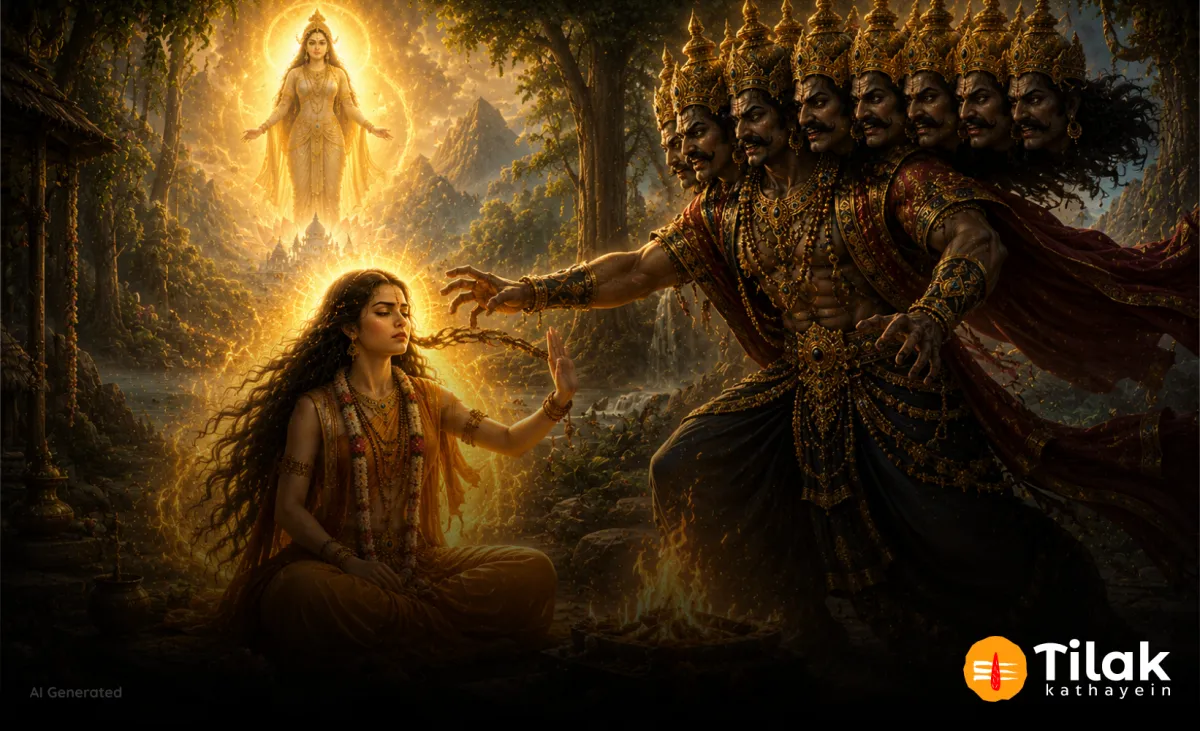
How was Mother Sita born? A mysterious mythological story linked to a curse
**माता सीता के जन्म** को लेकर रामायण और विभिन्न पुराणिक परंपराओं में अलग-अलग कथाएं मिलती हैं। एक प्रसिद्ध मान्यता में उनका संबंध **वेदवती** से जोड़ा जाता है, जिन्होंने भगवान विष्णु को पति रूप में पाने के लिए कठोर तपस्या की थी और रावण के कारण अपने जीवन का अंत कर पुनर्जन्म लेने का संकल्प किया था। आगे चलकर सीता जी का प्राकट्य राजा जनक को खेत में हल चलाते समय हुआ। इस लेख में जानें वेदवती की कथा, श्राप और पुनर्जन्म से जुड़ी मान्यता तथा माता सीता के दिव्य जन्म का रहस्य।
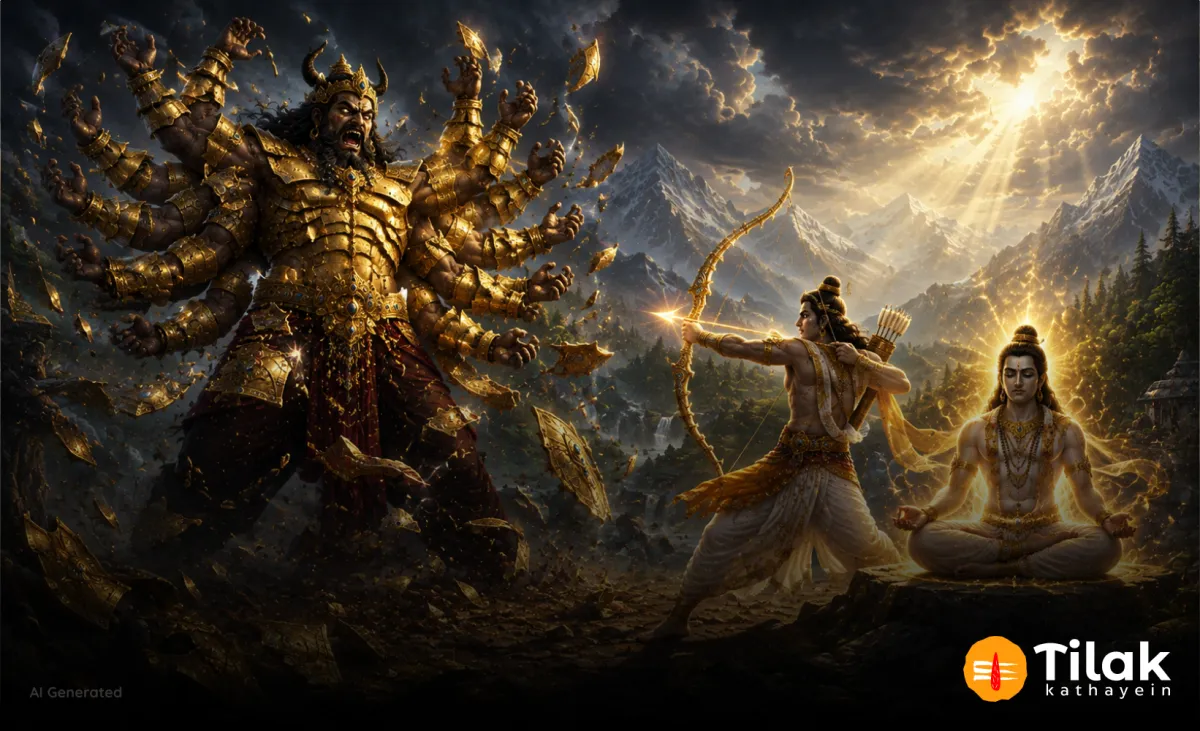
How did Karna's story begin thousands of years ago? A mysterious secret connected to the Mahabharata
**कर्ण** महाभारत के सबसे रहस्यमयी और महान योद्धाओं में से एक थे, लेकिन उनकी कहानी केवल कुरुक्षेत्र युद्ध से शुरू नहीं होती। उनके जन्म, सूर्यदेव से संबंध, कुंती के रहस्य और जीवन में मिले शाप-वरदानों ने उनके भाग्य को जन्म से ही प्रभावित किया। विभिन्न पौराणिक परंपराओं में कर्ण से जुड़े पूर्वजन्म और प्राचीन घटनाओं की भी अलग-अलग मान्यताएं मिलती हैं। इस लेख में जानें कर्ण की कहानी की शुरुआत, उनके जन्म का रहस्य, सूर्यदेव से दिव्य संबंध और महाभारत से जुड़े उन पौराणिक प्रसंगों को, जिन्होंने उनके जीवन की दिशा तय की।
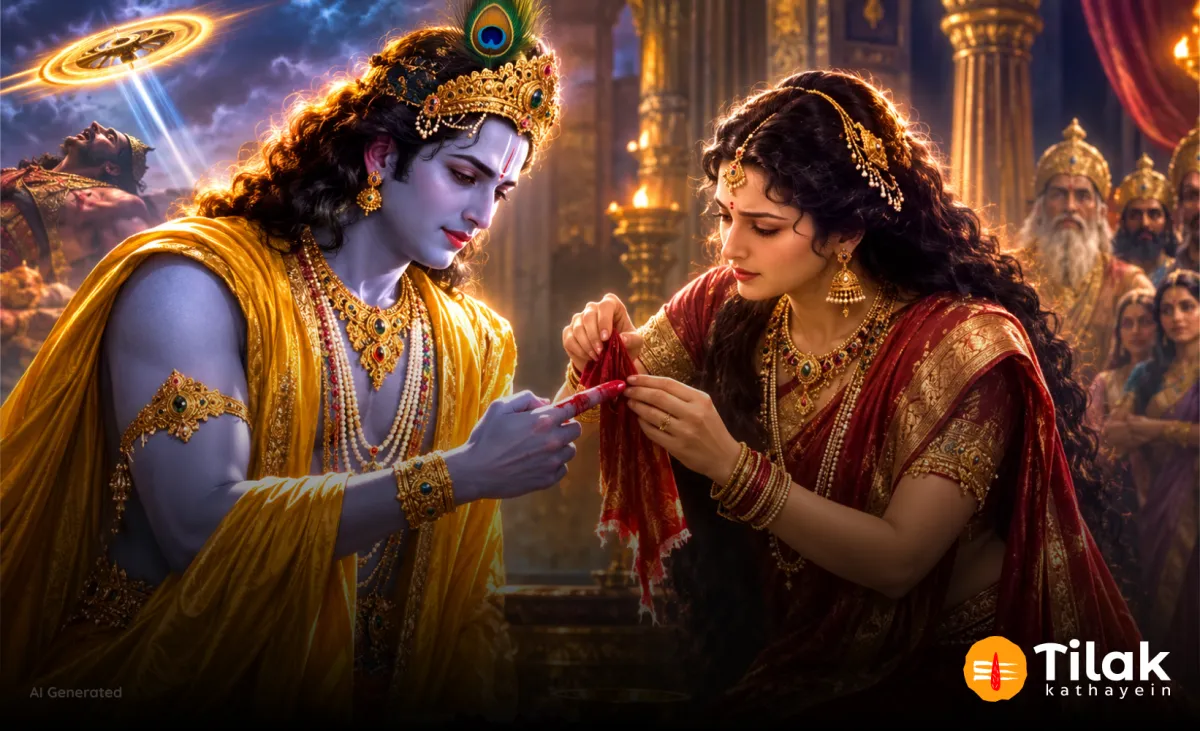
The Story of Draupadi and Krishna's Rakhi | The Truth of Their Relationship in the Mahabharata
**द्रौपदी और श्रीकृष्ण का रिश्ता** महाभारत की सबसे भावनात्मक कथाओं में से एक है। लोकप्रिय मान्यता में द्रौपदी द्वारा कृष्ण को राखी बांधने की कथा सुनाई जाती है, लेकिन मूल महाभारत में राखी बांधने का स्पष्ट वर्णन नहीं मिलता। महाभारत में एक प्रसिद्ध प्रसंग है जिसमें कृष्ण की उंगली से रक्त निकलने पर द्रौपदी कपड़े का टुकड़ा बांधती हैं और कृष्ण उनके इस स्नेह का ऋण चुकाने का वचन देते हैं। इस लेख में जानें दोनों के रिश्ते का वास्तविक स्वरूप और राखी की लोकप्रिय कथा के पीछे की मान्यता।
How was Lord Ganesha born? The complete mythological story of Mother Parvati and Shiva
भगवान गणेश के जन्म की कथा हिंदू धर्म की सबसे प्रसिद्ध पौराणिक कथाओं में से एक है। मान्यता के अनुसार, माता पार्वती ने अपने शरीर के उबटन से गणेश जी की रचना की और उन्हें अपने द्वार की रक्षा का दायित्व सौंपा। भगवान शिव के आने पर गणेश जी ने उन्हें भीतर जाने से रोक दिया, जिसके बाद भयंकर संघर्ष हुआ और शिव जी ने उनका सिर काट दिया। माता पार्वती के आग्रह पर भगवान शिव ने हाथी का सिर लगाकर उन्हें पुनर्जीवित किया और प्रथम पूज्य होने का वरदान दिया। इस लेख में जानें गणेश जी के जन्म से लेकर उनके प्रथम पूज्य बनने तक की सम्पूर्ण कथा।
7 Lessons from Mahabharata That Can Still Change Lives Today | Great Life Lessons
महाभारत केवल युद्ध की कहानी नहीं, बल्कि जीवन, रिश्तों, धर्म, कर्म और सही निर्णय लेने की गहरी सीख देने वाला महाकाव्य है। इसमें श्रीकृष्ण, पांडवों, कौरवों और अन्य पात्रों के जीवन से ऐसी अनेक शिक्षाएं मिलती हैं जो आज भी उतनी ही प्रासंगिक हैं। इस लेख में जानें **महाभारत की 7 महत्वपूर्ण सीख**, जो कठिन परिस्थितियों में सही मार्ग चुनने, कर्म को समझने, रिश्तों को निभाने और जीवन में धर्म का पालन करने की प्रेरणा देती हैं।
How were the Pandavas born? The amazing story of Kunti and Madri | The strange tale of Mahabharata
पांडवों का जन्म महाभारत की सबसे अद्भुत और महत्वपूर्ण घटनाओं में से एक है। राजा पांडु को मिले एक शाप के कारण वे संतान उत्पन्न करने में असमर्थ थे। तब कुंती को ऋषि दुर्वासा से प्राप्त दिव्य मंत्र का स्मरण हुआ, जिसके माध्यम से उन्होंने देवताओं का आह्वान किया। इसी प्रकार युधिष्ठिर, भीम और अर्जुन का जन्म हुआ, जबकि माद्री ने इसी मंत्र की सहायता से अश्विनी कुमारों का आह्वान कर नकुल और सहदेव को जन्म दिया। इस लेख में जानें पांचों पांडवों के जन्म की पूरी कथा, कुंती-माद्री की भूमिका और इसके पीछे की पौराणिक मान्यता।