
Patanjali Yoga Sutras – Chapter 3: Yoga Sutras: Compilation
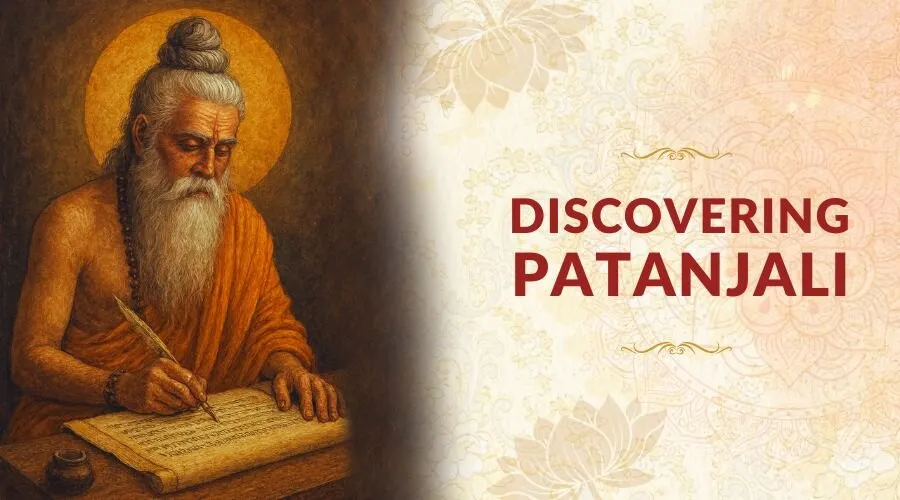
Yoga Sutras: Compilation
In the previous chapter, we understood the preliminary teachings and the importance of grammar. Moving forward on the path of Yoga, we will now focus on the compilation and classification of those sutras that have given Yoga the form of a systematic science. These sutras are composed by Maharishi Patanjali, who is a beacon of Yoga philosophy.
The Eight Limbs of Yoga: Ashtanga Yoga
A serene morning, in an ashram nestled in the lap of the Himalayas. The golden rays of the sun filtered through the trees, dancing on the leaves. Disciples, filled with curiosity, gathered around Rishi Patanjali. The atmosphere was a wonderful blend of peace and inquisitiveness, as if a significant secret was about to be unveiled. Every face held the same question – what are the eight limbs of Yoga?
Rishi Patanjali opened his eyes, in which the depth of knowledge and the ocean of compassion were swirling. He said in a sweet voice, "The eight limbs of Yoga are - Yama, Niyama, Asana, Pranayama, Pratyahara, Dharana, Dhyana, and Samadhi. These eight limbs are like a tree, where the roots are Yama and Niyama, the trunk is Asana and Pranayama, the branches are Pratyahara, the leaves are Dharana, the flowers are Dhyana, and the fruit is Samadhi. By practicing these limbs, the seeker delves into the depths of their inner self and attains supreme bliss." A disciple asked, "Guruji, what is the correct order of these limbs?" The Rishi smiled and said, "This order is merely a guidance. Each person's journey is different, and they should choose the path according to their needs and abilities."
Compilation of Sutras and Maharishi Patanjali's Contribution
Maharishi Patanjali gave Yoga the form of a science by compiling and classifying the Yoga Sutras. He presented the scattered knowledge in a systematic manner, making the study and practice of Yoga easier. The sutras are divided into four chapters: Samadhi Pada, Sadhana Pada, Vibhuti Pada, and Kaivalya Pada. Each Pada represents different aspects of Yoga.
It is believed that Maharishi Patanjali was an incarnation of Lord Sheshnag, the attendant of Vishnu and the symbol of infinite knowledge. His Yoga Sutras encapsulate profound knowledge in just a few words. Each of his sutras is like a seed, containing hidden infinite possibilities. With his guidance, the curious can move forward on the path of Yoga and progress towards self-realization. Upon studying the Yoga Sutras in depth, the disciple understands the importance of self-discipline, compassion, and concentration.
Propagation of Yoga through Yoga Sutras
The Yoga Sutras have been propagated throughout the world. These sutras have inspired countless people and shown them the way to live a healthy life physically, mentally, and spiritually. Yoga is not limited to asanas and pranayama; it is a lifestyle that helps us understand ourselves and the world around us. It is a path that leads us towards peace, joy, and freedom.
Maharishi Patanjali had said, "Yogashchittavrittinirodhah." This means, Yoga is the cessation of the modifications of the mind. When we calm our mind, we are able to know our true nature. The Yoga Sutras are like a beacon, guiding us in darkness and leading us on the path of truth. In the next chapter, we will consider the interpretations of these sutras and their effects, so that the profound mysteries of Yoga can be understood even more deeply.
Summary of Chapter 3: In this chapter, we learned about the eight limbs of Yoga and the compilation of Yoga Sutras. We also understood the importance of Maharishi Patanjali's contribution and the propagation of Yoga through Yoga Sutras. The Yoga Sutras are a path that leads us towards self-realization, and the aim of this chapter is to inspire seekers to walk on that path.
📚 Patanjali Yoga Sutras — All Chapters
Today's Panchang 9 September 2026
For auspicious times, choghadiya, horoscope and planetary positions
Related Articles
Kalashtami Vrat – Chapter 5: The Fruit and Lesson of Devotion
कालाष्टमी व्रत का अध्याय 5 — भक्ति का फल और सीख। यह अंतिम अध्याय बताता है कि कालाष्टमी व्रत रखने से प्राप्त होने वाले परिणाम और इससे मिली सीख क्या है।
Kalashtami Vrat – Chapter 4: Divine Intervention and Blessings
कालाष्टमी व्रत का अध्याय 4 — दिव्य हस्तक्षेप और आशीर्वाद। अध्याय चार में, भगवान भैरव भक्त की अटूट भक्ति से प्रसन्न होते हैं और उसे अपना आशीर्वाद देते हैं।
Kalashtami Vrat – Chapter 3: Facing Trials and Tribulations
कालाष्टमी व्रत का अध्याय 3 — परीक्षा और कष्टों का सामना। इस अध्याय में, भक्त को भगवान की कृपा प्राप्त करने से पहले कई बाधाओं और परीक्षाओं का सामना करना पड़ता है।
Kalashtami Vrat – Chapter 2: Devotee's Plea and Devotion
कालाष्टमी व्रत का अध्याय 2 — भक्त की विनती और भक्ति। इस अध्याय में, एक भक्त की सच्ची भक्ति और भगवान भैरव से उसकी पुकार का वर्णन किया गया है।
Kalashtami Vrat – Chapter 1: The Origin of Kalashtami Vrat
कालाष्टमी व्रत का अध्याय 1 — कालाष्टमी व्रत का उद्भव। यह अध्याय बताता है कि कालाष्टमी व्रत का जन्म कैसे हुआ और इसका महत्व क्या है।
Patanjali Yoga Sutras – Chapter 5: Legacy: Union and Liberation
पातंजल योगसूत्र का अध्याय 5 — विरासत: मिलन और मुक्ति। यह अध्याय पतंजलि की विरासत, योग के माध्यम से मिलन और मुक्ति के मार्ग, और उनके दर्शन के शाश्वत महत्व को दर्शाता है।