
The Story of Maharshi Valmiki: The Journey from Bandit Ratnakar to Adi Kavi
📋 Table of Contents
- Introduction: The First Mahakavi of Sanatana Culture and the Immortal Saga of Self-Transformation
- Early Life: From Pracheta's Son to the Forest Dacoit 'Ratnakar'
- The Life-Changing Turning Point: Encounter with Devarshi Narada Muni and That Stern Question
- The Mystery of the 'Mara-Mara' Chant and the Name 'Valmiki' (Termite Mound)
- The Pathetic Cry of the Kraunch Bird and the Manifestation of the World's First Shloka
- Shelter to Mother Sita and Imparting the Knowledge of Ramayana to Lava and Kusha
- Frequently Asked Questions (FAQs)
- Conclusion: Man Becomes Great Not by His Past, But by His Present Resolve
- Read Also (Profound Mysteries of Ramayana and Sanatana Dharma)
Introduction: The First Mahakavi of Sanatana Culture and the Immortal Saga of Self-Transformation
In the history of Indian literature and Sanatana culture, whenever the name of Maharshi Valmiki is taken, the head bows in reverence. He was not only the 'Adi Kavi' (the first poet of Sanskrit literature), but he was also the most living proof that no human being is a slave to the mistakes of their past.
The person whose hands once shed the blood of countless innocent travelers, who was once known as the most fearsome dacoit of the dense forests, 'Ratnakar'—this very person, upon receiving a spark of self-knowledge, became so pure and clairvoyant a Brahmarshi that he composed the entire life story of Lord Rama, the 'Ramayana', even before Rama descended to Earth.
"Kujantam Rama Rame'ti madhuram madhuraksharam.
Aaruhya kavitashakham vande Valmikikokilam॥"
(Meaning: I repeatedly bow to the Valmiki-like cuckoo, who, perched on the branch of poetry, sings sweetly the sweet syllables 'Rama-Rama'.)
Early Life: From Pracheta's Son to the Forest Dacoit 'Ratnakar'
According to the Skanda Purana and Adhyatma Ramayana, Maharshi Valmiki was born to Pracheta (Varuna), the ninth son of Maharshi Kashyapa and Aditi. In his childhood, his name was 'Ratnakar'.
However, due to destiny and the decree of fate, Ratnakar got lost in the dense forest in his childhood and fell into the hands of a Bhil community. Growing up among the Bhils, he was distanced from the rituals of the scriptures and Vedas and became proficient in the art of hunting and looting.
Upon reaching adulthood, he got married, and when children were born, the burden of supporting the family fell upon him. Ratnakar chose the most terrifying path for his livelihood—he began to rob merchants, travelers, and saints passing through the forest, and did not hesitate to kill them if they resisted. Fear of the dacoit Ratnakar spread throughout the region.
The Life-Changing Turning Point: Encounter with Devarshi Narada Muni and That Stern Question
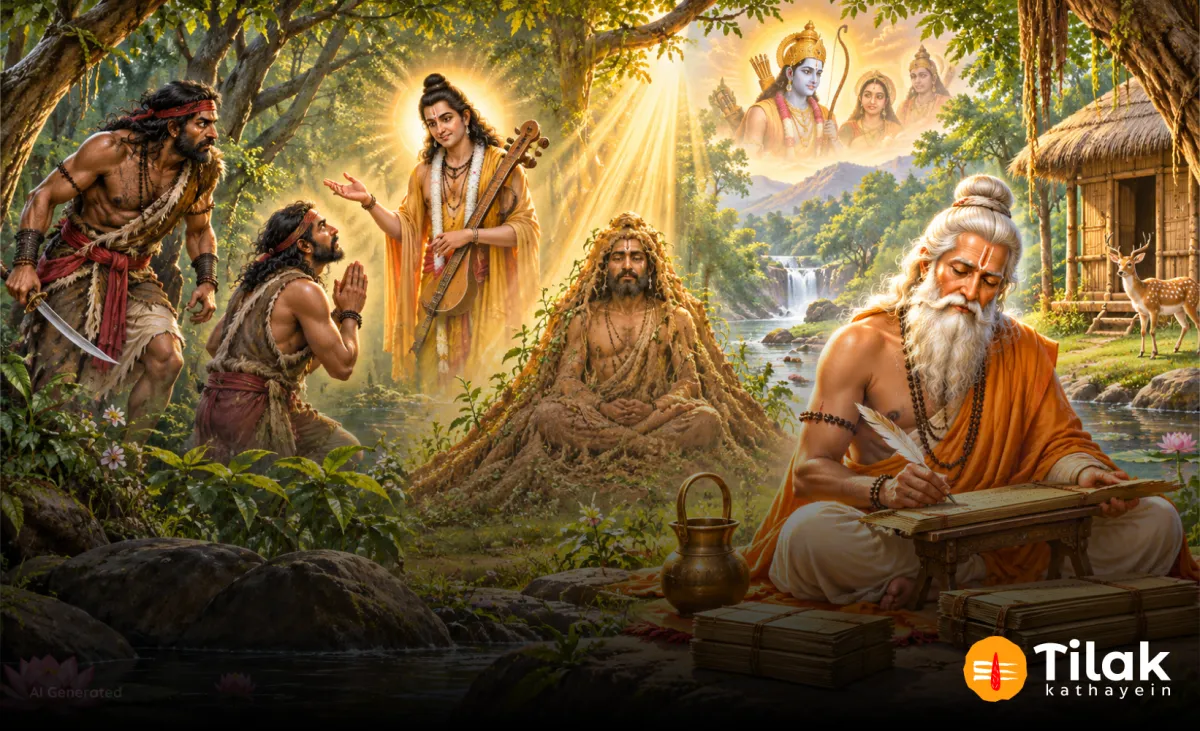
One day, while chanting the sweet hymn of "Narayana-Narayana" on his veena, Devarshi Narada was passing through that dense forest. Suddenly, from behind the bushes, Ratnakar stopped him with his sword drawn and roared—"Hand over whatever you have, quietly, or you will lose your life!"
Without being disturbed in the least by Ratnakar's anger, Narada Muni calmly smiled and said—"O son! I have nothing with me except this veena and these clothes. If you want these, take them. But tell me, for whom are you committing this terrible sin?"
Ratnakar proudly replied—"I do all this to feed my old parents, wife, and children."
Then Narada Muni asked a question that shook Ratnakar's consciousness:
"Ratnakar! You are accumulating terrible sins of looting and violence every day for your family. Have you ever asked them after returning home if they will share the punishment (hellish torment) for these sins with you? Go, ask them first; until then, I will wait here under this tree."
Ratnakar's Disillusionment
Ratnakar tied Narada Muni to a tree and ran to his home. He first asked his father, then his mother, and finally his wife—"I perform acts of violence and looting to support all of you; will you share the consequences of my sins with me?"
All of them replied in one voice—"It is your duty to support the family. How you earn money is your karma; we are only beneficiaries of your wealth, never of your sins."
Hearing this, Ratnakar felt the ground slip from under his feet. Those for whom he had stained his soul his entire life were disowning him in a time of crisis. Weeping, Ratnakar returned to the forest, untied Narada Muni, and fell at his feet, repenting.
The Mystery of the 'Mara-Mara' Chant and the Name 'Valmiki' (Termite Mound)
Seeing Ratnakar's true repentance, Narada Muni advised him to chant the liberating mantra of the Supreme Being, 'Rama'. However, due to the deep-seated sins of countless past lives, the pure word 'Rama' could not come out of Ratnakar's tongue.
Then, the clairvoyant Narada Muni pointed to a tree and said—"If you cannot say 'Rama', then looking at this dry tree, chant 'Mara-Mara'."
Ratnakar accepted his guru's command and, sitting in one posture with his eyes closed, began the continuous chanting of 'Mara-Mara'. As he chanted intensely and continuously, "Mara-Mara" automatically transformed into "Rama-Rama".
Ratnakar's meditation was so deep that years passed, seasons changed, but he did not move. Around his still body, soil and termites built a large mound, which is called 'Valmika' (termite mound) in Sanskrit. Thousands of years later, when Narada Muni and Brahma Ji came and awakened him from his samadhi, he came to be known as 'Maharshi Valmiki' because he emerged from the valmika.
The Pathetic Cry of the Kraunch Bird and the Manifestation of the World's First Shloka
Maharshi Valmiki's hermitage was on the sacred banks of the Tamasa River. One morning, as he was going towards the river for his bath, he saw a pair of Kraunch birds engrossed in love on a tree branch.
At that very moment, a cruel hunter (vyadha) shot an arrow and killed the male Kraunch. Seeing the male bird writhing on the ground, drenched in blood, the female Kraunch let out a heart-rending cry. Moved by the pain of the mute bird, a metered curse spontaneously erupted from Maharshi Valmiki's compassionate heart:
"Ma Nishada Pratishtham Tvamagamah Shashvateeh Samah.
Yatkraunchamithunadekamavadhīh Kamamohitam॥"
(Meaning: O hunter! May you not find peace or prestige for eternal years, because you have killed one of the Kraunch pair, who was engrossed in love.)
This Anushtup meter was the first shloka of worldly Sanskrit poetry. The 'Shloka' was born from the Maharshi's sorrow. At that moment, the creator, Lord Brahma, appeared and said to Valmiki Ji—"O Maharshi! By my inspiration, Saraswati has taken residence in your speech. Now, in this meter, compose the complete divine life story of Maryada Purushottam Lord Rama, the 'Ramayana'."
Shelter to Mother Sita and Imparting the Knowledge of Ramayana to Lava and Kusha
Maharshi Valmiki composed the world's greatest epic, 'Valmiki Ramayana', in 24,000 shlokas, 7 Kandas, and 500 Sargas.
Later, when pregnant Mother Sita was abandoned in Ayodhya, it was Maharshi Valmiki who gave her shelter in his ashram like a daughter. It was in his ashram that Lava and Kusha were born. Valmiki Ji taught both princes the Vedas, archery, and the complete singing of the Ramayana, through which the purity and dignity of Mother Sita were re-established in Ayodhya.
Frequently Asked Questions (FAQs)
1. What was Maharshi Valmiki's childhood name?
Maharshi Valmiki's childhood name was 'Ratnakar'. He was the son of Rishi Pracheta (Varuna), but due to getting lost in the forest, he was raised by the Bhil community.
2. How did Ratnakar get the name 'Valmiki'?
After receiving initiation from Narada Muni, Ratnakar remained in deep meditation for thousands of years. During this time, termites built a mound of soil on his body, which is called 'Valmika' in Sanskrit. Because he emerged from this valmika, he became known as 'Valmiki'.
3. How many shlokas and Kandas are there in Valmiki Ramayana?
The original Valmiki Ramayana contains a total of 24,000 shlokas and 7 Kandas (Balakanda, Ayodhyakanda, Aranyakanda, Kishkindhakanda, Sundarakanda, Lankakanda, and Uttarakanda).
4. Was the Ramayana composed even before Lord Rama's birth?
Yes, by the boon of Lord Brahma, Maharshi Valmiki became clairvoyant, enabling him to see and document the events of Lord Rama's exile and Ravana's defeat with divine vision even before they occurred.
Conclusion: Man Becomes Great Not by His Past, But by His Present Resolve
The life of Maharshi Valmiki is the greatest source of inspiration in human history. This story teaches us that any person lost in the darkness of ignorance, if they introspect under the guidance of a true guru and take refuge in chanting the divine name, can rise from an ordinary human to a god-like sage.
Today, as we read and live by the ideals of Maryada Purushottam Rama, we must remember that it was Adi Kavi Valmiki Ji who brought the character of Rama to every household.
"Valmikigirisambhoota Ramasagaragamini.
Punatu bhuvana punyah Ramayanamahanadi॥"
(May this holy great river Ramayana, originating from the mountain of Maharshi Valmiki and merging into the ocean of Lord Rama, purify the entire world.)🚩 Victory to Adi Kavi Maharshi Valmiki Ji! Jai Shri Ram! 🙏🪔🏹
Read Also (Profound Mysteries of Ramayana and Sanatana Dharma):
- Why did Lakshmana never sleep for 14 years? Know the secret of the Goddess of Sleep: The complete mythological story of Queen Urmila's unimaginable sacrifice, the naming of 'Gudakesha', and the slaying of Indrajit.
- Rameshwaram Jyotirlinga: Lord Rama's Installation of the Shivalinga and its Story: The construction of the Shivalinga from sand by Lord Rama before his victory in Lanka and the mystery of the 22 sacred kunds.
- What was the real secret behind Ravana's 10 heads? Were they truly ten heads, or a symbol of knowledge of 6 Shastras, 4 Vedas, and 10 vices? Know the scriptural evidence.
- Where was the real Mother Sita during the abduction of Sita? ('Chhaya Sita' episode): The profound mythological truth about Maya Sita, who was abducted by Ravana in Panchavati, while the real Sita was in the refuge of Agni Deva.
Today's Panchang 20 November 2026
For auspicious times, choghadiya, horoscope and planetary positions
Related Articles
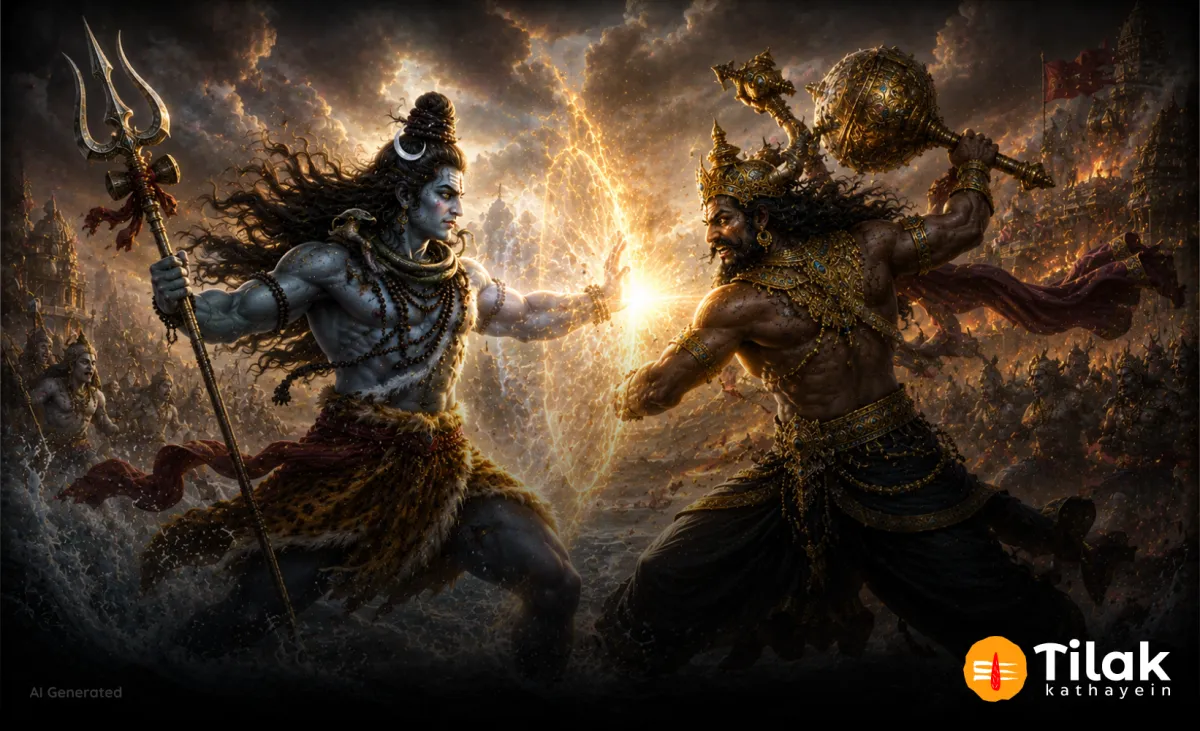
Why Did Lord Shiva Kill Jalandhar? Know the Mystery and Story
शिव पुराण के अनुसार, जलंधर भगवान शिव के तीसरे नेत्र के तेज से समुद्र में उत्पन्न हुआ उनका ही एक अंश था। अपनी अजेय शक्ति और अहंकार के कारण उसने त्रिलोक पर विजय प्राप्त की और माता पार्वती का हरण करने का प्रयास किया। जब तक उसकी पतिव्रता पत्नी वृंदा का सतीत्व अखंड था, तब तक जलंधर को मारना असंभव था। धर्म और सृष्टि की रक्षा के लिए भगवान विष्णु द्वारा वृंदा का पतिव्रत धर्म खंडित करने के पश्चात ही महादेव ने त्रिशूल से उसका वध किया।
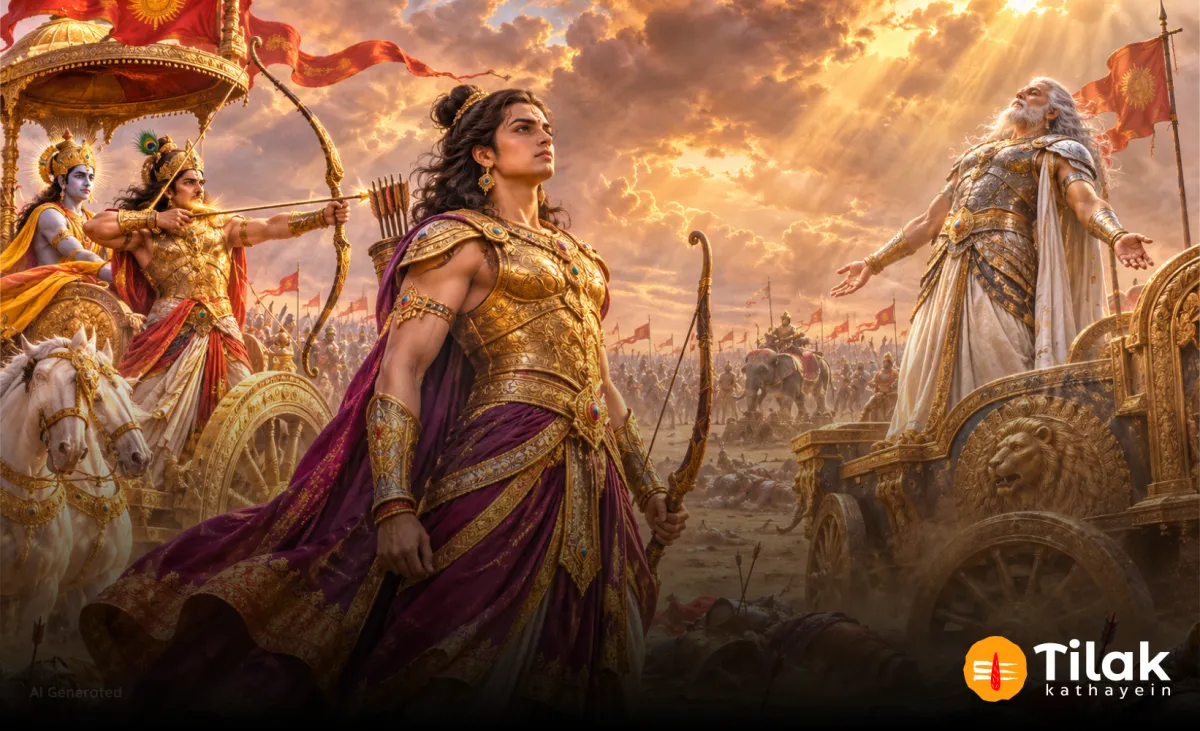
Shikhandi's Role in Mahabharata: The Truth of Bhishma's Fall and Amba's Revenge
महाभारत के कुरुक्षेत्र युद्ध में शिखंडी की भूमिका सबसे निर्णायक मोड़ों में से एक थी। पूर्वजन्म में काशी की राजकुमारी 'अंबा' के रूप में उसने भीष्म के विनाश की प्रतिज्ञा ली थी और भगवान शिव से वरदान पाकर राजा द्रुपद के घर शिखंडी के रूप में जन्म लिया। युद्ध के 10वें दिन जब भीष्म पितामह कौरव सेना का संहार कर रहे थे, तब अर्जुन ने शिखंडी को अपने रथ के आगे ढाल बनाया। भीष्म पितामह ने शिखंडी को पूर्वजन्म की स्त्री मानकर अपने अस्त्र नीचे रख दिए, जिसके पश्चात शिखंडी के बाणों के पीछे से अर्जुन ने तीरों की बौछार कर भीष्म को बाणों की शय्या पर ला पटका।
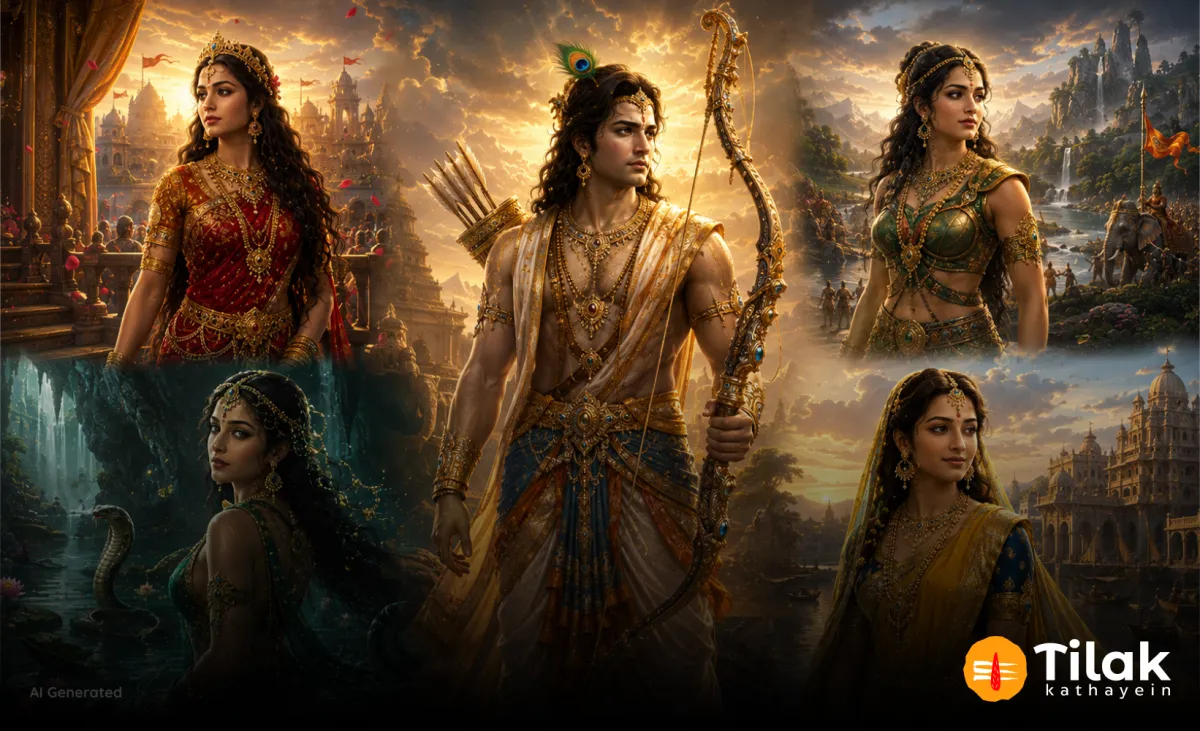
Who were Arjuna's 4 Wives? Know the Complete Mahabharata Story from Draupadi to Ulupi
महाभारत में अर्जुन को महान धनुर्धर और पांडवों के प्रमुख योद्धा के रूप में जाना जाता है, लेकिन उनके **चार विवाहों** की कथा भी उतनी ही रोचक है। अर्जुन का विवाह **द्रौपदी, नागकन्या उलूपी, मणिपुर की राजकुमारी चित्रांगदा और सुभद्रा** से हुआ था। प्रत्येक विवाह के पीछे अलग परिस्थितियां, परंपराएं और महत्वपूर्ण घटनाएं जुड़ी थीं। इस लेख में जानें अर्जुन की चारों पत्नियों की कहानी, उनसे जुड़ी संतान, विवाह के कारण और महाभारत की कथा में उनके महत्वपूर्ण योगदान की सम्पूर्ण जानकारी।
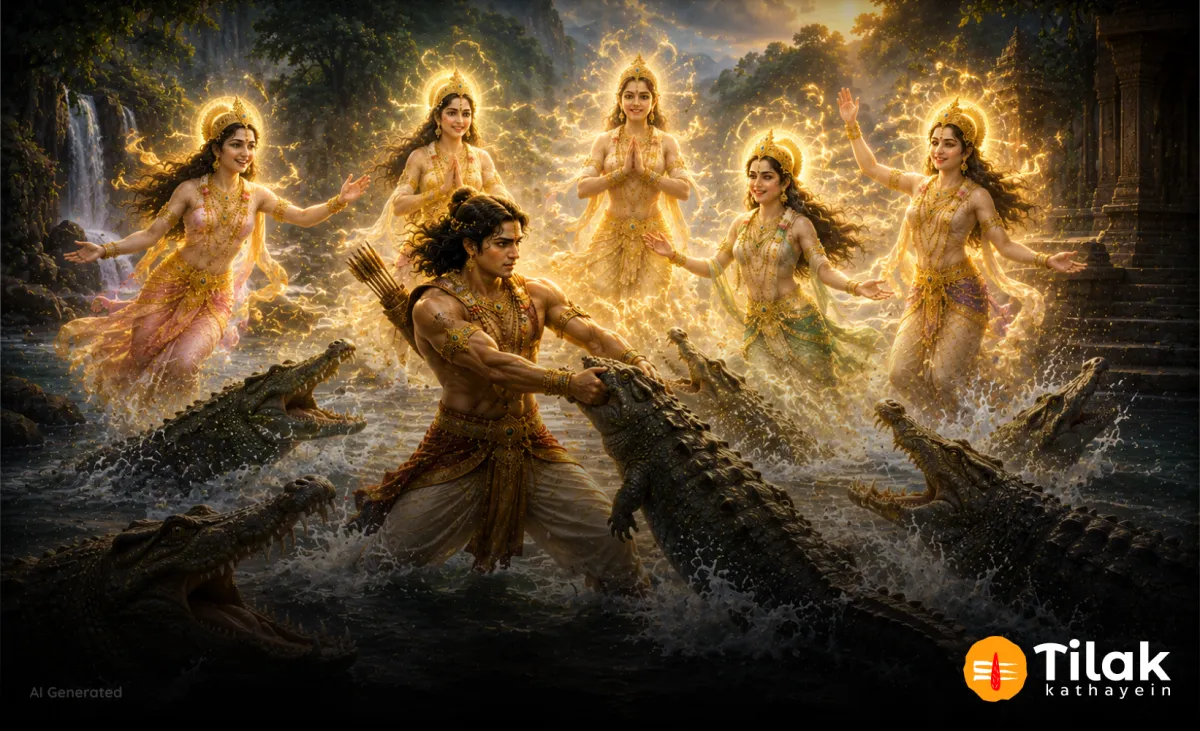
Salvation of 5 Apsaras: When Arjuna Broke the Crocodile's Curse
महाभारत के अनुसार, अपने 12 वर्ष के तीर्थाटन के दौरान अर्जुन ने दक्षिण के पंच तीर्थों में प्रवेश कर मगरमच्छ रूपी पाँचों शापित अप्सराओं (वर्गा, सौरभेयी, समीची, बुद्बुदा और लता) को जल से बाहर खींचकर उनका उद्धार किया। एक ऋषि के 100 वर्ष पुराने श्राप से मुक्त होकर वे पुनः अपने दिव्य रूप में लौट आईं, जिसके बाद ये पवित्र सरोवर 'नारी तीर्थ' के नाम से प्रसिद्ध हुए।
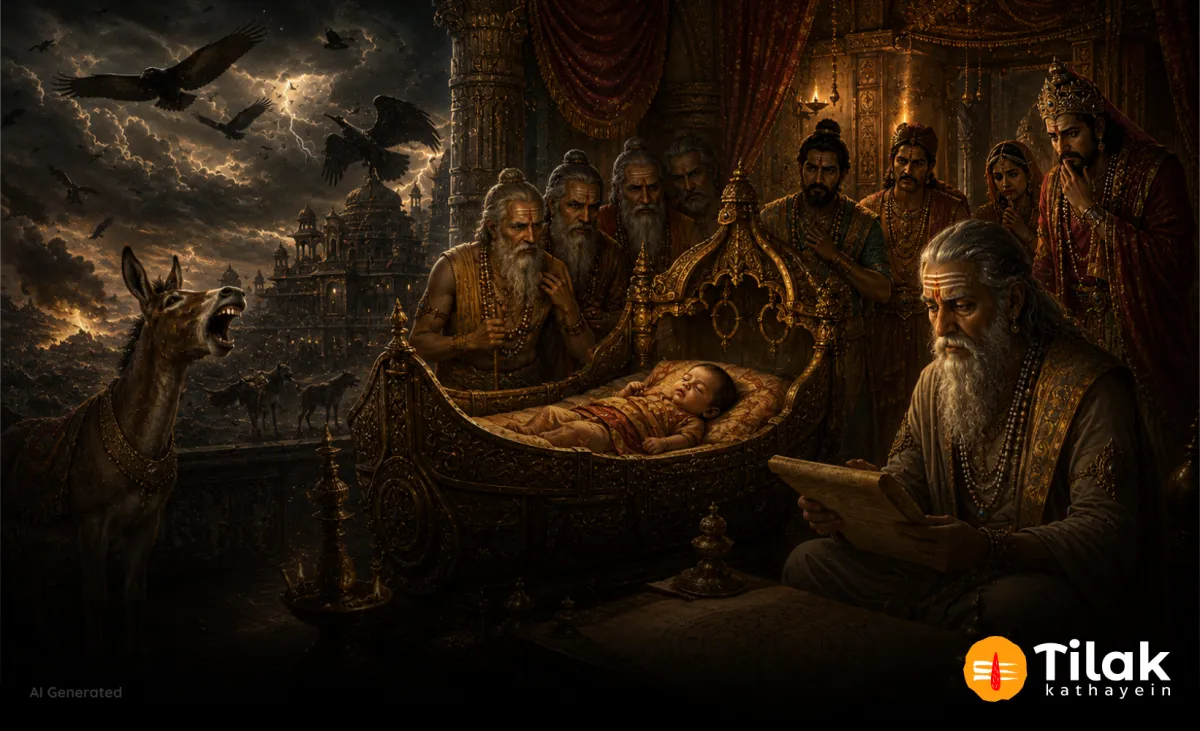
What Happened on the Night of Duryodhana's Birth? Know the Ominous Signs, Vidura's Warning, and the Mystery of the Mahabharata
**दुर्योधन के जन्म का प्रसंग** महाभारत की सबसे रहस्यमयी घटनाओं में से एक माना जाता है। कथाओं में वर्णन मिलता है कि उसके जन्म के समय वातावरण में कई अशुभ संकेत दिखाई दिए और हिंसक पशु-पक्षियों की भयावह आवाजें सुनाई देने लगीं। इन संकेतों को देखकर विदुर और अन्य विद्वानों ने धृतराष्ट्र को चेतावनी दी थी कि यह बालक कुल के लिए विनाश का कारण बन सकता है। इस लेख में जानें दुर्योधन के जन्म की रात क्या हुआ था, कौन-कौन से अपशकुन दिखाई दिए और महाभारत में इस घटना का क्या महत्व बताया गया है।
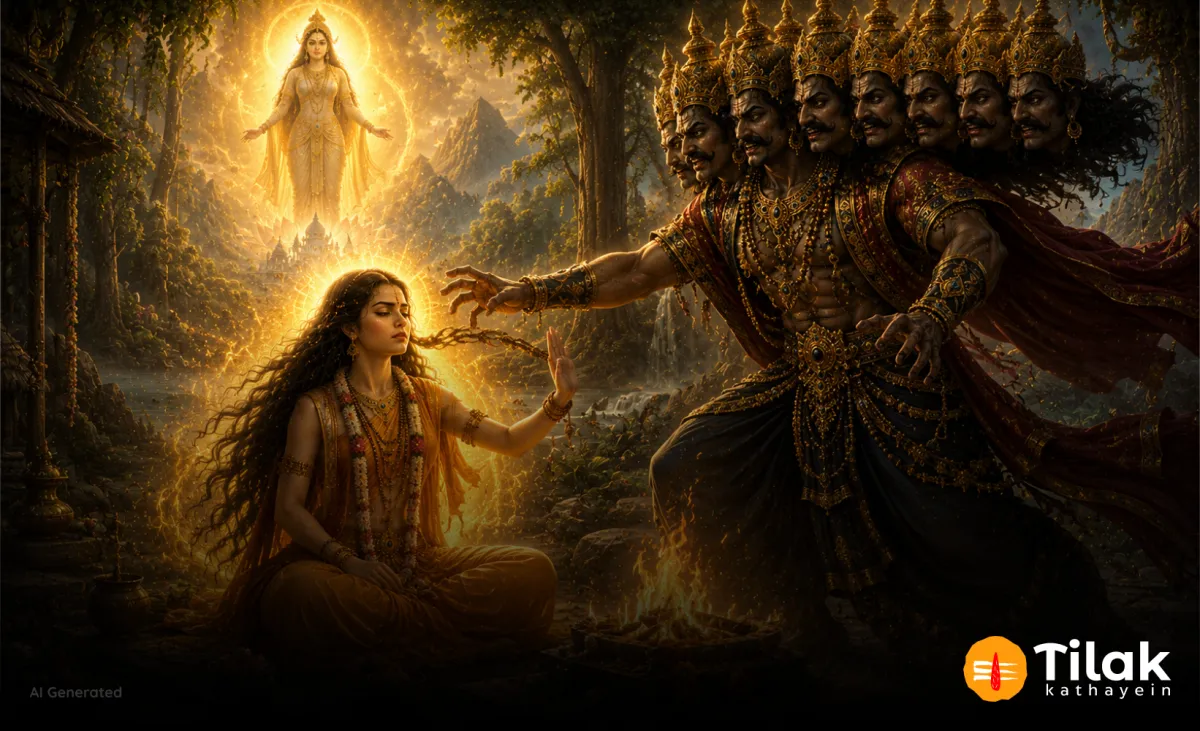
How was Mother Sita born? A mysterious mythological story linked to a curse
**माता सीता के जन्म** को लेकर रामायण और विभिन्न पुराणिक परंपराओं में अलग-अलग कथाएं मिलती हैं। एक प्रसिद्ध मान्यता में उनका संबंध **वेदवती** से जोड़ा जाता है, जिन्होंने भगवान विष्णु को पति रूप में पाने के लिए कठोर तपस्या की थी और रावण के कारण अपने जीवन का अंत कर पुनर्जन्म लेने का संकल्प किया था। आगे चलकर सीता जी का प्राकट्य राजा जनक को खेत में हल चलाते समय हुआ। इस लेख में जानें वेदवती की कथा, श्राप और पुनर्जन्म से जुड़ी मान्यता तथा माता सीता के दिव्य जन्म का रहस्य।