
Rameshwaram Jyotirlinga – रामेश्वरम ज्योतिर्लिंग

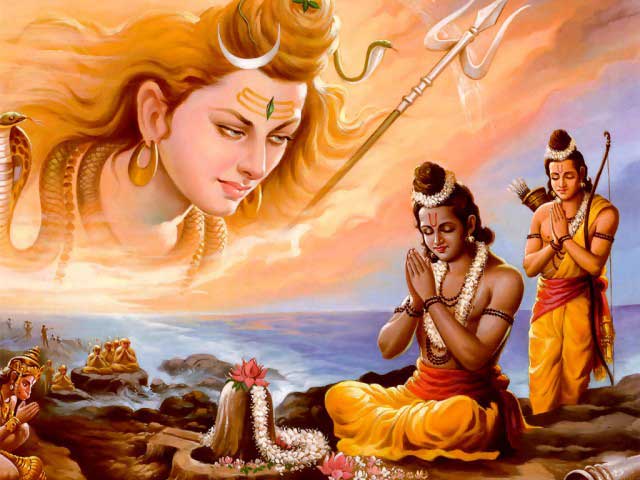
This temple, located on the beach in Tamil Nadu, is considered to be from the Ramayana period. It is believed that Lord Shri Ram, the king of Ayodhya, worshiped Lord Shiva by making a Shivling of sand at this place with the desire for victory before fighting Ravana, the lord of Lanka. After which Lord Shiva appeared here in the form of light.
Mythological Story
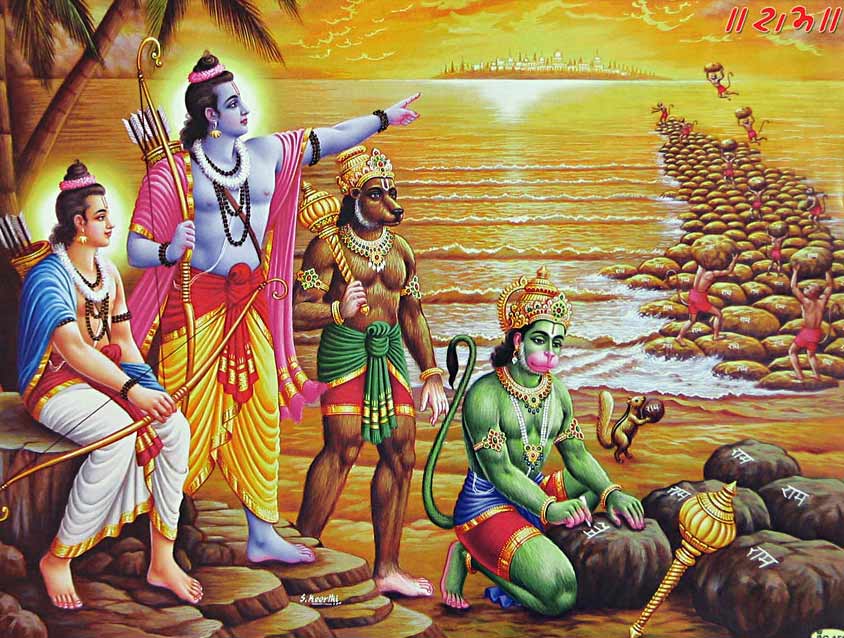
These interesting stories are told about the establishment of the famous temple of Rameshwaram. Ram attacked Lanka to free Sita. He tried a lot to get Sita freed without war, but when Ravana refused to agree, he was forced to fight. For this war, Ram had to cross the ocean with the monkey army, which was an extremely difficult task.
Then Shri Ram, to express gratitude for success in the war and victory, built a Shivling with his own hands from the sand on the seashore to worship his revered Lord Shiva, only then did Lord Shiva appear in the form of light and he gave this Linga the epithet of Shri Rameshwaram. In this war, Ravana, along with his entire demon clan, was destroyed and finally Shri Ram returned after freeing Sita.
Ravana was also no ordinary demon. He was a descendant of Maharishi Pulastya and a knowledgeable person of the Vedas and a great devotee of Shiva. Shri Ram felt great regret after killing him. To atone for the sin of Brahma-hatya, Shri Ram went to Rameshwaram and worshiped even after the victory of the war.
After establishing the Shivling, to give this Linga the same recognition as Kashi Vishwanath, he asked Hanumanji to bring a Shivling from Kashi. Hanuman was the son of Pawan. He set off at great speed through the sky. And brought the Shivling. Seeing this, Ram was very pleased and established the Linga of Kashi along with the Jyotirlinga of Rameshwar. This small-sized Shivling is also known as Ramnath Swami. Both these Shivlings are still worshiped in the main temple of this pilgrimage site today. This main Shivling is the Jyotirlinga.
Construction
To the south of Rameshwaram is the famous pilgrimage site called Kanyakumari. The Bay of Bengal, called Ratnakar, meets the Indian Ocean here. Rameshwaram and Setu are very ancient. But the temple of Ramnath is not that old. Some other temples in the South were built one and a half to two thousand years ago, while the temple of Ramnath was built less than eight hundred years ago. Many parts of this temple are fifty-sixty years old.
The corridor of Rameshwaram is the longest corridor in the world. It is 197 m in north-south and 133 m in east-west. The width of its rampart is 6 m and the height is 9 m. The Gopuram of the entrance of the temple is 38.4 m high. This temple is built in approximately 6 hectares.
In the temple, near the sanctum sanctorum of Vishalakhshi Ji, there are nine Jyotirlingas, which are said to have been established by Lankapati Vibhishana. The copper plates in the Ramnath temple show that in 1173 AD, King Parakram Bahu of Sri Lanka had the sanctum sanctorum of the original Linga built. Only the Shivling was installed in that temple. The idol of the goddess was not kept, hence it was called the temple of Nihsangheshwar. This original temple has reached its present state.
Later, in the fifteenth century, Raja Udayan Setupati and a Vaishya resident of nearby Nagaur had its 78 feet high Gopuram built in 1450. Later, a devotee of the goddess from Madurai renovated it. In the sixteenth century, the second rampart wall of the southern part was built by Tirumalaya Setupati. His and his son's idols are also installed at the gate. In the same century, Udayan Setupati Kattateshwar, a subordinate king of Raja Vishwanath Nayak of Madurai, had the Nandi Mandap etc. built. Nandi Mandap is 22 feet long, 12 feet wide and 17 feet high. The Setumadhav temple along with the Ramnath temple was built five hundred years ago by Raja Udayan Setupati of Ramnathpuram and a wealthy Vaishya together.
In the seventeenth century, Dalwai Setupati started the eastern Gopuram. In the 18th century, Ravivijay Setupati built the sleeping quarters of the gods and goddesses and a pavilion. Later, Muttu Ramaling Setupati built the outer rampart. Between 1897 – 1904, a family from Madhya Devakottai built the eastern Gopuram with nine gates, 126 feet high. This family repaired the sanctum sanctorum in 1907-1925. Later, they also performed Mahakumbhabhishekam in 1947.
Mythological Reference of Setu
The construction of the Setu is described every year on Dussehra in many countries across India, Southeast Asia and East Asia and in all kinds of dance-dramas based on the life of Ram. This bridge built by Ram is mentioned not only in the Ramayana, but also in the Mahabharata, there is a mention of Shri Ram's Nal Setu. Kalidas's Raghuvansh has a description of Setu. Many Puranas also contain details of Shriramsetu.
It is called Ram Setu in the Encyclopedia Britannica. In the pictures taken by NASA and Indian satellites, the thin line of islands that appears from Dhanushkodi to Jaffna is known today as Ramsetu. This bridge was later named Adam's Bridge. This bridge was built in just five days. Its length was 100 yojanas and width was 10 yojanas. High technology was used to build it.
Today's Panchang 28 October 2026
For auspicious times, choghadiya, horoscope and planetary positions
Related Articles
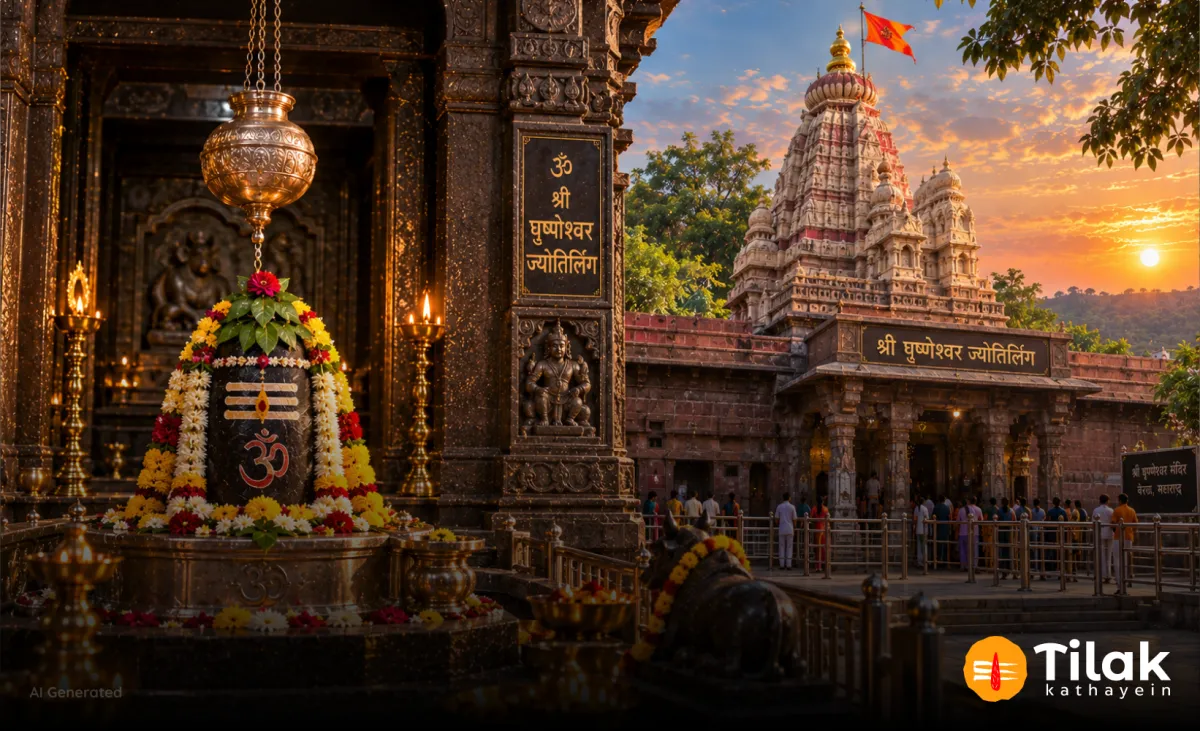
Grishneshwar Jyotirlinga: Grishneshwar Temple Guide & Katha
महाराष्ट्र के छत्रपति संभाजीनगर (औरंगाबाद) में प्रसिद्ध एलोरा गुफाओं के समीप स्थित घृष्णेश्वर (घुश्मेश्वर) महादेव मंदिर भगवान शिव के 12 पावन ज्योतिर्लिंगों में 12वां (अंतिम) ज्योतिर्लिंग है। शिव पुराण के अनुसार, अपनी परम भक्त 'घुश्मा' की अनन्य निष्ठा और भक्ति से प्रसन्न होकर भगवान शिव ने उसके मृत पुत्र को पुनर्जीवित किया था तथा उसके विनम्र अनुरोध पर सदैव के लिए यहाँ 'घुश्मेश्वर/घृष्णेश्वर' ज्योतिर्लिंग के रूप में स्थापित हुए। लाल पत्थरों से निर्मित यह भव्य मंदिर मोक्षदायिनी ऊर्जा और अटूट भक्ति का पावन प्रतीक है।
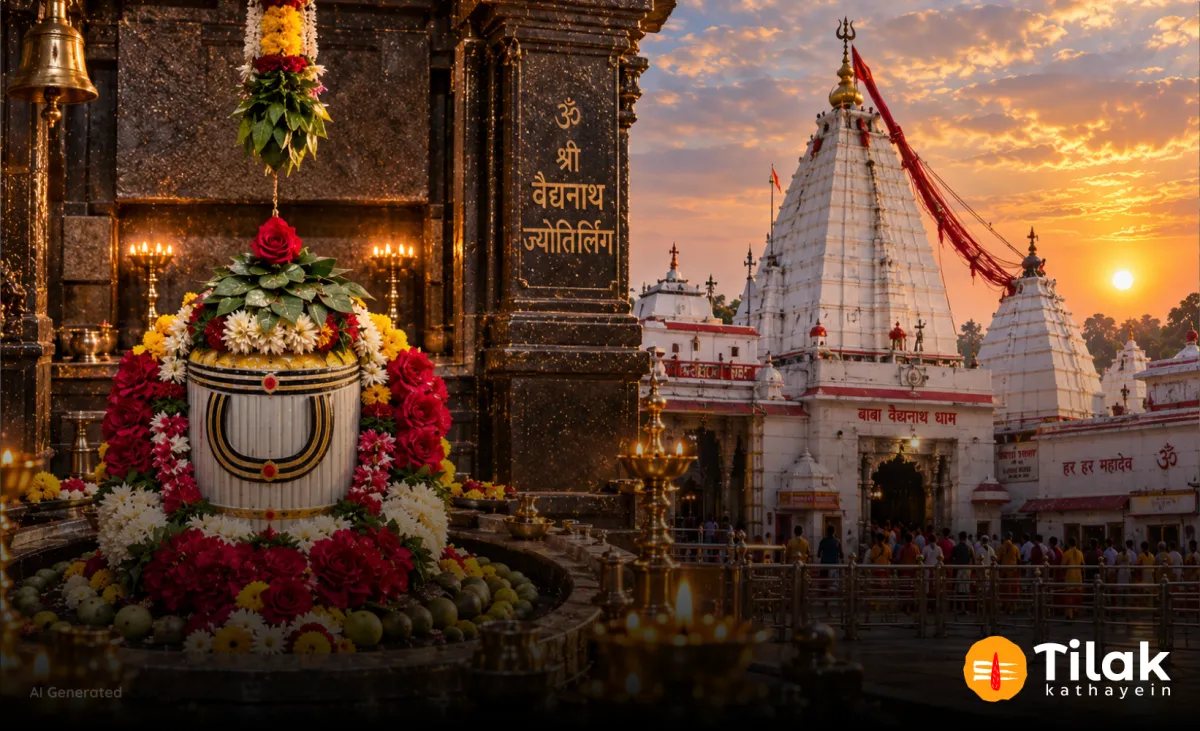
Baidyanath Jyotirlinga: Baidyanath Dham Guide & Katha
झारखंड के देवघर में स्थित बाबा बैद्यनाथ (वैद्यनाथ) मंदिर भगवान शिव के 12 पवित्र ज्योतिर्लिंगों में से एक है, जिसे 'कामना लिंग' के नाम से भी जाना जाता है। शिव पुराण के अनुसार, लंकापति रावण ने महादेव को लंका ले जाने के लिए यहाँ अपने दस शीश काटकर घोर तपस्या की थी। भगवान शिव ने प्रकट होकर उसके शीश पुनः जोड़ दिए और एक कुशल वैद्य की तरह उसकी चिकित्सा की, जिससे इस धाम का नाम 'वैद्यनाथ' पड़ा। सावन के पावन मास में सुल्तानगंज से गंगाजल लाकर बाबा धाम में जलाभिषेक करने का विशेष धार्मिक महत्व है।
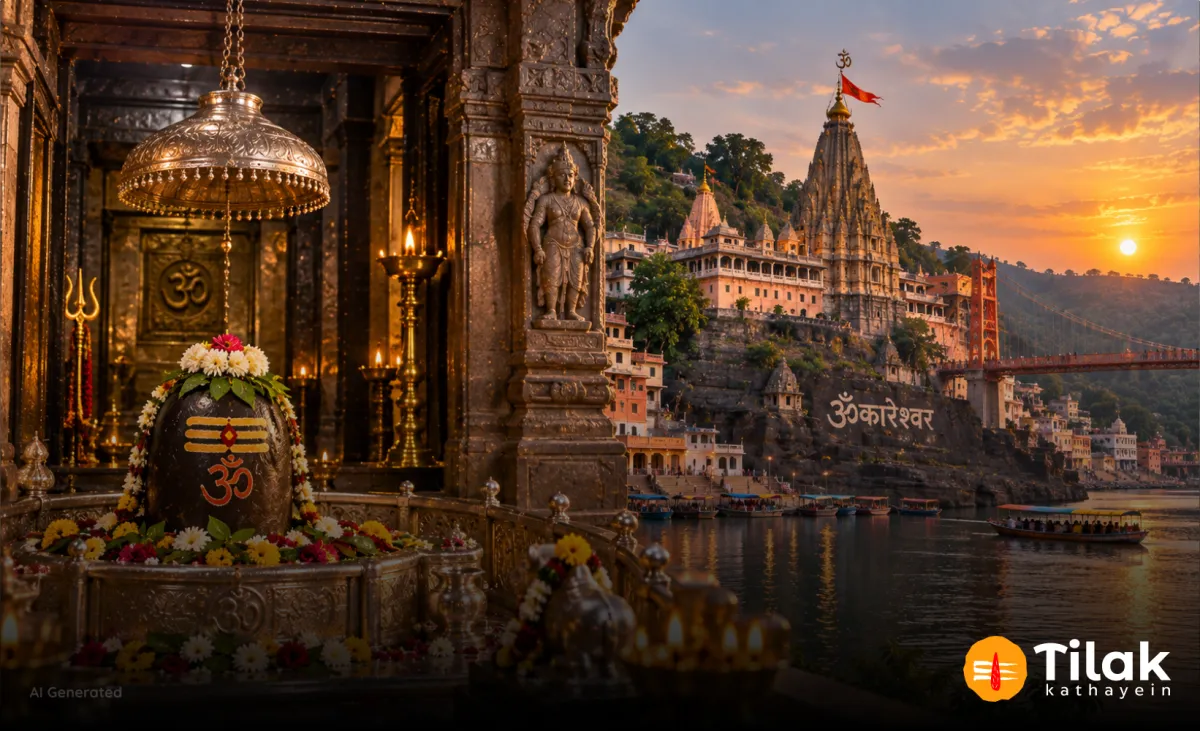
Omkareshwar Jyotirlinga: Omkareshwar Temple History & Guide
मध्य प्रदेश के खंडवा जिले में पवित्र नर्मदा नदी के तट पर स्थित ओंकारेश्वर महादेव मंदिर भगवान शिव के 12 पावन ज्योतिर्लिंगों में चतुर्थ (चौथा) स्थान रखता है। इस पावन तीर्थ का भौगोलिक आकार प्राकृतिक रूप से ॐ (प्रणव) जैसा बना हुआ है, जिसे शिवपुरी या मान्धाता द्वीप कहा जाता है। शिव पुराण के अनुसार, इक्ष्वाकु वंश के चक्रवर्ती राजा मान्धाता की कठोर तपस्या से प्रसन्न होकर महादेव यहाँ ज्योति रूप में प्रकट हुए थे। ओंकारेश्वर के साथ नर्मदा पार स्थित 'ममलेश्वर' लिंग के दर्शन करने पर ही संपूर्ण ज्योतिर्लिंग यात्रा का फल पूर्ण माना जाता है।
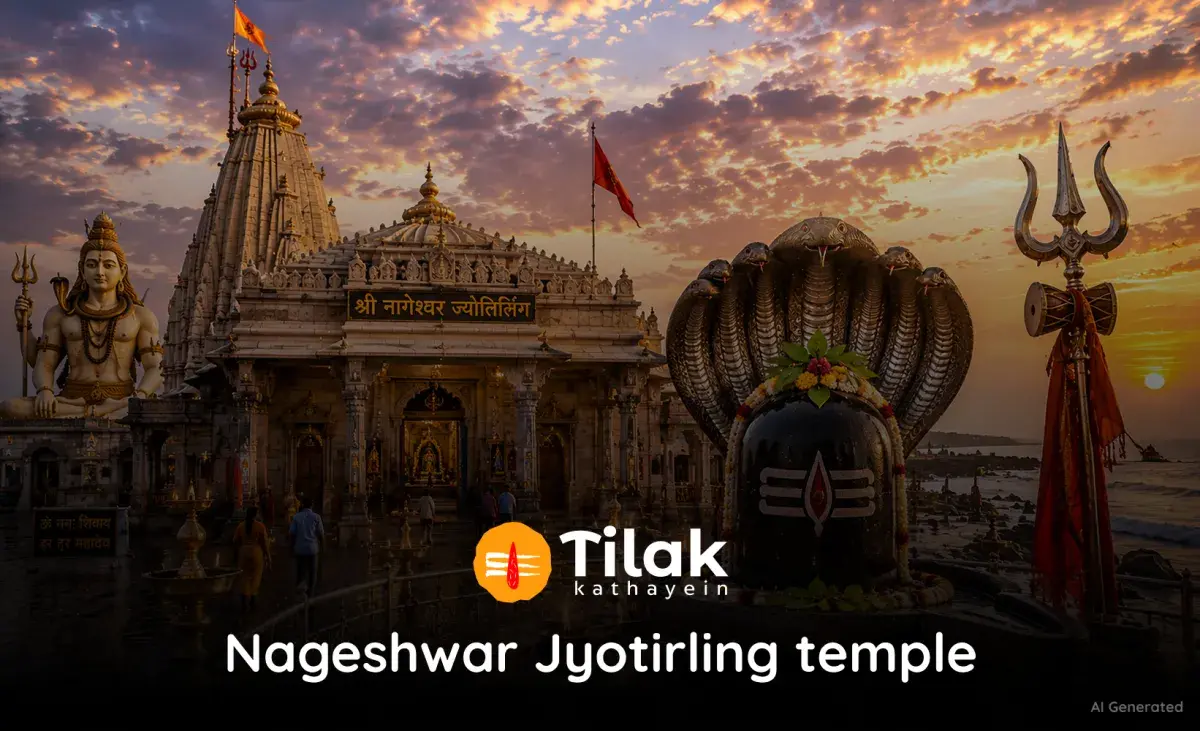
Nageshwar Jyotirlinga | Nageshwar Jyotirlinga Temple in Hindi
गुजरात के द्वारका स्थित नागेश्वर ज्योतिर्लिंग मंदिर की सम्पूर्ण जानकारी हिंदी में पढ़ें। जानें इसकी पौराणिक कथा, इतिहास, धार्मिक महत्व, दर्शन समय, पूजा विधि और यात्रा मार्ग।
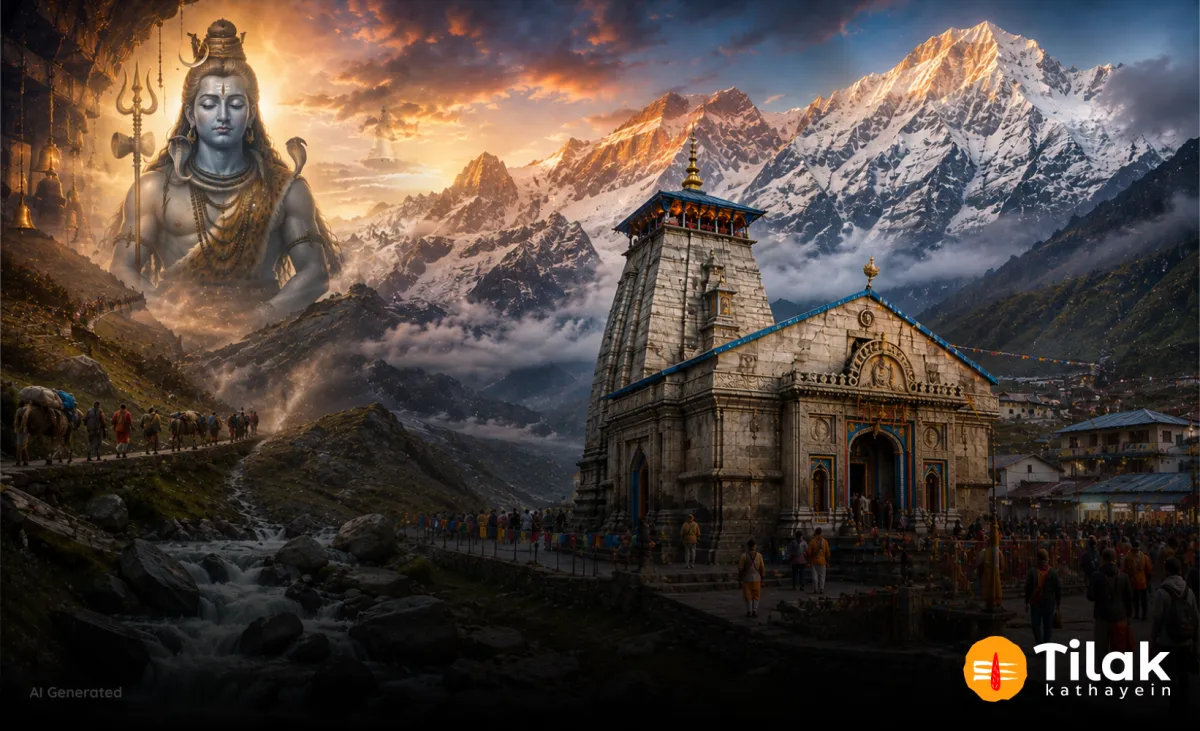
Kedarnath Dham: History, Mythology, Mysteries & Travel Guide
उत्तराखंड के रुद्रप्रयाग जिले में मंदाकिनी नदी के तट और गढ़वाल हिमालय की गोद में स्थित केदारनाथ धाम भगवान शिव के 12 प्रमुख ज्योतिर्लिंगों तथा चार धामों में से एक है। महाभारत काल की पौराणिक मान्यता के अनुसार, कुरुक्षेत्र युद्ध के पापों के प्रायश्चित हेतु जब पांडव शिवजी की खोज में हिमालय पहुँचे, तब महादेव ने बैल (नंदी) का रूप धारण किया और उनका पृष्ठ (पीठ) भाग केदारनाथ में स्वयंभू ज्योतिर्लिंग के रूप में प्रकट हुआ। यह पावन धाम मोक्ष, आत्मशुद्धि और आध्यात्मिक ऊर्जा का प्रमुख केंद्र माना जाता है।

Somnath Jyotirlinga: Somnath Temple History & Guide
सोमनाथ मंदिर गुजरात के प्रभास पाटन में स्थित भगवान शिव के **12 ज्योतिर्लिंगों में प्रथम** और सबसे पवित्र तीर्थस्थलों में से एक है। यह मंदिर अपने प्राचीन इतिहास, अनेक बार हुए पुनर्निर्माण, अद्भुत वास्तुकला और गहन धार्मिक महत्व के लिए विश्वभर में प्रसिद्ध है। इस लेख में जानें सोमनाथ मंदिर का इतिहास, पौराणिक कथा, ज्योतिर्लिंग का महत्व, दर्शन समय, आरती, यात्रा मार्ग, प्रमुख उत्सव और इससे जुड़े रोचक तथ्य।