
Kedarnath Temple: History, Darshan, Yatra, Opening Date, and Religious Significance
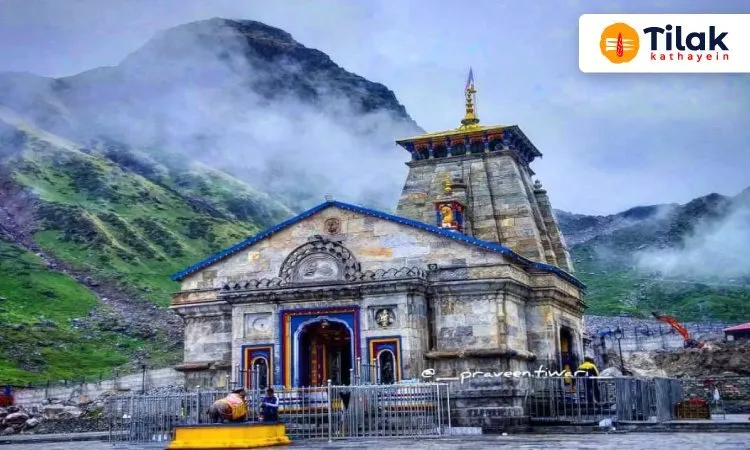
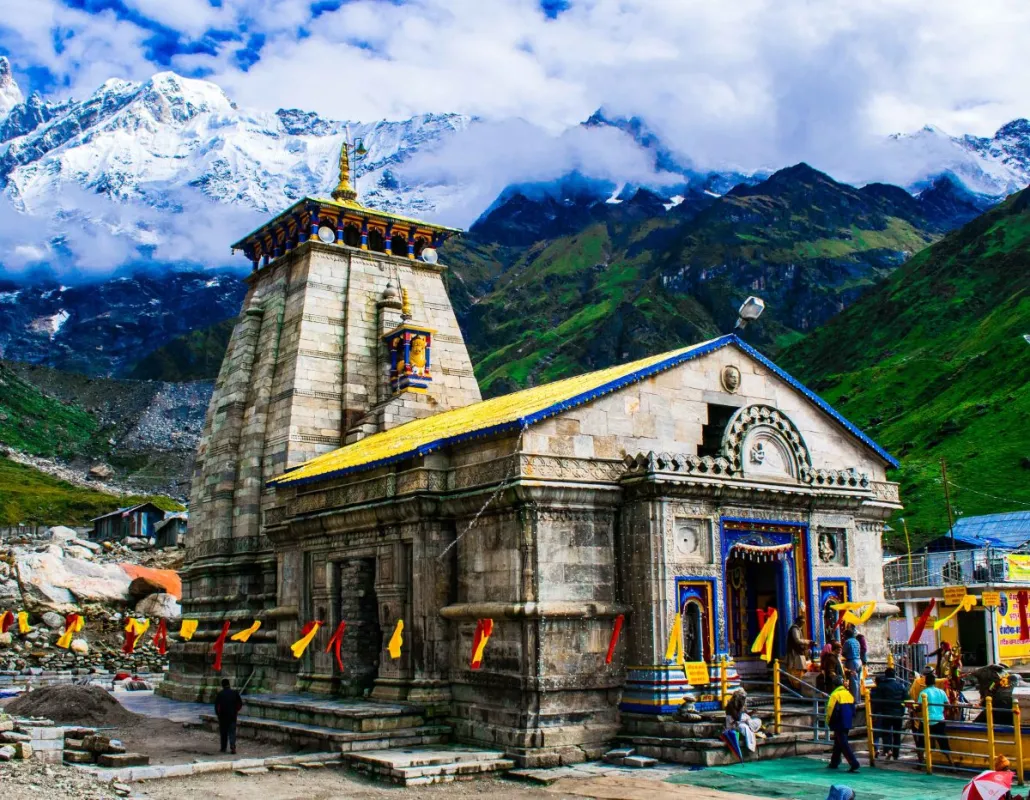
The Kedarnath temple is believed to have been built by the Pandavas and was renovated by Adi Shankaracharya in the 8th century. Situated on the banks of the Mandakini River, this temple is made of ancient stones and its architecture is unique. Millions of devotees visit here every year for darshan.
Mythological Story
The history of the establishment of this Jyotirlinga is briefly that Lord Vishnu's avatar, the great ascetics Nara and Narayana, used to perform penance on the Kedar peak of the Himalayas. Pleased by their devotion, Lord Shiva appeared and, as per their prayer, granted them the boon of residing there forever in the form of a Jyotirlinga. This place is situated on the peak named Kedar, on the Kedar mountain range of the Himalayas.
The story of Panchkedar is believed to be that after winning the Mahabharata war, the Pandavas wanted to be absolved of the sin of fratricide. For this, they wanted to seek Lord Shiva's blessings, but he was displeased with them. To seek Lord Shiva's darshan, the Pandavas went to Kashi, but they did not find him there. Searching for him, they reached the Himalayas. Lord Shiva did not want to give darshan to the Pandavas, so he disappeared from there and settled in Kedar.
On the other hand, the Pandavas were also determined; they followed him and reached Kedar. Lord Shiva had then taken the form of a bull and mingled with other cattle. The Pandavas became suspicious. Therefore, Bhima assumed his gigantic form and spread his legs across two mountains. All the other cows and bulls passed through, but the bull in the form of Shiva was unwilling to pass from beneath his legs. Bhima forcefully lunged at this bull, but the bull began to disappear into the ground. Then Bhima caught hold of the triangular part of the bull's back. Lord Shiva was pleased to see the devotion and firm resolve of the Pandavas. He immediately gave them darshan and absolved them of their sins. From that time onwards, Lord Shiva is worshipped in the form of a bull's hump-like idol at Shri Kedarnath. It is believed that when Lord Shiva disappeared in the form of a bull, the part of his body above the torso appeared in Kathmandu. Now, the famous Pashupatinath temple is located there. Shiva's arms appeared in Tungnath, his face in Rudranath, his navel in Madmaheshwar, and his matted locks in Kalpeshwar. Therefore, along with these four places, Shri Kedarnath is called Panchkedar. Grand temples of Lord Shiva are built here.
Construction
Kedarnath Temple is a famous Hindu temple located in the Rudraprayag district of Uttarakhand state in India. Nestled in the lap of the Himalayas in Uttarakhand, Kedarnath Temple is counted among the twelve Jyotirlingas, as well as being one of the Char Dham and Panch Kedars. Due to the adverse climate here, the temple opens for darshan only between April and November. This temple, built in the Katyuri style with stones, is said to have been constructed by Maharaja Janamejaya, the grandson of the Pandavas. The self-manifested Shivalinga located here is very ancient. Adi Shankaracharya renovated this temple.
During June 2013, Kedarnath was the most affected area due to sudden floods and landslides in the Indian states of Uttarakhand and Himachal Pradesh. Houses around the temple were washed away. The main part of this historic temple and its centuries-old dome remained safe, but the temple's entrance and the surrounding area were completely devastated. Kedarnath Temple is an unsolved mystery!!
Much is said about who built the Kedarnath temple, from the Pandavas to Adi Shankaracharya. Today's science suggests that the Kedarnath temple was perhaps built in the 8th century. Even if you don't agree, this temple has been in existence for at least 1200 years. The land of Kedarnath is very harsh even in the 21st century. On one side is the 22,000 feet high Kedarnath mountain, on the other side is the 21,600 feet high Karachkund, and on the third side is the 22,700 feet high Bharatkund. There are five rivers flowing through these three mountains: Mandakini, Madhuganga, Chirganga, Saraswati, and Swarandari. Some of these are mentioned in this Purana.
This region is the sole catchment area of the "Mandakini River". This temple is a work of art. What a monumental impossible task it must have been to build a temple like a work of art in such a place, where there is heavy snowfall in winter and water flows at high speed during the monsoon season. Even today, you cannot reach that place by car! Then why was this temple built in such a location? How could such a magnificent temple be built over 1200 years ago in such adverse conditions? Even after 1200 years, where everything in that region is transported by helicopter! Even today, not a single structure stands there without a JCB. This temple stands there, and not only stands but is very strong. We should all think about this at least once.
Scientists estimate that if the temple were on Earth in the 10th century, it would have been during a short period of the "Ice Age." The Wadia Institute of Geology, Dehradun, tested lignomatic dating on the rocks of the Kedarnath temple. This is done to identify the "life of the stones." The tests revealed that the temple was completely buried under ice from the 14th century to the mid-17th century. However, the construction of the temple suffered no damage. Everyone must have seen the devastating flood in Kedarnath in 2013. During this time, the rainfall was 375% more than average.
Reasons for the temple standing intact: The direction in which this temple is built and the location chosen are the primary reasons. The second reason is that the stone used in it is very hard and durable. The special thing is that the stone used for the construction of this temple is not available there, so just imagine how that stone could have been transported there. At that time, there were not enough tools available to carry such large stones. The specialty of this stone is that even after being under ice for 400 years, there is no difference in its "properties."
Today, science states that the stone and structure used in the construction of the temple, and the direction in which it is built, are the reasons why this temple survived this flood. Kedarnath Temple is built "North-South." Whereas almost all temples in India are "East-West." According to experts, if the temple were "East-West," it would have been destroyed long ago. Or at least it would have been devastated in the 2013 flood. But due to this direction, the Kedarnath temple has survived. Therefore, the temple has maintained its strength within the cycle of nature.
Kedarnath Yatra
The journey to Kedarnath Dham is one of the four important temples of Uttarakhand's sacred Chota 5 Dham Yatra. The Chota Char Dham Yatra is organized every year. Apart from the Kedarnath Yatra, the other temples are Badrinath, Gangotri, and Yamunotri. To participate in the Kedarnath Yatra, the date of the temple's opening is decided each year. The opening date of the temple is announced after calculations from the Hindu almanac on Akshaya Tritiya.
The opening date of Kedarnath is declared every year on the auspicious day of Akshaya Tritiya and on Mahashivratri. And the closing date of Kedarnath Temple is around November every year, after the Diwali festival, on the day of Bhai Dooj. After this, the temple doors are closed for the winter season.
Suggestions
- Health Check-up: Get your health checked before trekking, as the route can be challenging.
- Registration: Registration for the journey has been made mandatory by the Uttarakhand government. Register online before your journey.
- Keep Weather in Mind: Get weather information while planning your trip and prepare accordingly.
- Follow Instructions of Local Administration: Be sure to follow the instructions of the local administration and security personnel during the journey.
Before planning your trip, contact the official website of Uttarakhand Tourism or the concerned authorities for the latest information.
| Information – Information | |
|---|---|
| Establishment | Pandavas |
| Construction | Janamejaya, the great-grandson of the Pandava lineage |
| Inaugurated by | – |
| Dedicated to | Lord Vrishabhanatha |
| Supervising Body | Shri Badrinath Kedarnath Temple Committee |
| Photography | No |
| Free Entry | No, it is advisable to book in advance for the Kedarnath temple visit. |
| Timings | 4:30 AM to 9:00 PM |
| Pooja Timings | Mangala Aarti: 4:00 AM Mahabhishek Pooja:4:30 AM to 7:00 AMShringar Darshan:7:00 AM to 12:00 PM Bhog Aarti:12:00 PM to 3:00 PMSandhya Aarti:6:00 PM to 7:30 PM |
| Time taken for Darshan | 0.5-1 hour |
| Best time to visit | September to October |
| Website | https://badrinath-kedarnath.gov.in/ |
| Phone | +91-1382-262185, +91-1382-262276 |
| Basic Facilities | Prasad, Hotels, Seating Benches, Parking, Dining Hall |
| How To Reach – How To Reach | |
|---|---|
| Address | Kedarnath, Rudraprayag District, Uttarakhand, Pin Code: 246445, India |
| Road/Route | Delhi to Gaurikund: The distance from Delhi to Gaurikund is approximately 450 kilometers. You can reach Gaurikund via Rishikesh and Rudraprayag from Delhi. Bus and taxi services run regularly from Delhi to Rishikesh. Gaurikund from Rishikesh/Haridwar:Direct buses and taxis are available from Rishikesh or Haridwar to Gaurikund. This journey can take approximately 8-10 hours. |
| Railway Station | Gaurikund from Rishikesh: Taxi or bus services are available from Rishikesh to Gaurikund. This distance is approximately 210 kilometers. |
| Air Route | Gaurikund/Phata from Jolly Grant Airport: Taxi or bus services are available from Jolly Grant Airport to Gaurikund. This distance is approximately 240 kilometers. Helicopter Service:Helicopter service is also available from Gaurikund or Phata to Kedarnath. |
| Trekking | Kedarnath from Gaurikund: A trek of 16 kilometers is required from Gaurikund to Kedarnath Temple. This trekking route is very beautiful and holds religious significance. Several resting points and food facilities are available along the route. |
| Coordinates | 9.0669° E / 30.7352° N |
Kedarnath Temple – On Google Maps
Today's Panchang 25 July 2026
For auspicious times, choghadiya, horoscope and planetary positions
Related Articles

The Four Abodes of India | Char Dham Yatra in India
हिंदू धर्म की सबसे पवित्र तीर्थ यात्राओं में से एक मानी जाती है। इसमें **बद्रीनाथ, द्वारका, जगन्नाथ पुरी और रामेश्वरम** शामिल हैं, जिन्हें मोक्ष प्रदान करने वाले चार प्रमुख धाम माना जाता है। इस लेख में जानें भारत के चार धाम का इतिहास, धार्मिक महत्व, पौराणिक कथाएं, यात्रा मार्ग और दर्शन से जुड़ी सम्पूर्ण जानकारी।
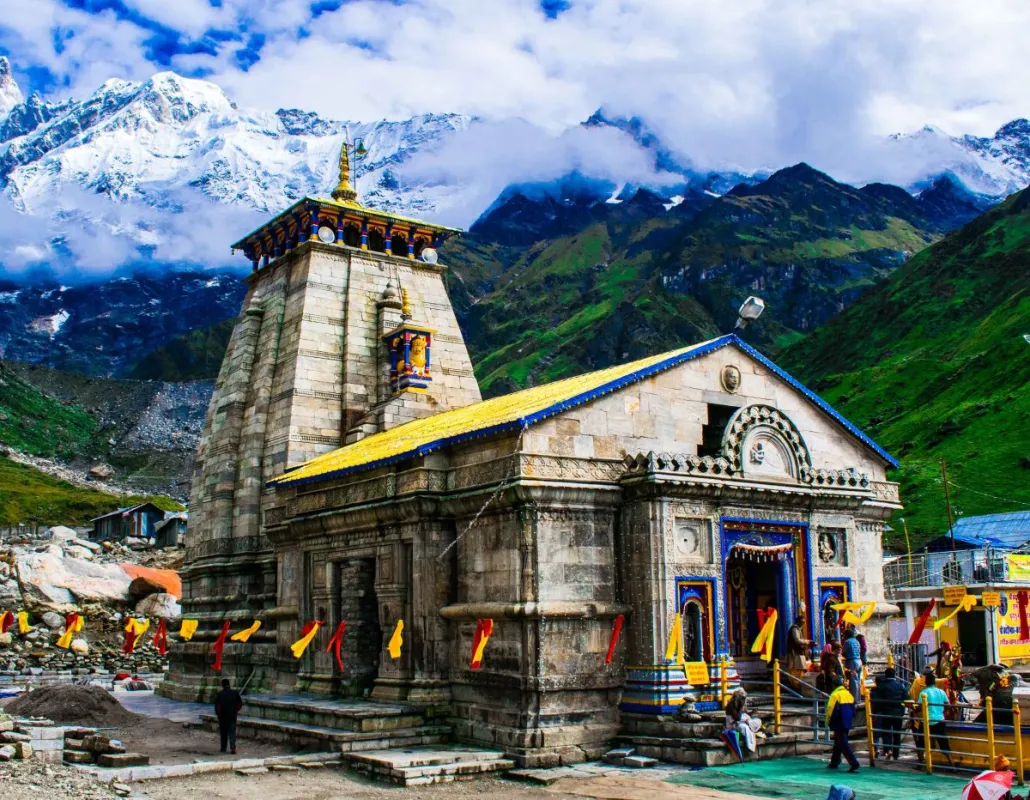
Kedarnath Temple | Kedarnath Temple 2026 - Darshan Timings, History, How to Reach | Complete Information
केदारनाथ मंदिर, उत्तराखंड 2026: आरती समय, दर्शन समय, प्रवेश शुल्क, कैसे पहुंचें, इतिहास और यात्रा गाइड। सम्पूर्ण जानकारी हिंदी में।
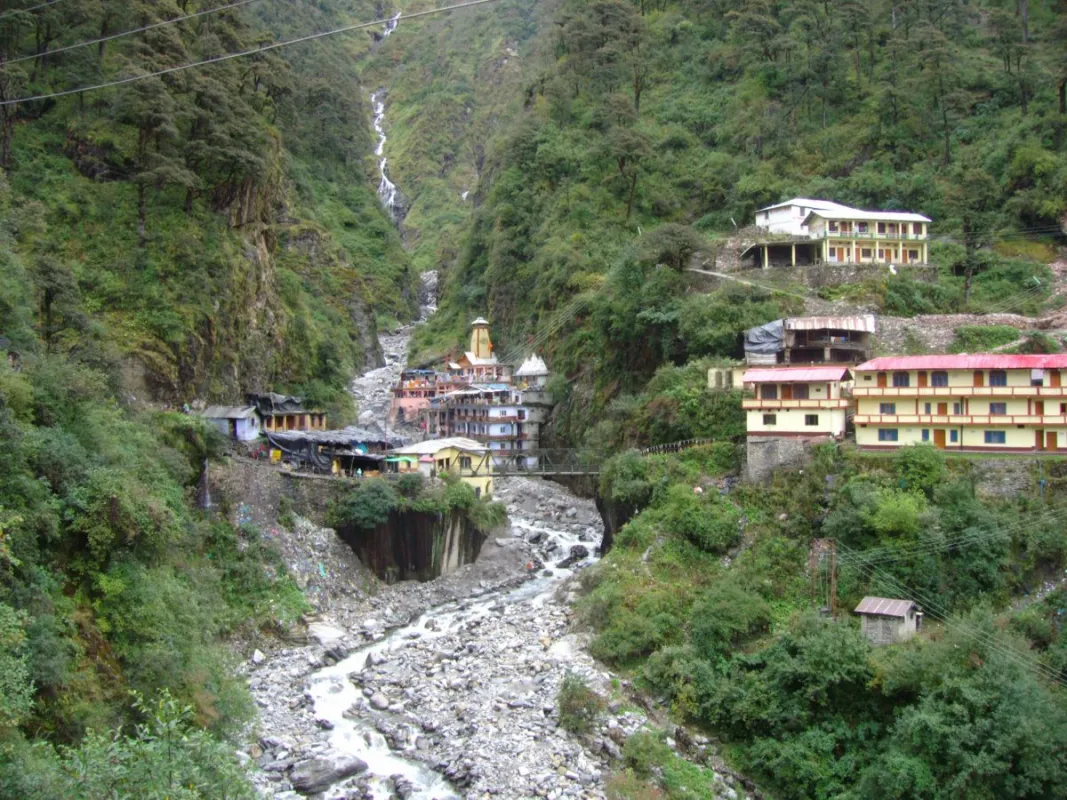
Yamunotri Temple | Yamunotri Temple 2026 – Darshan Timings, History, How to Reach | Complete Information
यमुनोत्री मंदिर, उत्तराखंड 2026: आरती समय, दर्शन समय, प्रवेश शुल्क, कैसे पहुंचें, इतिहास और यात्रा गाइड। सम्पूर्ण जानकारी हिंदी में।
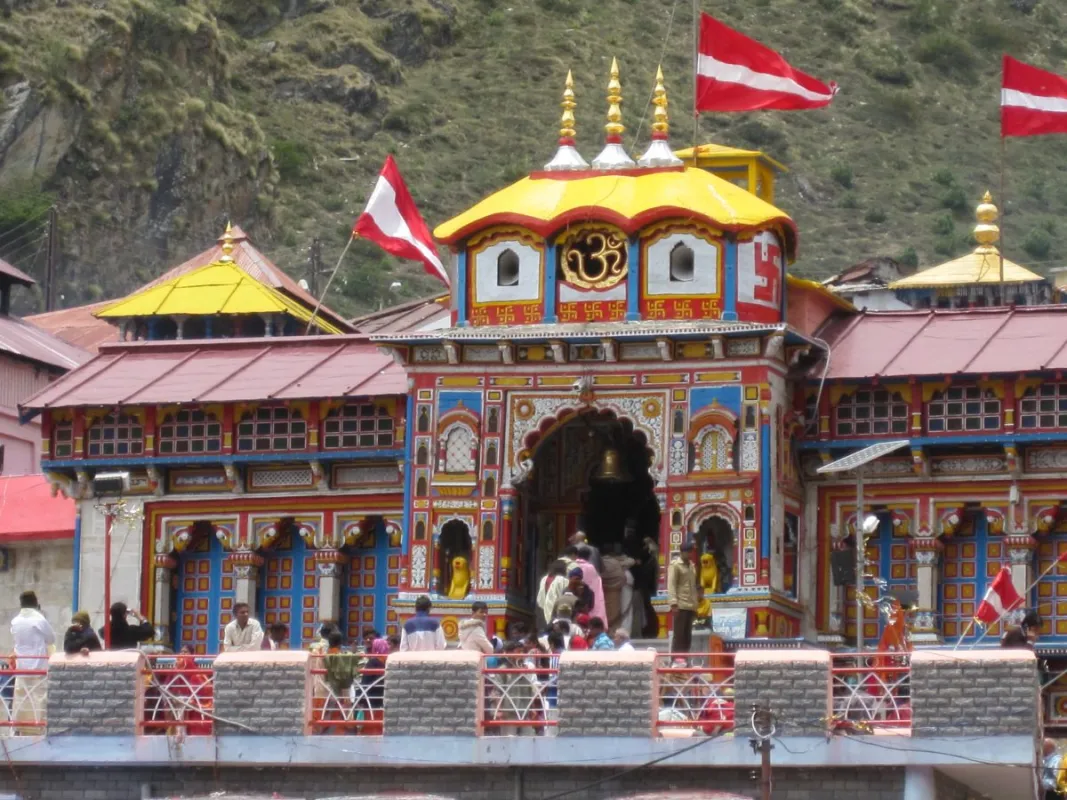
Badrinath Temple | Badrinath Temple 2026 - Darshan Timings, History, How to Reach | Complete Information
बद्रीनाथ मंदिर, उत्तराखंड 2026: आरती समय, दर्शन समय, प्रवेश शुल्क, कैसे पहुंचें, इतिहास और यात्रा गाइड। सम्पूर्ण जानकारी हिंदी में।
Gangotri Temple | Gangotri Temple 2026 – Darshan Timings, History, How to Reach | Complete Information
गंगोत्री मंदिर, उत्तराखंड 2026: आरती समय, दर्शन समय, प्रवेश शुल्क, कैसे पहुंचें, इतिहास और यात्रा गाइड। सम्पूर्ण जानकारी हिंदी में।
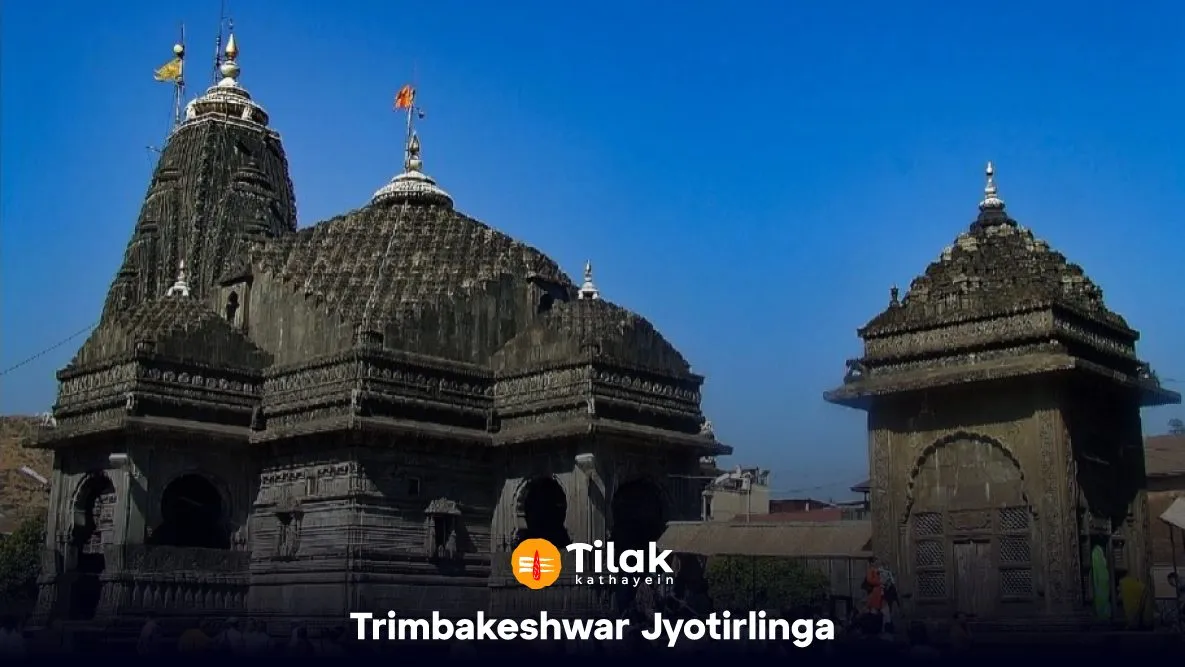
Tryambkeshwar Jyotirling – त्रंबकेश्वर ज्योतिर्लिंग
त्र्यंबकेश्वरज्योर्तिलिंग में ब्रह्मा, विष्णु और महेश तीनों ही विराजित हैं यही इस ज्योतिर्लिंग की सबसे बड़ी विशेषता है। अन्य सभी ज्योतिर्लिंगों में केवल भगवान शिव ही विराजित हैं। पौराणिक कथा…