
Why Do We Say "Swaha" During Havan?

Swaha – Introduction
Swaha, an extremely important word and concept in Hinduism, is directly related to fire and sacrifices (Yajnas). It is not just an incantation, but a symbol of surrender, offering, and complete faith. Fire is considered the mouth of the gods, and when an offering is made into the fire with the utterance of Swaha, it reaches the gods directly, as described in the scriptures. In 2026, where people often get disconnected from their spiritual roots in the hustle and bustle of life, the concept of Swaha inspires us to reconnect, perform our actions with a sense of witnessing, and understand the importance of sacrifice and surrender by rising above materialism.
Detailed Information
According to mythological stories, Swaha was the daughter of Daksha Prajapati and the wife of Agni Deva (the fire god). She performed the task of delivering the offerings made to the gods in Yajnas to them through fire, which is why her name is chanted during the offering. The various aspects of Swaha reflect its universal significance; it is not limited to religious rituals but also signifies the spirit of performing any task in life with completeness and devotion. An interesting fact about Swaha is that it not only signifies making an offering but also represents the spirit of relinquishing one's ego and dedicating all actions to others. It paves the way for our consciousness to rise above material desires and move towards spiritual bliss.
Importance and Benefits
- Connection with Agni Deva – The utterance of Swaha pleases Agni Deva and makes the Yajna successful. This brings the blessings of the gods.
- Purity and Sanctity – It is a symbol of purity of mind and speech, which removes negativity. Its use in Yajna also purifies the environment.
- Spirit of Surrender – It promotes the spirit of dedicating one's actions to God or the universe. It is helpful in reducing ego.
- Spiritual Progress – Through the regular practice of Swaha, the spiritual consciousness of the seeker develops. It brings the seeker closer to God.
Practical Suggestions
To adopt Swaha in life means to perform every action as a divine offering. Before starting any important task, or when you are performing a task with complete devotion and surrender, keep the feeling of "Swaha" in your mind, as if you are dedicating that task to a higher power. The common mistake is that people consider Swaha to be limited only to Yajnas, whereas its true meaning is to live the spirit of surrender in every moment of life. We should perform our actions free from ego, with a sense of witnessing; this is the true practical form of Swaha.
Frequently Asked Questions
What is Swaha?
Swaha is a Vedic mantra used during Yajnas and rituals when making offerings. It is the medium through which offerings made to Agni Deva are delivered to the gods.
What is the significance of Swaha?
Religiously, Swaha is indispensable for the success of a Yajna. Practically, it teaches surrender, sacrifice, and performing actions with a divine spirit, which brings peace and contentment in life.
Conclusion
The significance of Swaha in the spiritual journey of a modern Hindu is profound; it reminds us that our actions are not just for ourselves, but a means of dedication to a larger purpose. Understanding this concept deeply strengthens one's connection with Dharma, bringing a new direction and meaning to life.
We hope this information will be helpful in understanding the subject of Swaha more deeply. Share this knowledge with your family and friends. May the grace of Agni Deva always be upon you. Jai Agni Deva!
Today's Panchang 26 September 2026
For auspicious times, choghadiya, horoscope and planetary positions
Related Articles
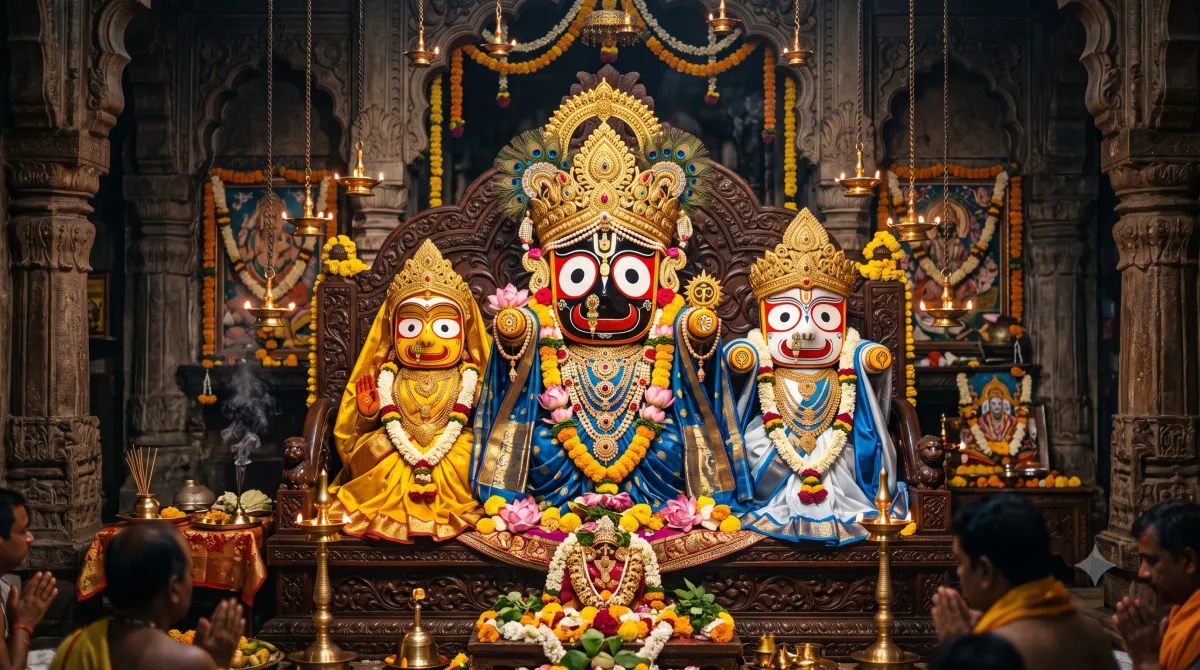
Introduction to Lord Jagannath | History, Mythology, Form, and Significance
भगवान जगन्नाथ भगवान श्रीकृष्ण के दिव्य स्वरूप माने जाते हैं और ओडिशा के पुरी में स्थित श्री जगन्नाथ मंदिर विश्वभर के करोड़ों श्रद्धालुओं की आस्था का केंद्र है।

Kaal Bhairav and the Dog: Mythological Significance
कालभैरव का वाहन कुत्ता है, जो रक्षा और वफादारी का प्रतीक माना जाता है। हिंदू धर्म में, भैरव को शिव का रौद्र रूप और काशी का कोतवाल कहा जाता है, जिनकी पूजा अनिष्ट निवारण और सुरक्षा के लिए की जाती है।

What is Mangal Dosha?
हिंदू धर्म में मंगल दोष का गहन महत्व है, जो विवाह और व्यक्तिगत जीवन को प्रभावित करता है। यह दोष ज्योतिषीय गणना पर आधारित है और इसके निवारण के उपाय भी बताए गए हैं।
Radha Chalisa | राधा चालीसा – संपूर्ण पाठ, अर्थ और लाभ 2026
राधा चालीसा – सम्पूर्ण पाठ, शब्दार्थ, विधि और लाभ। 2026 में राधा चालीसा हिंदी में पढ़ें।

Amalaki Ekadashi | आमलकी एकादशी – व्रत कथा, विधि और लाभ 2026
आमलकी एकादशी 2026 – व्रत कथा, विधि, क्या खाएं, शुभ मुहूर्त और लाभ। भगवान विष्णु की कृपा पाएं।

Devutthana Ekadashi | देवउठनी एकादशी – व्रत कथा, विधि और लाभ 2026
देवउठनी एकादशी 2026 – व्रत कथा, विधि, क्या खाएं, शुभ मुहूर्त और लाभ। भगवान विष्णु की कृपा पाएं।