
The Story of Gandhari | Gandhari Biography, Curse & Mahabharat Story in Hindi
📋 Table of Contents
Gandhari's Story – Introduction
The story of Gandhari is taken from the epic Mahabharata. Its main theme is the observance of Pativratya Dharma, which signifies a wife's unwavering love and devotion to her husband. This story is famous for Gandhari's sacrifice, penance, and divine vision. Gandhari's character is considered a symbol of feminine power and dedication in Indian culture.
This story holds a special place in Hindu culture as it teaches how to remain steadfast on the path of Dharma and truth even in adverse circumstances. This story has been passed down from the Mahabharata era and continues to inspire people even today. It showcases the power of a woman's sacrifice and devotion.
Character Introduction
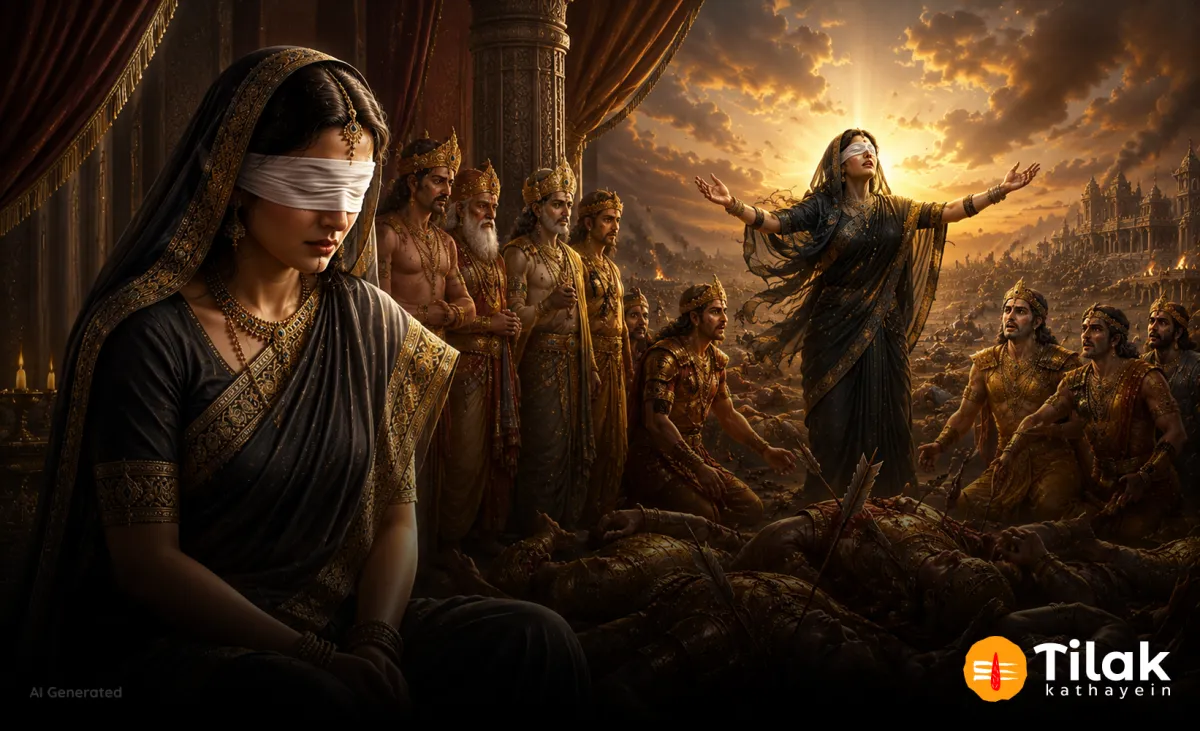
Gandhari: Daughter of King Subala of Gandhara and wife of Dhritarashtra. She is known for her Pativratya Dharma. Because her husband was blind, she herself blindfolded her eyes. Her role in the story is that of an ideal wife and a powerful ascetic.
Dhritarashtra: The blind king of Hastinapur and husband of Gandhari. He is the father of the Kauravas. Due to his blindness, he was unable to rule the kingdom, which led to many problems in the state. His role in the story is that of a weak and attachment-ridden king.
Kauravas: The hundred sons of Dhritarashtra and Gandhari. They fight against the Pandavas under the leadership of Duryodhana. Their character symbolizes greed and injustice. Their role in the story is that of villains.
Pandavas: The five sons of Kunti and Pandu. They symbolize Dharma, justice, and truth. Their role in the story is that of heroes. Yudhishthira, Bhima, Arjuna, Nakula, and Sahadeva are called Pandavas.
Lord Krishna: An avatar of Vishnu and a friend and guide to the Pandavas. He became Arjuna's charioteer in the Mahabharata war and imparted the knowledge of the Bhagavad Gita to him. His role in the story is that of a divine guide.
Gandhari's Story – Complete Story
Gandhari, the daughter of King Subala of Gandhara, was born. Gandhari was a radiant and righteous maiden. Her marriage was fixed with Dhritarashtra, the blind king of Hastinapur. When Gandhari learned that her husband was blind, she made a significant decision. Demonstrating complete devotion to her husband, she too blindfolded her eyes so that she could not see the world.
After marriage, Gandhari came to Hastinapur and fulfilled her duties as the queen mother. Gandhari gave birth to her hundred sons, the Kauravas. Duryodhana was the eldest son and was always envious of the Pandavas. Gandhari always advised her sons to follow the path of Dharma, but Duryodhana did not heed her words. The conflict over the kingdom between the Pandavas and the Kauravas escalated.
When the Pandavas had to go into exile after losing in a game of dice, Gandhari was very saddened. She also advised Dhritarashtra to stop Duryodhana from doing wrong, but Dhritarashtra remained blind in his affection for his son. Gandhari knew that this conflict would be destructive, and she prayed to Lord Krishna to avert this war.
The Mahabharata war took place in Kurukshetra. During the war, Gandhari worshipped Lord Shiva to protect her sons and obtained divine power from him. She blessed Duryodhana that his body would become like a vajra (thunderbolt), but Krishna, with his cleverness, did not allow Duryodhana's body to become entirely vajra. In the war, all of Gandhari's sons were killed.
At the end of the war, when Gandhari lost all her sons, she became very angry. She cursed Lord Krishna that just as her lineage was destroyed, so too would Krishna's lineage be destroyed. Lord Krishna accepted Gandhari's curse, as he knew it was destiny.
After the war ended, Gandhari went to the forest with Dhritarashtra and Kunti. She performed penance there and eventually renounced her body. Gandhari's life is an excellent example of sacrifice, penance, and Pativratya Dharma.
Lessons from the Story
- Main Message – The story of Gandhari highlights the importance of Pativratya Dharma. It teaches that a wife should be completely devoted to her husband, regardless of the circumstances.
- Moral Lesson – This story teaches us that we should always walk on the path of Dharma and truth. We should fulfill our duties towards our family and society.
- Modern Relevance – This story remains relevant even in today's life. It teaches us to act with patience and courage even in adverse situations. It inspires us to remain steadfast in our values and principles.
Frequently Asked Questions
In which scripture is the story of Gandhari found?
The story of Gandhari is described in the Adi Parva, Sabha Parva, Vana Parva, Stri Parva, and Shanti Parva of the Mahabharata. Particularly in the Stri Parva, the lament and curse of Gandhari after the war are described in detail.
What lessons can be learned from Gandhari's story?
From Gandhari's story, we learn lessons of sacrifice, devotion, Pativratya, and walking the path of Dharma. This story teaches us to remain steadfast in our values and principles, whatever the outcome. It also inspires us to stay away from attachment and support justice.
Conclusion
The story of Gandhari remains eternally relevant due to its profound messages of Pativratya. It is unique among Hindu tales as it depicts sacrifice, dedication, and a woman's inner strength. Gandhari's character teaches us how to remain steadfast in our values even in adverse circumstances and follow the path of Dharma.
We encourage you to share this inspiring story with others. May this story continue to inspire us to walk the path of Dharma, truth, and love. Jai Shri Krishna!
Today's Panchang 28 October 2026
For auspicious times, choghadiya, horoscope and planetary positions
Related Articles
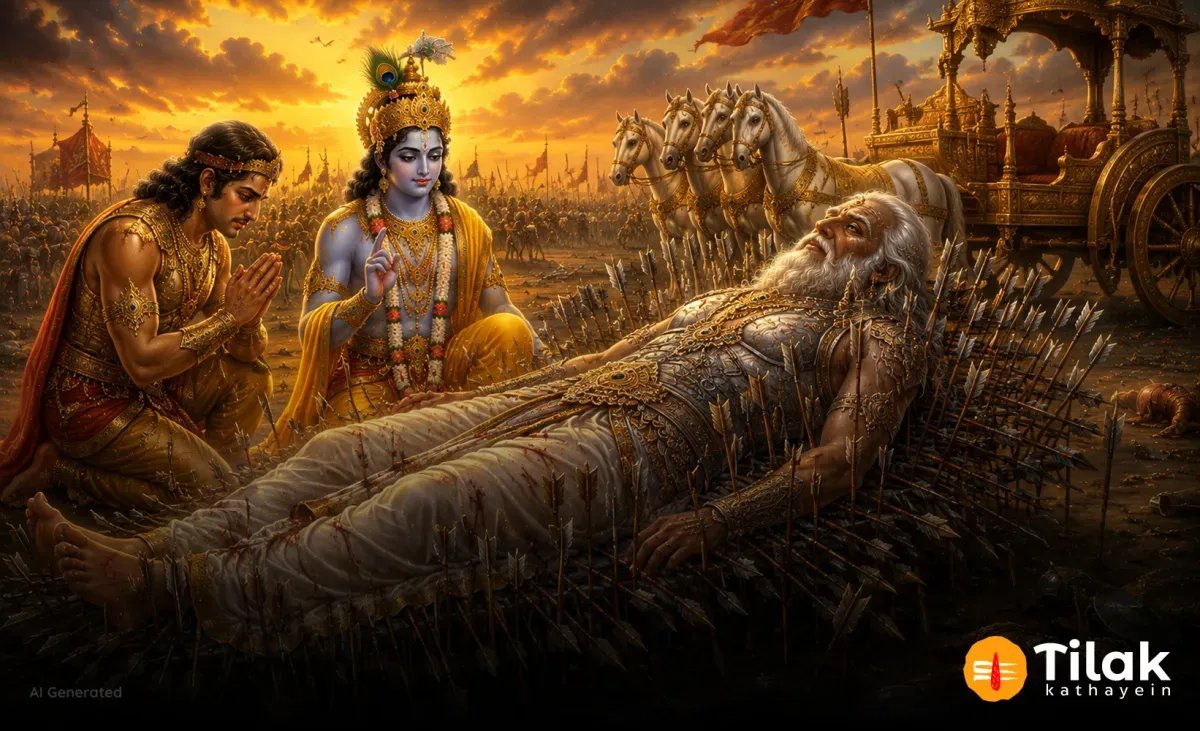
Why Did Bhishma Pitamah Receive the Bed of Arrows? Know the Mahabharata Story
भीष्म पितामह महाभारत के सबसे महान योद्धाओं और धर्मनिष्ठ पात्रों में से एक थे। कुरुक्षेत्र युद्ध में अर्जुन ने शिखंडी को आगे रखकर उन पर बाणों की वर्षा की, जिससे उनका पूरा शरीर बाणों से ढक गया और वे धरती पर गिरने के बजाय **बाणों की शय्या** पर स्थित हो गए। इच्छामृत्यु के वरदान के कारण उन्होंने तत्काल प्राण त्याग नहीं किए और उत्तरायण आने तक वहीं रहकर धर्म, नीति और राजधर्म का उपदेश दिया। इस लेख में जानें भीष्म पितामह को बाणों की शय्या क्यों मिली, इसके पीछे की महाभारत कथा, शाप-वरदान और इसका गहरा आध्यात्मिक संदेश।
The Story of Nala and Damayanti | Complete Story and Teachings
नल दमयंती की कहानी – पौराणिक कहानी, पात्र, शिक्षा और हिंदू धर्म में महत्व। हिंदी में।
Bhishma Pratigya Story | The Complete Story and Teachings of Bhishma's Vow
भीष्म प्रतिज्ञा की कहानी – पौराणिक कहानी, पात्र, शिक्षा और हिंदू धर्म में महत्व। हिंदी में।
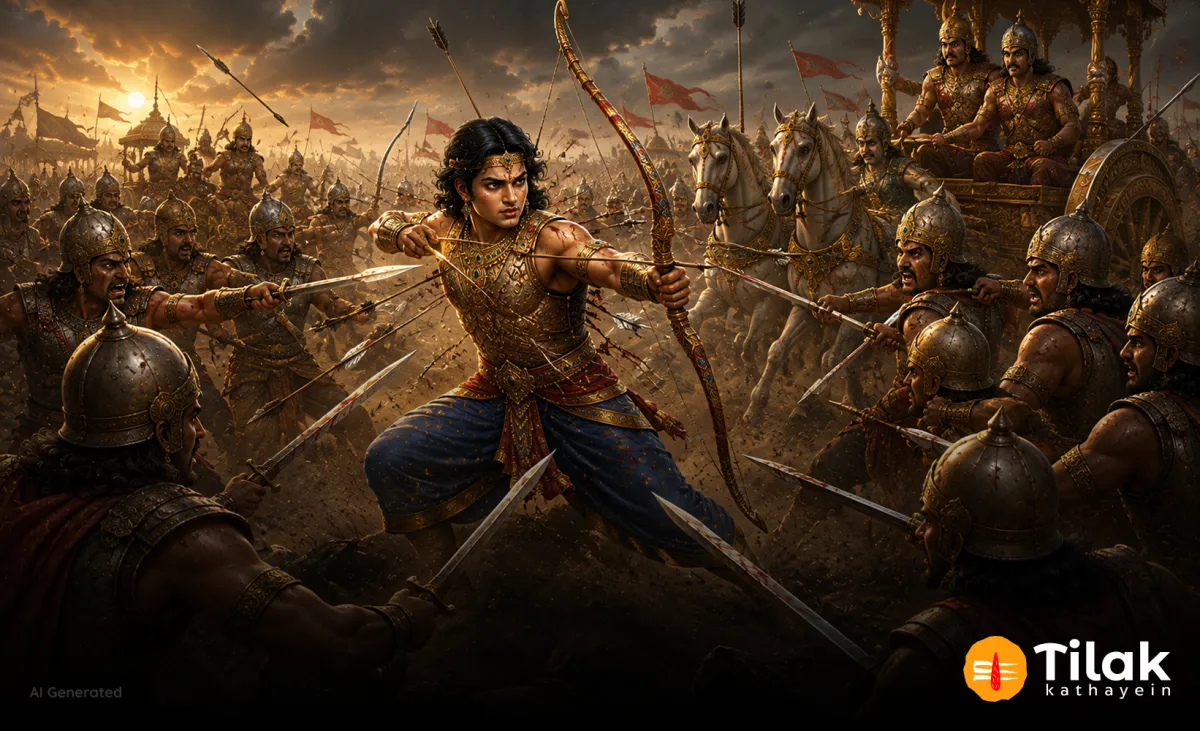
The Story of Abhimanyu | Abhimanyu Biography, Chakravyuh & Mahabharat in Hindi
अभिमन्यु महाभारत के महान वीर योद्धा, अर्जुन और सुभद्रा के पुत्र तथा भगवान श्रीकृष्ण के भांजे थे। उन्होंने कम आयु में ही अद्भुत शौर्य, पराक्रम और धर्मनिष्ठा का परिचय दिया। कुरुक्षेत्र युद्ध के तेरहवें दिन उन्होंने अकेले चक्रव्यूह में प्रवेश कर अनेक महारथियों का सामना किया और वीरगति प्राप्त की। इस लेख में जानें अभिमन्यु का जन्म, चक्रव्यूह का रहस्य, उनका वीरतापूर्ण युद्ध, बलिदान और उनके जीवन से मिलने वाली प्रेरणादायक शिक्षाएं।
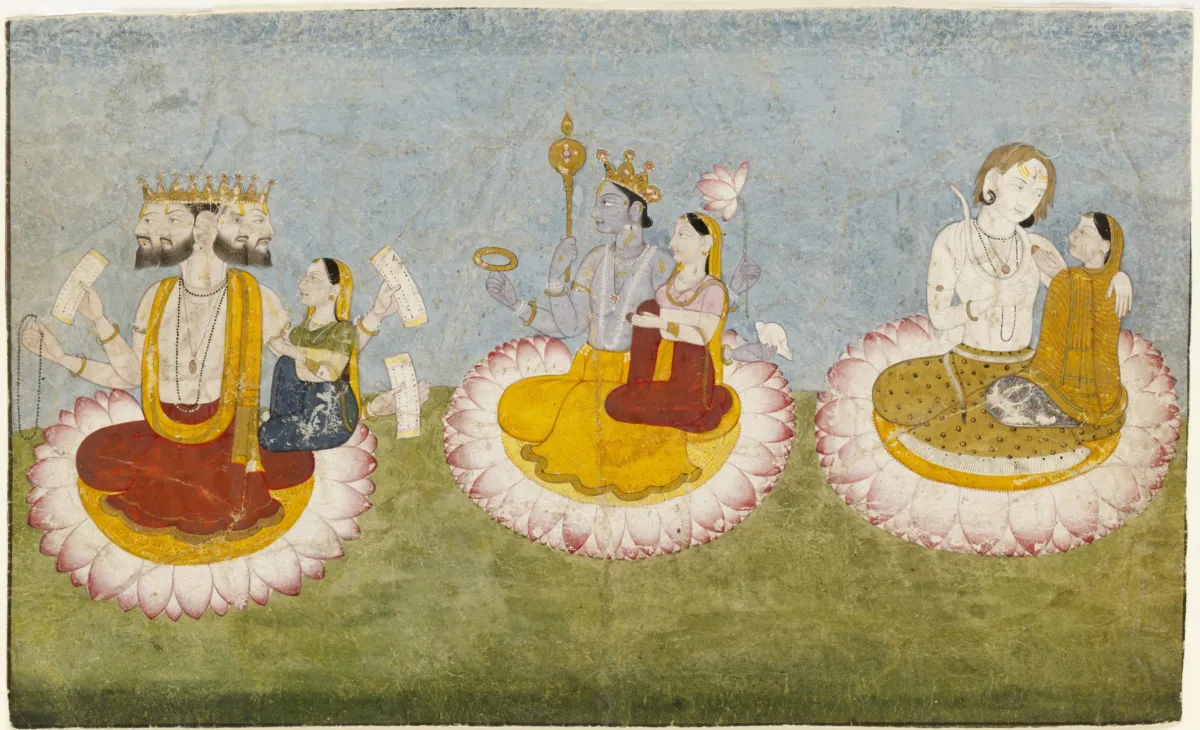
The Story of Chanakya | Complete Story and Teachings
चाणक्य की कहानी – पौराणिक कहानी, पात्र, शिक्षा और हिंदू धर्म में महत्व। हिंदी में।
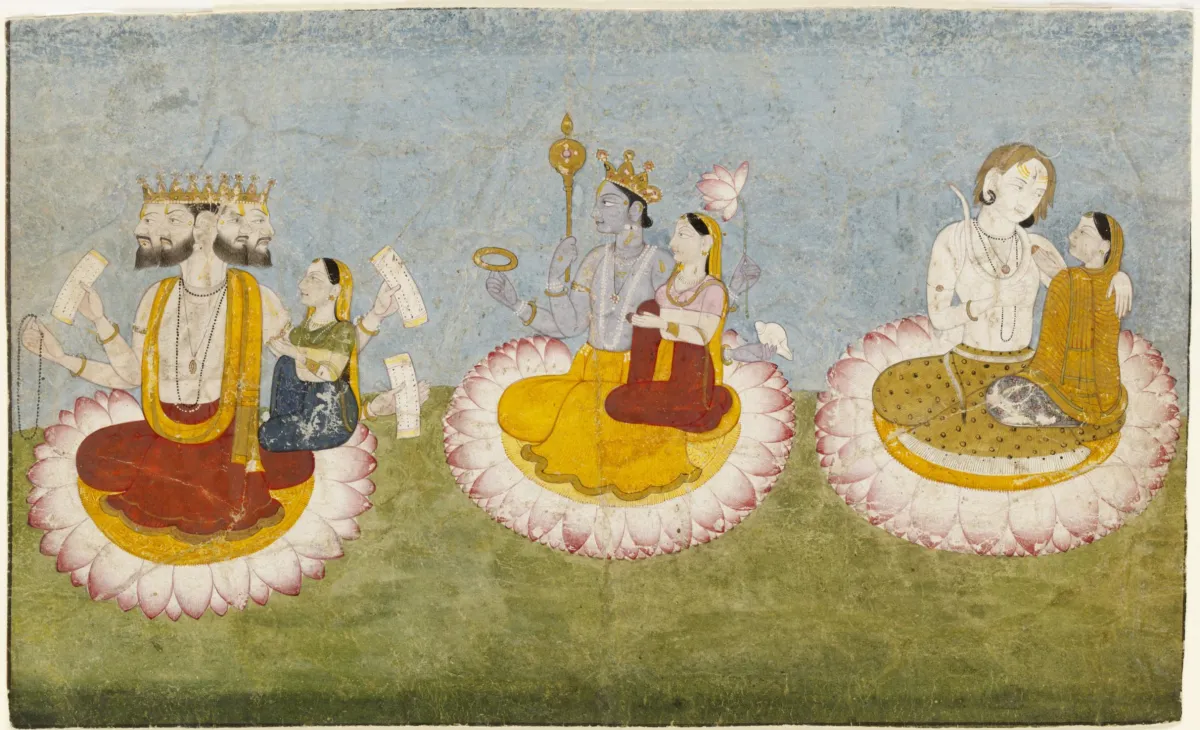
The Story of Eklavya | Eklavya's Story – Complete Story and Teachings
एकलव्य की कहानी – पौराणिक कहानी, पात्र, शिक्षा और हिंदू धर्म में महत्व। हिंदी में।